
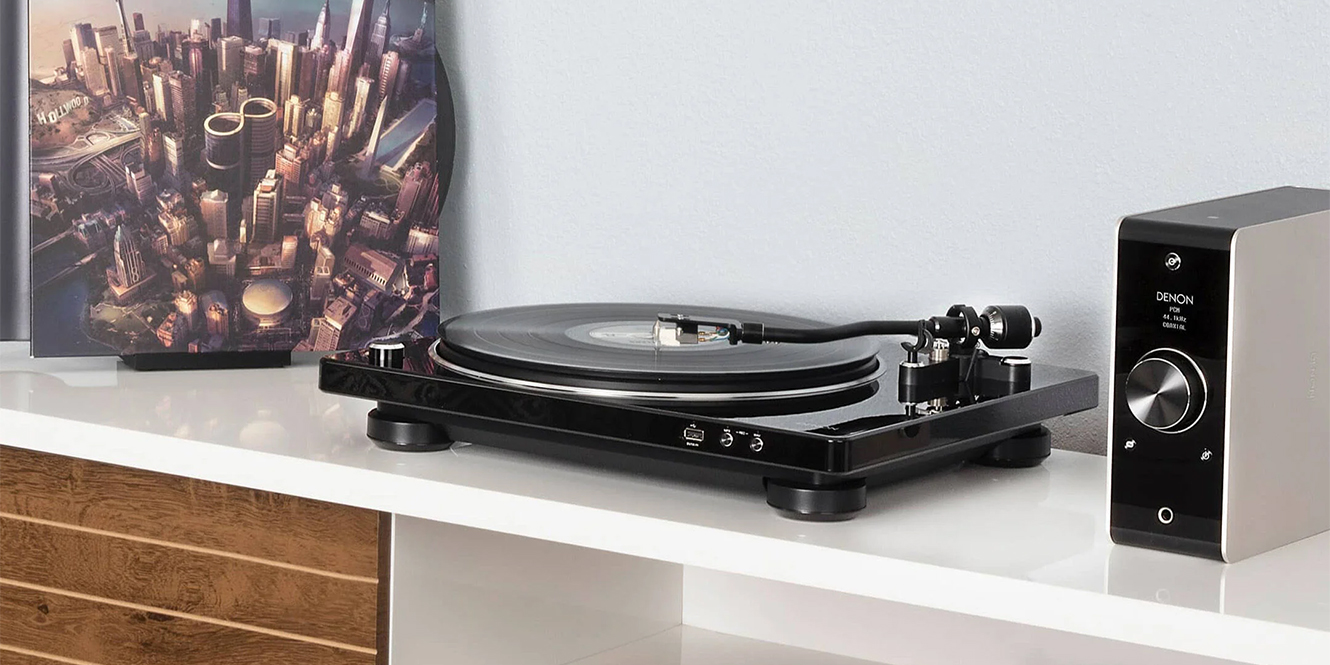

USB turntables have become increasingly prevalent in recent years, as the industry shifts from a more traditional approach to quicker and more convenient ways of listening to music.
So the big question is, why would you want a USB connection on your turntable? And honestly, that is an extremely valid question.
There are myriad reasons you might want a USB connection on a turntable, but the main one is to connect it to a computer for the purpose of digitising your record collection. This method is simpler and quicker than using an audio interface with the analogue outputs, which involves balancing gain and signal levels.
It also allows you to use the USB connection as a digital output for use with a USB DAC setup, should you be inclined to do so. You have more options and flexibility with this function than you might imagine, but typically, you would only use the USB for the convenience of digitising your records.
Now you know why you’d want a USB connection, here are the best USB turntables on the market right now.
In a hurry?
Here are our top three USB turntables:
| Denon DP-450 | The best all-rounder, with an S-Shape curved tone-arm and weighted, belt-driven platter. | Check the current price |
| Pro-Ject Elemental Phono USB Final Edition | Simple but effective. With the included platter and isolation pad, you have the foundation of a high-performance turntable. | Check the current price |
| Audio-Technica AT-LP120XUSB | Reminiscent of a Technics turntable from the '90s, although it won't cost you several grand. | Check the current price |
The best USB turntables
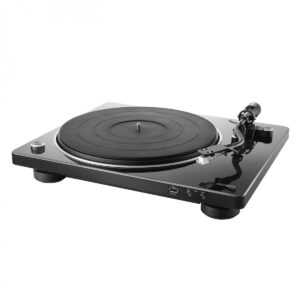
1. Denon DP-450 – The best all-rounder
 Key features
- Built-in phono stage with switchable EQ
- MM cartridge
- Multi-speed belt-drive design (33 1/3, 45, and 78 RPM)
Pros
- Excellent out-of-the-box sound with included MM cartridge
- USB recording makes archiving vinyl simple
- Clean, well-built design that suits modern hi-fi systems
Cons
- Fully manual operation may not suit absolute beginners
The Denon DP-450 sits alongside the DP-400 in Denon’s range, offering a feature-rich alternative if you want a bit more flexibility. While the two models share a similar design approach, the DP-450 is the better choice if you’re looking for a turntable that balances everyday convenience with broader system compatibility. It covers a lot of bases without overcomplicating things.
At its core, the DP-450 is a belt‑drive turntable engineered for stable, consistent playback. The weighted platter and Denon’s S‑shaped tonearm work together to minimise unwanted vibration and resonance, helping records sound even‑handed and controlled rather than exaggerated or harsh. The supplied moving‑magnet cartridge is immediately satisfying, offering good balance and clarity straight out of the box.
If you like to tweak and improve over time, the universal headshell and moving‑coil compatibility means the turntable accommodates future upgrades – which is very handy as your setup progresses.
Where the DP-450 really stands out, though, is how easily it fits into different systems. A built‑in, switchable phono stage allows direct connection to amplifiers, active speakers, or audio systems without a dedicated phono input. And of course, there’s the USB output for another layer of flexibility.
Support for 78 RPM records then opens the door to older pressings and shellac recordings. An auto‑lift tonearm helps protect both stylus and vinyl by lifting at the end of a side, adding a reassuring touch during longer listening sessions. Solidly built and thoughtfully designed, the DP-450 is a turntable that grows with your system rather than limiting it.
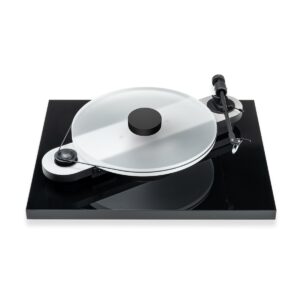
2. Pro-Ject Elemental Phono USB Final Edition – The best minimalist, modular system
 Key features
- Built-in phono stage with optional USB recording
- Artificial stone central mass for vibration control
- Upgraded Pick-it 25A cartridge with silver coil windings
Pros
- Exceptionally clean, detailed sound for a compact design
- Hassle-free setup with pre-set tracking force and anti-skate
- Excellent isolation thanks to the included Ground it E platform
Cons
- Manual speed change may not suit convenience-first users
If you like your hi-fi to be simple, purposeful, and a bit different, this one will probably appeal to you. There’s nothing here that feels unnecessary, and that’s very much the point. Pro-Ject’s Elemental Phono USB Final Edition is designed around the idea that good sound starts with controlling vibration and keeping the signal path clean, rather than piling on features.
The most obvious part of that approach is the artificial stone central mass, which anchors the bearing and tonearm. It looks unusual, sure, but it’s there for a reason: to help keep the deck stable and less sensitive to external vibration. When paired with the Ground it E isolation platform (included), the turntable feels planted,
It comes fitted with Pro-Ject’s upgraded Pick-it 25A cartridge, which is a step up from the regular Elemental models. The cartridge tracks well and sounds clean without tipping into anything overly sharp or analytical. Combined with the acrylic platter and supplied record puck, the overall presentation is excellent.
Despite its more audiophile-leaning design, setup is actually quite straightforward. Tracking force and anti-skate are factory-set, so you don’t need to fiddle with counterweights and balancing; you can put the little scales away. The built-in phono stage keeps system matching simple, and the USB output gives you the option to digitise records if you are so inclined.
This Final Edition feels like a deliberate, well-judged version of the Elemental concept. They’ve taken what was already a great formula and just refined it.
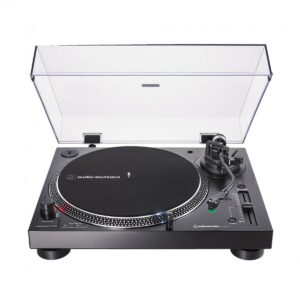
3. Audio-Technica AT-LP120XUSB – The classic
 Key features
- Direct-drive motor with variable pitch control
- Built-in switchable phono preamp and USB output
- AT-VM95E cartridge with upgradeable stylus options
Pros
- Rock-solid speed stability thanks to direct drive
- Huge flexibility for home listening, archiving, or light DJ use
- Excellent upgrade path through the VM95 cartridge range
Cons
- Large footprint may not suit compact setups
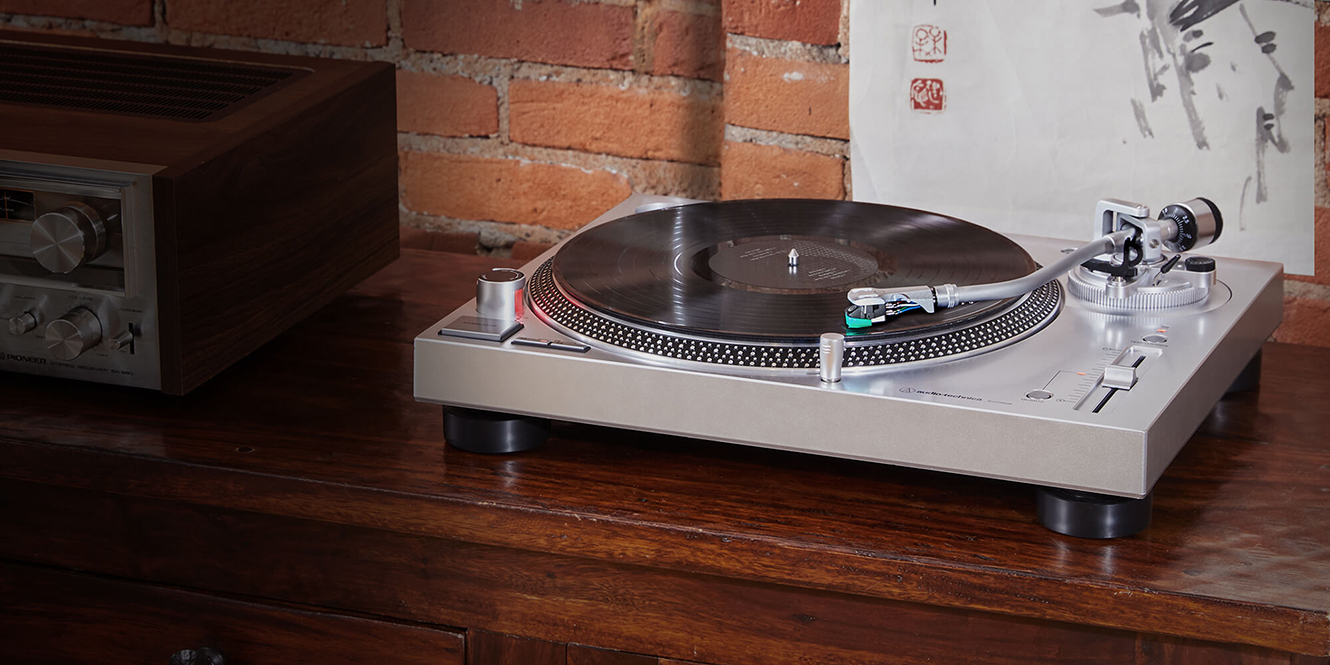
If you’ve ever seen a turntable and thought, “yeah, that’s what a turntable is supposed to look like”, this style will feel instantly familiar. It leans heavily on classic direct-drive designs from the ’80s and ’90s, and there’s a good reason that layout has stuck around for so long. It’s practical, robust, and very easy to live with.
The Audio-Technica AT-LP120XUSB uses a high-torque direct-drive motor, which gives it excellent speed stability and a quick start-up. In real terms, that means reliable pitch and very little speed drift. You also get variable pitch control, a strobe platter, and support for 33, 45, and 78 RPM playback. That’s more flexibility than most people will need, but it’s nice to have it there.
It comes fitted with the AT-VM95E cartridge, which is a solid choice and, again, probably the default-looking stylus that people think of when they think of a stylus (not that that’s a bad thing). It tracks well, sounds clean, and most importantly, gives you a clear upgrade path.
If you want to improve things later on, you can move up through the VM95 stylus range without replacing the whole cartridge, which makes it a good long-term option.
System setup is straightforward. There’s a built-in, switchable phono stage for connecting to amps or active speakers, and a USB output. The USB side of things is simple and functional, and feels like a useful extra rather than the main selling point.
However, just be warned that this is a fairly large, industrial-looking deck, so it won’t suit every space. But if you want something dependable, hands-on, and flexible enough to cover listening, archiving, and a bit of experimentation, this one still earns its place.
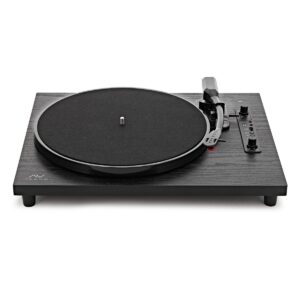
4. AVCOM Contemporary Turntable – The best starting point
 Key features
- Three-speed belt-drive playback (33, 45, 78 RPM)
- Bluetooth input for wireless streaming from smart devices
- RCA outputs for connection to hi-fi systems or active speakers
Pros
- Very affordable entry point into vinyl
- Clean, minimalist design that suits modern spaces
- Simple operation with auto-stop for added convenience
Cons
- Requires an external phono stage for passive speaker systems
The AVCOM Contemporary Turntable kind of exists to make getting into vinyl as painless as possible. It’s aimed squarely at first-time buyers or casual listeners who want to enjoy records without worrying about setup quirks, fine adjustments, or building a full hi-fi system around it. It makes everything very, very easy.
Playback is handled by a straightforward belt-drive system that supports 33, 45, and 78 RPM speeds. That means it can cover modern pressings, older records, and even shellac discs from back in the day. Much like other offerings on this list, there’s also a myriad of quality-of-life features, such as the auto-stop function that prevents the stylus from looping endlessly in the run-out groove.
Since the AVCOM Contemporary Turntable only outputs a phono-level signal, you’ll need an external phono stage if your amplifier doesn’t already have one. That’s a bit of a shame at this price point, but it’s hardly a deal-breaker. In fact, it gives you the opportunity to explore external phono stages down the line, which generally sound better anyway. All in all, its a great jumping off point for your journey into vinyl.
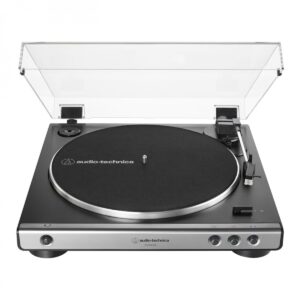
5. Audio-Technica AT-LP60XUSB – The most convenient and self-contained
 Key features
- Fully automatic operation (auto start/stop tonearm movement)
- Dual Magnet phono cartridge
- Built-in switchable phono preamp (phono or line-level output)
Pros
- Proper “press play and relax” turntable – ideal for beginners
- Good record tracking and reduced resonance
- Replaceable stylus keeps long-term ownership simple and cheap
Cons
- Limited upgrade path compared to higher-end turntables
Audio-Technica’s AT-LP60XUSB is essentially a “press play and relax” turntable, or a “set and forget”, if you will. It’s very easy to live with day to day, especially if you just want to play records without thinking too hard about setup or handling.
You can almost think of it as the little brother to the LP120 further up the list, borrowing some of that familiar ’90s turntable icon styling, but stripping things back in favour of simplicity and automation.
Fully automatic operation is the core appeal here. A single press of a button, and the tonearm cues itself, drops onto the record, and lifts again when the side finishes. That makes it ideal for beginners, anyone who doesn’t want to worry about manual cueing, or those who simply don’t want to have to get up when the record is over.
The automatic operation also helps protect both the stylus and your records, as there’s far less chance of accidental damage or leaving the needle looping endlessly in the run-out groove.
USB output is the other key feature, and it’s a genuinely practical one. You can connect the turntable directly to a computer and digitise your records without needing an audio interface or additional hardware. For backing up older records, preserving favourites, or creating digital copies for the car or phone, it does exactly what it’s supposed to with minimal effort.
And now that I write it, this “minimal effort” approach is kind of the theme of the whole turntable.
In terms of sound and setup, expectations are set sensibly. The belt-drive design keeps motor noise down, and the built-in switchable phono preamp allows direct connection to active speakers or a standard amplifier. There isn’t much scope for upgrading, but that’s by design. The AT-LP60XUSB works best as a dependable, stress-free way into vinyl, where convenience matters more than tweaking.
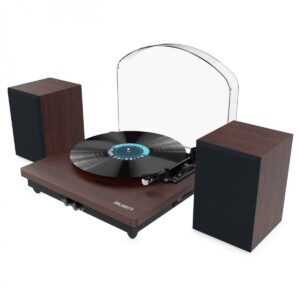
6. Majority Moto Plus – Hit the ground running
 Key features
- Separate stereo speakers
- Bluetooth 5.3 for wireless streaming from phones and tablets
- USB recording to digitise vinyl directly to a USB drive
Pros
- True all-in-one setup with speakers included
- Very easy setup with minimal adjustment required
- Plays 33, 45, and 78 RPM records
Cons
- Limited upgrade potential compared to traditional hi-fi turntables
The Majority Moto Plus is for people who want to get listening straight away, without having to piece together a system from separate boxes. It’s very much a “hit the ground running”-type setup, which will appeal if the idea of amps, speaker cables, and system matching feels daunting.
Importantly, it avoids the usual pitfall of all-in-one turntables by including separate stereo speakers, which immediately gives you a more convincing sense of space and separation.
It comes pre-fitted with the Audio-Technica AT3600L cartridge – it’s forgiving, tracks reliably, and doesn’t demand much in the way of setup or maintenance. You get support for 33, 45, and 78 RPM records, so it’s flexible enough to handle a mixed collection without fuss. There’s no fine adjustment to worry about here, and that’s very much intentional. This is about playing records, not obsessing over alignment.
Beyond vinyl, the Moto Plus doubles as a compact everyday music system. Bluetooth 5.3 lets you stream from a phone, tablet, or laptop, which makes it easy to switch between records and playlists without changing setups. And there’s USB recording for digitising your records directly to a USB drive.
In use, the vibration-damping feet and damped platter help keep playback steady, and the supplied speakers sound clean and balanced for their size. Again, there’s limited upgrade potential, but that’s not really the point. The Majority Moto Plus is about lowering the barrier to entry, and even then, if you outgrow the turntable, the speakers will still be functional as part of setups down the line.
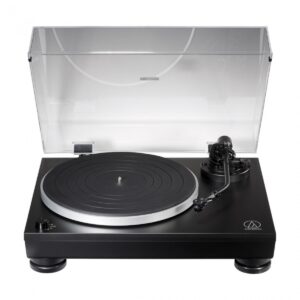
7. Audio-Technica AT-LP5X – Reminiscent of the ’90s
 Key features
- Direct-drive motor for stable speed and low noise
- J-shaped tonearm for reduced tracking error
- Built-in switchable MM/MC phono stage and USB output
Pros
- Excellent speed stability and pitch accuracy
- Strong upgrade potential with cartridge swaps
- Very flexible connectivity for modern and vintage systems
Cons
- Fully manual operation won’t suit everyone
If you know what you’re doing with turntables and move into more serious hi-fi territory without getting carried away, the Audio-Technica AT-LP5X might be the way to go. It almost feels unfair to have it this far down the list, but something has to round things out, and there are far worse ways to do that than with a turntable this capable.
The direct-drive motor is a big part of the appeal. It delivers excellent speed stability and keeps things feeling consistent. Paired with the anti-resonance aluminium platter, playback feels solid and controlled, with a certain kind of confidence about it. It’s not showy, but it does the fundamentals properly.
The J-shaped tonearm is another strong point. Drawing on Audio-Technica’s broadcast heritage, it’s designed to reduce tracking error across the record surface. With adjustable counterweight and anti-skate, you have genuine control over setup, which makes cartridge upgrades worthwhile rather than theoretical.
The supplied VM95E cartridge is a good starting point, the VM95E is a poster child of a good stylus, and the fact that Audio Tehcnica are pre-loading their turntables with them (as they have for forever) is a sign of the confidence they have in their turntable. Again, the VM95E footprint is essentially the most versatile platform to work with, allowing you to upgrade to a myriad of other styli as needed
Yes, it has a built-in phono stage and USB output, and those are genuinely useful to have. But what really makes the AT-LP5X stand out is the feeling it gives you when you use it. There’s a strong sense of nostalgia here, evoking the era when a certain famous Japanese brand defined what a proper turntable looked and felt like throughout the ’90s.
It has that same solid, purposeful character, where everything feels built to last, and nothing is trying too hard to impress. Plus, if you want to invoke that feeling of the ’90s “properly”, it’ll cost you significantly more, let’s put it that way, so this is a winner in my books.
USB turntables: Jargon buster
If you’re new to turntables, especially USB models, you’ll quickly notice that the hobby comes with its own language. Here are some of the key terms you’re likely to come across, explained plainly.
USB output
A USB turntable includes a USB connection that allows you to plug the deck directly into a computer. This lets you digitise your vinyl collection, usually into WAV or MP3 files, using recording software. The turntable converts the analogue signal into digital audio internally, saving you from needing extra equipment.
Phono level vs. line level
Turntables produce a very low-level signal called phono level. This signal needs boosting and equalising before it can be played through speakers or headphones. Line level is the stronger signal used by most audio equipment, like amplifiers, speakers, and audio interfaces.
Built-in phono preamp (phono stage)
Many USB turntables include a built-in phono preamp. This boosts the phono signal up to line level and applies RIAA equalisation. If your turntable has a switchable phono preamp, you can use it with systems that don’t have a dedicated phono input, or bypass it if your amplifier already includes one.
RIAA equalisation
When records are cut, bass is reduced, and treble is boosted to fit music into the groove cleanly. RIAA equalisation reverses this process during playback, restoring the correct tonal balance. Every turntable setup needs this somewhere in the chain, either via a built-in or external phono stage.
Belt drive vs. direct drive
Belt-drive turntables use a rubber belt to spin the platter, helping isolate the motor from the record and reduce vibration. Direct-drive turntables have the motor directly attached to the platter, offering faster start-up and excellent speed stability. USB turntables are available in both formats.
Cartridge
The cartridge sits at the end of the tonearm and converts the groove’s movement into an electrical signal. Most USB turntables use moving magnet (MM) cartridges, which are affordable, reliable, and easy to replace or upgrade.
Stylus (needle)
The stylus is the small tip that physically tracks the record groove. It wears out over time and should be replaced periodically to protect your records and maintain sound quality. Many cartridges allow stylus-only replacement, which is cheaper than replacing the whole cartridge.
Tracking force
This refers to how much downward pressure the stylus applies to the record. Too much can damage records, too little can cause skipping and distortion. Some USB turntables are pre-set at the factory, while others allow adjustment.
Wow and flutter
These terms describe small speed variations during playback. Lower wow and flutter figures mean steadier pitch and more accurate sound, which is especially noticeable on sustained notes like piano or vocals.
How to choose the best USB turntable for you
Sound quality and build fundamentals
Sound quality is a good place to start — and you’ll want to separate the things that genuinely affect what you hear from the marketing fluff. The two physical components that most directly shape sound are the platter and motor and the cartridge/stylus.
Platter stability matters because any wobble or vibration can translate into distortion. A heavier, well-damped platter tends to hold speed better and reduce resonance. Belt-drive turntables are often chosen for their ability to isolate motor vibration, while direct-drive decks offer strong speed consistency and quicker start-up. Neither is objectively “better” for USB use; it’s more about how each approach fits your priorities.
The cartridge and stylus sit at the very tip of the signal chain. Many entry-level USB turntables ship with a basic moving magnet (MM) cartridge that’s perfectly fine for most listeners. At higher price points, you’ll find better-quality cartridges that extract more detail and longevity from your records. Being able to upgrade the cartridge or stylus later is a useful feature if vinyl becomes a long-term passion.
Connectivity and software ease
A USB turntable’s headline feature is the ability to digitise your vinyl, but not all implementations are equally simple. Look for a unit with plug-and-play USB support for both Mac and Windows, so you can connect it to your computer without hunting for drivers. Some turntables bundle basic recording software, but you can also use third-party tools like Audacity if you want more control over file formats and edit functions.
Beyond USB, consider the other outputs you might use. A switchable built-in phono preamp can be extremely handy if your amplifier or active speakers don’t have a dedicated phono input. Without one, you’ll need an external phono stage to get clean, line-level sound.
Feature trade-offs and convenience
USB turntables come with a range of features. So, work out what you really need versus what simply feels nice to have. Here are a few common ones:
- Automatic vs. manual operation: Fully automatic decks will lift and lower the tonearm for you, which is comforting if you’re new or just want simplicity. Manual decks demand a bit more engagement but often give you more control over placement and tracking.
- Speed options: Most turntables support 33 1/3 and 45 RPM. If you want to play older 78 RPM records, check that the unit supports that speed (and comes with the correct stylus for it).
- Bluetooth connectivity: Some USB turntables add Bluetooth so you can stream straight to wireless speakers. This is a convenience feature rather than a quality enhancer, but for casual listening, it can be very appealing.
Think about how you plan to use the deck. If you’re primarily digitising records and sending them to headphones or a computer setup, convenience features may matter more to you than isolation feet or dense build materials. But if your turntable will sit at the heart of a hi-fi system, you may want to pay closer attention to mechanical quality and any potential upgrade paths.
Value for money and long-term ownership
A final consideration is value over time. Budget USB turntables get you into vinyl quickly and easily, but they sometimes limit your ability to improve sound quality without replacing the whole deck. Units with upgradeable cartridges, adjustable tonearms, and better isolation will cost more upfront but can repay that investment by staying useful as your system grows.
You should also pay attention to the accessories included. A good device will usually come with a dust cover, 45 RPM adaptor, and all necessary cables.
Warranty and brand support matter, too. A turntable is a mechanical device with moving parts, and being able to service or replace components under warranty can be worth choosing a slightly more established brand.
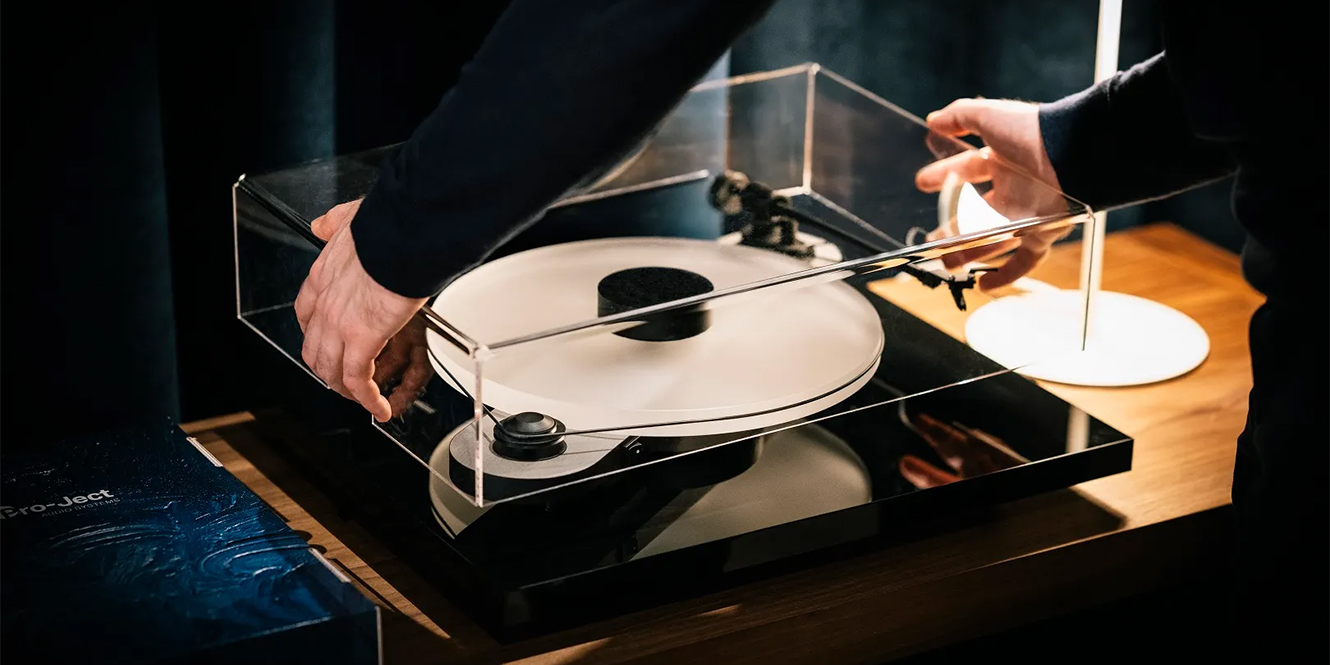
Brands to consider
When you start looking at USB turntables (or turntables in general), you’ll notice certain brands come up again and again. Each has a slightly different reputation and set of strengths, which can help you narrow your choice depending on what matters most to you.
Audio-Technica
Audio-Technica are one of the best-known names across all facets of turntable manufacture. Their decks tend to offer excellent value for money, solid build quality, and versatile features like built-in phono stages and USB outputs. AT turntables are a common recommendation for people just starting with vinyl.
Denon
Denon have a long history in hi-fi and have built a reputation for excellence. They’re respected for producing durable, well-engineered turntables with thoughtful features. Many Denon models combine classic design cues with modern convenience, such as USB outputs and auto-lift tonearms.
The brand’s decks typically feel stable and refined in their performance, making them a good choice if you want something that will settle into a home system and stay there.
Pro-Ject
Pro-Ject are a go-to brand for many serious vinyl enthusiasts. They focus on sound quality and precision engineering, with many models featuring high-quality cartridges, well-damped platters, and carefully designed tonearms. Pro-Ject also have a broad range of options, from minimalist, affordable decks to higher-end audiophile pieces.
Technics
Technics are legendary for their direct-drive designs. Their turntables are known for exceptional speed stability and build quality. Now, Technics may not dabble in the USB turntable world, but their equipment is excellent and often heralded as the masters of turntable manufacture and design from a practicality and overall quality perspective.
I can almost guarantee that if you imagine a turntable, you’ll picture a Technics SL-1200 -MK2 from the ’90s. Here’s the latest version of the SL-1200 if you want to feel nostalgic.
How to set up your USB turntable
This is a simple guide designed to get you up and running quickly. If you’d like a more in-depth, step-by-step walkthrough, you can find our full setup guide here.
That said, most modern turntables are designed to be as plug-and-play as possible, especially entry-level and mid-range models.
1. Position and level the turntable
Start by placing your turntable on a stable, flat surface, away from speakers to avoid vibration. Use a spirit level if you have one, as even slight tilting can affect tracking and sound quality.
2. Fit the platter, belt, and dust cover
If the platter or belt isn’t pre-installed, follow the manufacturer’s instructions to fit them correctly. This is usually straightforward and only takes a minute. Attach the dust cover if supplied.
3. Check the cartridge and tonearm
Many USB turntables come with the cartridge pre-fitted and pre-set. If yours does, you can usually skip alignment. If not, ensure the tracking force and anti-skate are set according to the cartridge’s recommendation. Entry-level decks often make this step automatic.
4. Connect to your audio system
If your turntable has a built-in phono preamp, connect it directly to powered speakers or an amplifier using RCA cables. Make sure the phono/line switch (if present) is set correctly for your setup.
5. Connect the USB cable
Plug the USB cable into your computer. Most USB turntables are class-compliant, meaning no drivers are required on Windows or macOS. Your computer should recognise it automatically as an audio input device.
6. Recording software
Install simple recording software such as Audacity, select the turntable as the input source, and you’re ready to digitise your records.
FAQs
What is the point of a USB turntable?
A USB turntable lets you convert your vinyl records into digital files by connecting directly to a computer. This makes it easy to archive your collection, listen on modern devices, and preserve rare records without repeated playback. It also simplifies setup for beginners by removing the need for additional recording equipment.
Can I listen to my USB turntable through my PC speakers?
You can listen to your USB turntable through your PC speakers by connecting it via USB and using audio software. Most turntables come with drivers or are plug-and-play, enabling playback through computer audio systems. Just be aware that there may be a slight delay, and sound quality depends on your computer and speakers.
What outputs do turntables have?
Most turntables use RCA (phono) outputs, which often require a phono preamp. Some models include a built-in preamp for line-level output. USB turntables add a USB output for computers, and some also offer Bluetooth.
Final thoughts
So, there we have it. USB turntables aren’t a gimmick, and they’re certainly not just a niche feature for audiophiles. In reality, USB connectivity adds a useful layer of flexibility. It works well for PC-based setups and makes digitising records far more straightforward, without having to head down the audio interface and gain-staging rabbit hole.
It’s also worth remembering that a USB turntable is still a proper turntable. Use the RCA outputs into an amp or powered speakers, and it’ll perform exactly as you’d expect. The USB connection simply gives you another option. And for many people, that extra convenience is a welcome bonus.
As always, a turntable is the sum of its parts. A better stylus will deliver better results, whether you’re listening via RCA or recording over USB. The process is the same at its core: the stylus tracks the groove, movement is converted into an electrical signal, and that signal is either sent straight to your system or converted into digital data for your computer.
Built-in A/D converters won’t match the quality of a dedicated audio interface. But for ease of use, they’re more than capable. And crucially, they let you digitise your collection without extra boxes. We hope you’ve found the right option for you on our list of the best USB turntables, or at least feel a bit more enlightened in what to look for!






0 Comments