
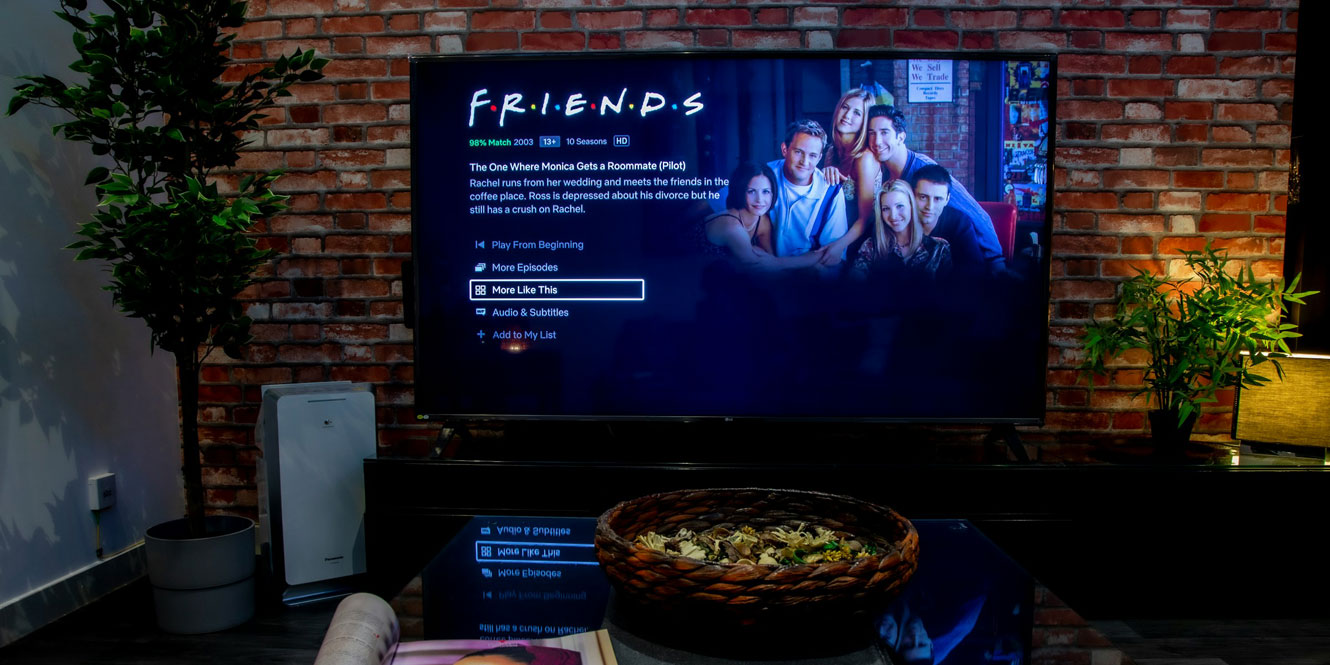

Have you been searching for a new flat-panel TV and are confused by the different types? Then you’ve come to the right place.
Once upon a time, we used CRT TVs, then plasma and LCD TVs, with size as the only concern. Fast forward a few years and these flat-panel TVs have branched out into a variety of different technologies, making it difficult to know which new replacement TV you should choose. Not only do we have LCD, LED, and OLED, but also the latest incarnations, MiniLED, QNED, and QD-OLED panel technology.
How do you decide which TV technology type is right for you?
In this article, we’ll concentrate on QNED vs. OLED as these are the favourites for modern flat-panel TVs. Both options have amazing abilities compared to the origins of LCD and plasma TVs.
Key takeaways
At a glance, here are the key specifications you need to know:
| QNED | OLED | |
|---|---|---|
| Technology | LCD with Quantum Dot, MiniLED, and NanoCell Layers combined technologies | Organic light-emitting diode |
| Infinite black? | No | Yes |
| Viewing angels | Good, but not as good as OLED | The best for viewing angles |
| Bright technology | The brightest of the two | Bright but not as bright as QNED |
| Response time | Slower than OLED | The quickest of the two |
| Price point | Low | High |
| Contrast | Lower contrast | Higher contrast |
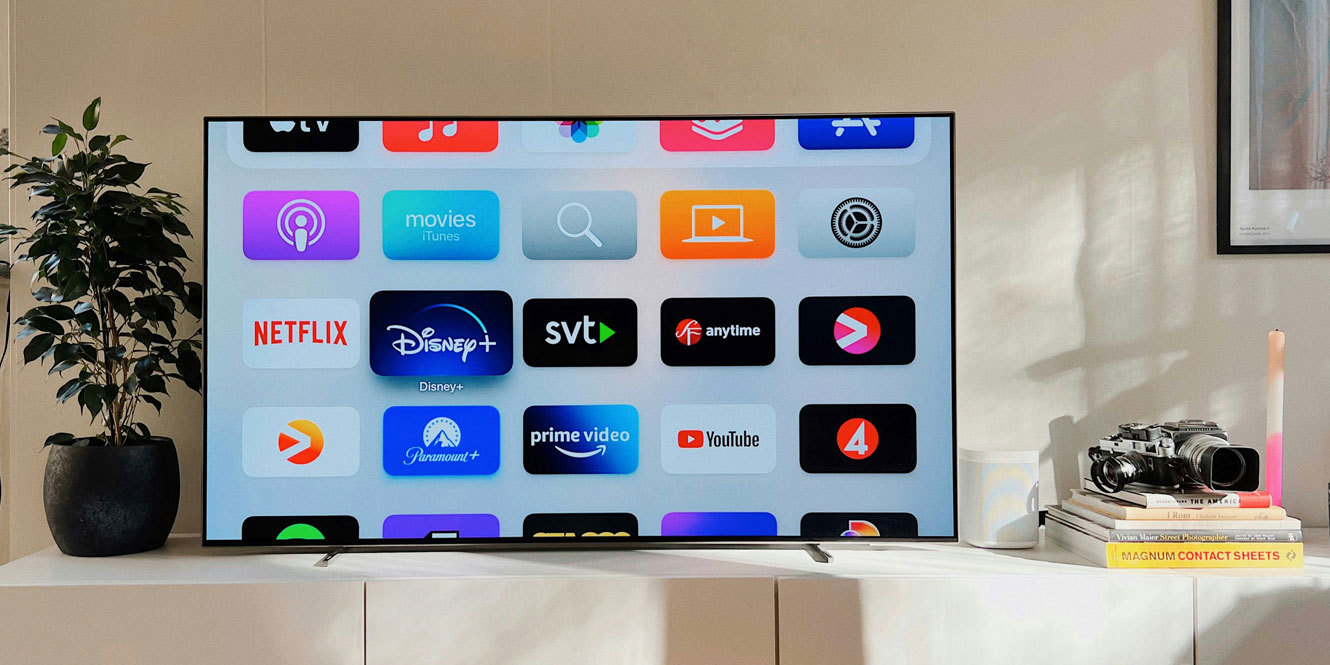
QNED vs. OLED
What is QNED?
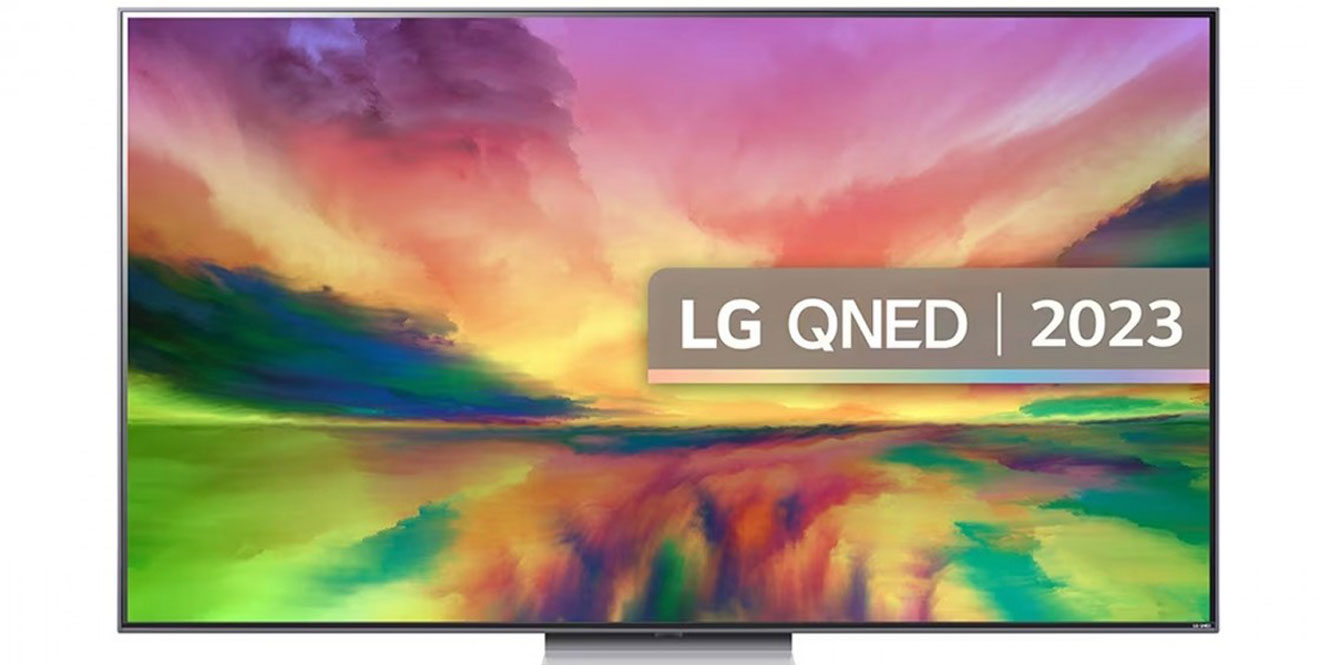
What’s QNED and who developed it? LG’s development team are the creators of QNED. They combined Quantum Dot technology with MiniLED, their own NanoCell Layer technology, to create the QNED screen technology.
Back in 2021, using MiniLED and quantum dots (something which other brands also use) became known as “Quantum Nano-Emitting Diodes”. However, not all LG TVs include the MiniLED technology, rather, they use NanoCell Layer technology. This led LG to change their technology from QLED to QNED, distancing themselves from Samsung’s QLED TVs.
Just like any LCD/LED TV, QNED TVs still require a lighting mechanism. Many modern QNEDs opt for edge-lit technology while using Quantum Dot technology, bringing an approximate 50% colour gamut improvement compared to LCD, making the panel look far more vibrant.
Quantum dots transformed how TVs work and enabled LED TVs to convert blue light-emitting diodes into red and green, creating the standard RGB colour palette. Thus, QLED was born.
Back in 2013, Sony was the first to adopt Quantum Dot technology into their screens, followed by Samsung, LG, and TCL. In 2017, Samsung rebranded the SUHD TV with QLED.
How does MiniLED differ from LED? Size-wise, you’ll need a microscope to see it as MiniLED is about 20 times smaller than traditional LEDs, which puts each MiniLED size at about 0.01 millimetres. This means that manufacturers can concentrate a vast number of MiniLEDs into a more confined area to boost their TV’s brightness and colour uniformity.
The NanoCell layer contains numerous minuscule pixel nanoparticles positioned behind the screen. These tiny nanoparticles help the QNED TV panel filter duller tones that affect the image’s brightness, creating another level of vibrancy.
The result of these Quantum Dot, MiniLED, and NanoCell layers creates a convincing competitor to OLED while keeping costs lower.
Where QNED differs from OLED is that QNED, or any other LCD-based TV for that matter, always requires an additional light source to illuminate the screen. This hinders its black level and, therefore, the entire grayscale which creates shadow detail, reducing the colour range generated from red, green, and blue. In short, this is why LCD TVs sometimes look blue when displaying black.
A consideration for gamers is that a QNED TV’s response time is slower than an OLED screen. At the time of writing, the quickest LCD screens have a 1ms response time.
The extra lighting engine also has another effect on the entire panel and that’s its depth as OLED screens are lit from the OLED pixel meaning no additional spacing is required to house a light engine to illuminate the screen
The extra lighting engine also affects the entire panel’s depth, as OLED screens are lit from the OLED pixel, meaning no additional spacing is required to house a light engine to illuminate the screen.
However, QNED TVs are more affordable and create stunning 4K HDR experiences that are getting closer to OLED quality thanks to advancements each year in achieving better black detail.
QNED pros and cons
| Pros | Cons |
|---|---|
| Brighter than OLED | Poorer black levels |
| Vibrant image | Colour palette isn't as accurate as OLED |
| More affordable than OLED | Poorer viewing angle |
What is OLED?
The development path of OLED technology is much older than most realise, with its origins dating back to the early 1950s. Two scientists observed the very first electroluminescence of organic material when a high alternating voltage was applied. It wasn’t known at the time that OLED would develop from this experiment, yet fast-forward to 1987, and the very first practical organic light-emitting diode came to fruition.
So, what’s the organic part of an OLED, and how does this become an OLED TV? Well, it’s carbon-based, just like you and me, although it is based on semiconductors. By packing these thin organic materials within five layers, they create a multi-layered semiconductor array known as a bilayer OLED. These elements are then triggered at different levels of voltage to bring the luminosity we see on the screen
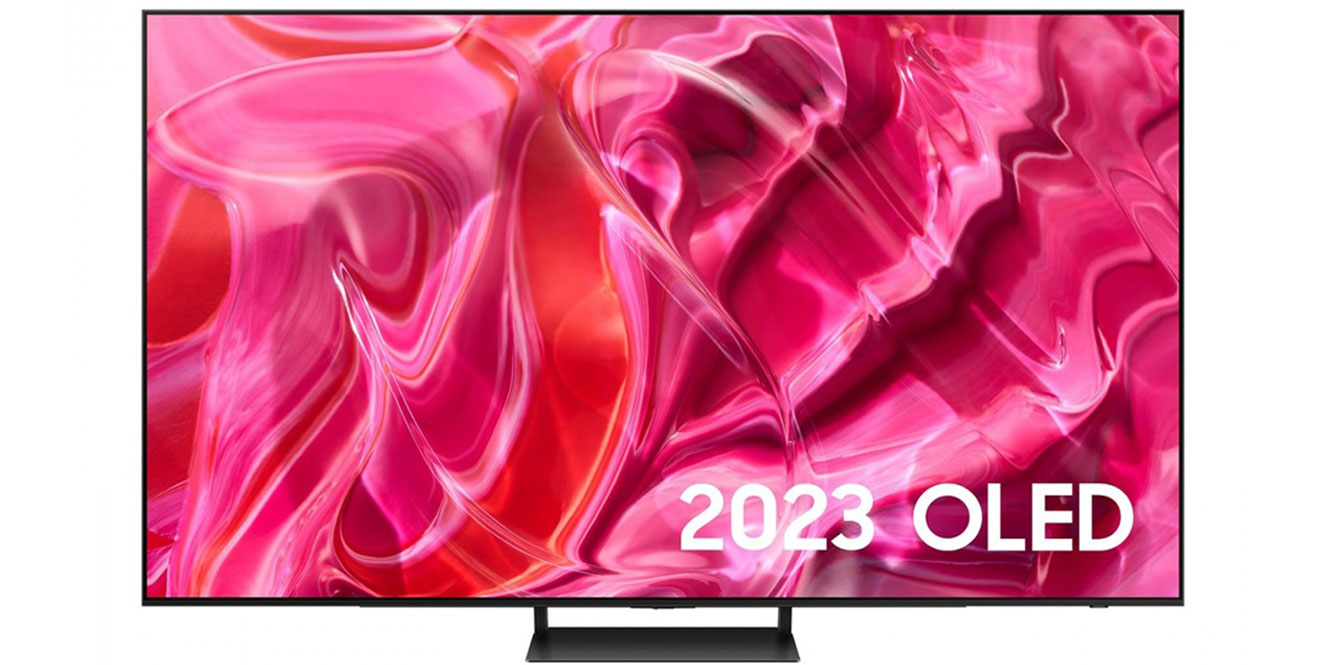
Modern OLED TVs differ slightly as each manufacturer uses their own unique makeup to create slightly different visual experiences on screen. However, one thing they all have in common is the ability to produce unrivaled colors and infinite black detail.
Unbelievably, the first OLED TV technology was developed by Ching Wan Tang and Steven Van Slyke at Eastman Kodak in 1987. It took another 20 years before a commercially available OLED TV was available on the market.
So, how do OLED TVs create infinite black compared to QNED? Unlike QNED, which cannot stop all the light bleed, OLED can physically turn off the light for each pixel thanks to the unique way it’s regulated by its own individual voltage, allowing it to emit light and colour.
This produces stunning contrast levels, which can reach 1,000,000:1, and far more accurate colours. Many people don’t realise that the grayscale and shadow detail help create millions of colours generated from these three simple colours: red, green, and blue.
One area where QNED and LED have an advantage over OLED is brightness, thanks to their use of an external light source. Manufacturers like LG and Samsung are challenging this by pushing the boundaries every year, increasing their nits (one candela per square meter), which brings them closer to QNED and LED brightness levels.
With OLED TVs, 4K HDR material looks simply stunning, and the anti-glare technology included by Samsung deepens that lush look. LG screens have the fastest response time, enabling them to keep up with the most demanding gaming footage at 0.01ms. This is why household brand names like Sony and Panasonic use both LG and Samsung screen technologies across their entire range now, as they’re so good.
Whether or not OLED is right for you comes down to its cost. OLED technology is far more expensive to produce, pushing its purchase price significantly higher than QNED. But if you factor in power consumption usage over the years, plus its resale value, the price in the long run isn’t too dissimilar. However, the initial cost of purchasing an OLED can be almost double that of a QNED for the same size screen.
There is also screen burn, which has plagued Plasma and CRT TVs since their launch. Screen burn isn’t anything new, despite some tabloids’ claims, as CRTs have always suffered from it too. However, modern OLED TVs use clever systems that occasionally reset each OLED, reducing the risk further.
OLED pros and cons
| Pros | Cons |
|---|---|
| Lush black detail | More expensive than QNED |
| Outstanding colour reproduction | Susceptible to screen burn |
| More natural and realistic to the eye | Isn’t as bright as QNED |
QNED vs. OLED: Which is Better?
Still haven’t decided which is the best between QNED and OLED TVs? Let’s look at how you are going to use the TV.
Viewing angle
The first thing to consider is the room, seating arrangement, and viewing angles. If your room has multiple seating arrangements that create acute viewing angles, OLED is the best option as it has an ultra-wide viewing angle, about 30 degrees wider in both directions compared to QNED.
Screen burn
Modern OLEDs, unlike older ones, are much safer from screen burn as brand names have included a correction system that periodically resets every OLED pixel back to its default state, eliminating that age-old issue. QNED TVs are immune from screen burn, so if you have been affected by an older Plasma or OLED screen, QNED might be the safest bet for your peace of mind.
Colour and brightness
Both TV technologies will produce stunning 4K HDR reproduction; however, OLED is still playing catch-up to QLED and QNED in terms of brighter colours. OLED can fool the eyes a little by giving a perceived brighter colour range, but this is partly due to the infinite black detail it creates and its more accurate grayscale.
Black levels and contrast levels
OLED is the outright winner here, thanks to its technological advantage. QNED is catching up, although when viewed side by side, the blackest inky films will still have a bluish glow, while the powered lighting engine will wash out some of the finer details.
Gaming
Again, OLED is a winner as it has the fastest response time of any flat panel technology. At 0.01ms, it far surpasses the 1.0ms response time of the best LED panels. Is this important enough to choose an OLED over a QNED panel? Not really, as anything around 20ms to 30ms should be more than enough to keep even the keenest gamers happy.
Pricing
This is probably the biggest concern for most and is really where QNED trumps OLED. The differences are getting closer every year, while the prices still have a similar premium for OLED vs. QNED. So, if you are a cinephile, you will always choose a large OLED TV, while those who watch the occasional film will most likely settle on a QNED.
FAQs
Is OLED better than QNED?
In many ways, OLED is better than QNED. The technology has been refining itself since the 1950s, so the tech is fully established. QNED on the other hand is getting closer and doing this with less cost. So, which is better will fully depend upon what’s important to you, image or cost!
Do QNED TVs burn in?
QNED TVs don’t burn in. Thanks to the way the technology works, it’s seemingly impossible for this to happen. LG, along with many other LED brands, have been testing all the technologies that make up QNED over thousands of hours, and so far, no burn-in image retention has been noted.
What’s the lifespan of a QNED TV?
As QNED is an LG technology, they have reported 50,000 to 60,000 hours of usage under normal conditions. This typically amounts to around 7-8 years. In reality, any TV that is over 5 years old will be out of date due to the rapid advancement of TV technology, and most people will likely have replaced their TV before reaching those hours.
Final thoughts
We hope you have found our guide to QNED vs. OLED helpful! As you can see, many factors can sway your decision when comparing the two, as we all have expectations that differ.
Some will be looking to get the best image quality for their hard-earned money, while others will simply want the best that’s available.
One thing you can be sure of is that whether you choose QNED or OLED, your new TV is going to look amazing. Neither QNED nor OLED TV technologies have significant drawbacks, as both are at the cutting edge of flat panel design.
Want to learn more? Check out our list of the top TV brands and what they have to offer!





0 Comments