
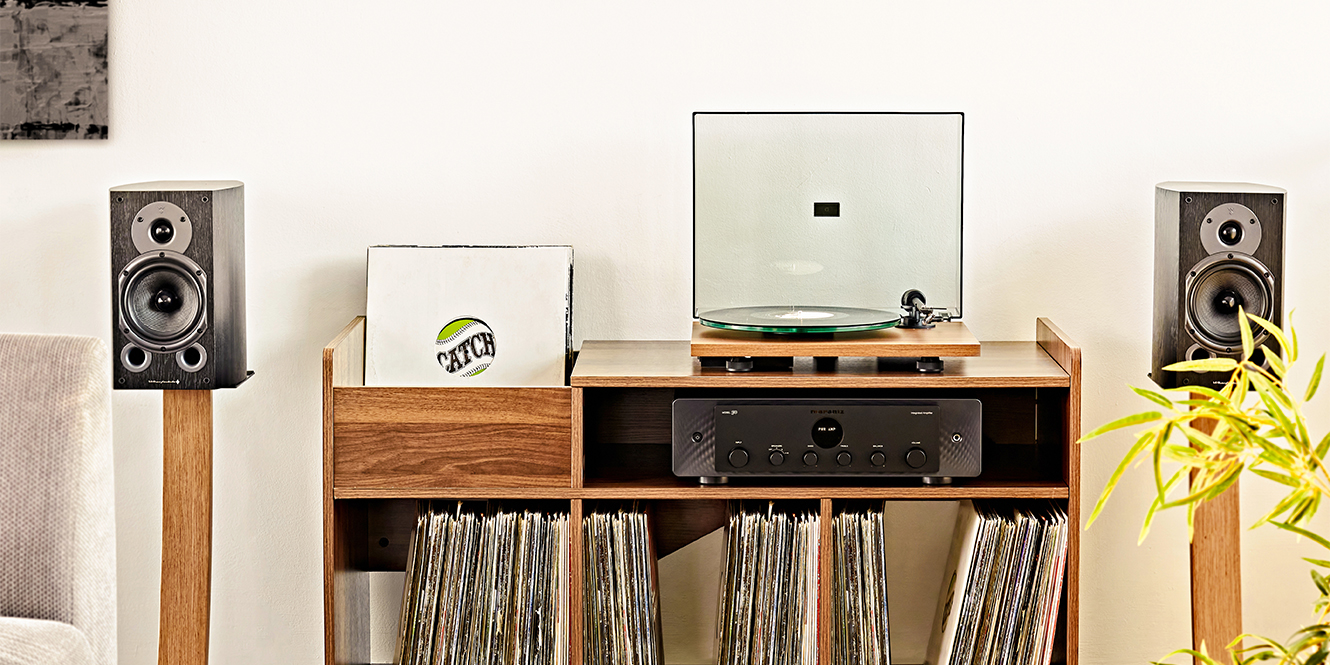

Whether you’re a seasoned record collector or just starting out, I think we can all agree that records are cool. But you know what’s not cool? Dust, and by extension, static. But all those tiny grooves… what is there to do about it? Aha, my friend, there is a solution: cleaning your records!
Depending on the level of detritus gathered in the grooves of your record, the answer may be as simple as a soft microfibre cloth, perhaps even a small, detailed brush.
The last thing any of us wants is that small bundle of fluff and dust clinging to the stylus. So, if you have a sizeable back catalogue that’s been sitting around gathering dust, it might be time to consider a more heavy-duty solution for cleaning your records in bulk. Wherever you stand on the matter, here’s my take on the seven best vinyl record cleaners.
If you’re looking for the best method, check out our step-by-step guide to cleaning your records.
In a hurry?
Here are our top three picks:
| AVCOM Microfibre Record and Turntable Cleaning Cloths | Soft, lint-free cloths that gently lift dust without scratching your vinyl or deck. | Check the current price |
| Pro-Ject Brush it Premium Record Cleaning Brush | Conductive carbon fibre bristles and grounding cable work together to reduce static charge while brushing away dust. | Check the current price |
| Goldring Milty Zerostat 3 Anti Static Gun | Neutralises static instantly so dust stops clinging and your records play clean. | Check the current price |
The best vinyl record cleaners
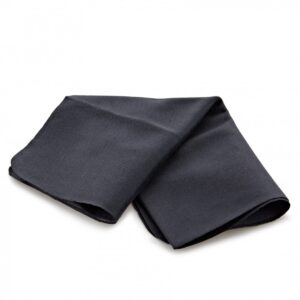
1. AVCOM Microfibre Record and Turntable Cleaning Cloths
 Key features
- Microfibre cloth
- Non-scratch
- 5 of them per pack
Pros
- Doesn’t scratch equipment
- Multi-purpose
- Cost effective
Cons
- It’s a cloth, so not very exciting
Picking a cloth pack doesn’t seem very inspired. But let me tell you, a good cloth is weirdly satisfying, and also very effective at cleaning records. Working in the industry as long as I have, I’ve accumulated dozens of microfibres, and having a good microfibre cloth to get the dust off my hi-fi is invaluable. Microfibre is the bare minimum required for a dust down.
I debated whether to include this on the list – it’s not the flashiest entry – but it’s important. A decent pack of microfibre cloths is cost-effective and handy for everything from cleaning records to tidying up your hi-fi or even your home. Cloth = good.
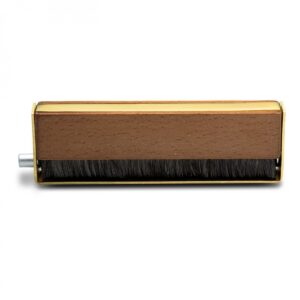
2. Pro-Ject Brush It Premium Record Cleaning Brush
 Key features
- Grounding cable included
- Conductive carbon fibres
- Removes fine dust particles
Pros
- It gives your records a thorough clean – with one handy device, no cleaning fluids
- Conductive design helps reduce static build-up while you brush
- Grounding cable further minimises static charge
Cons
- It’s quite small – but we’re being nitpicky here
At first glance, this brush might look similar to a number of cheaper alternatives – but not all brushes are created equal. The Pro-Ject Brush It Premium Record Cleaning Brush does exactly what it says on the tin; it cleans your records in a way that is… premium.
Its conductive carbon fibre bristles go beyond simply clearing dust out of the grooves; they also remove static, aided by the grounding cable for extra static charge elimination. Put simply, this is an effective and functional tool for daily record maintenance.
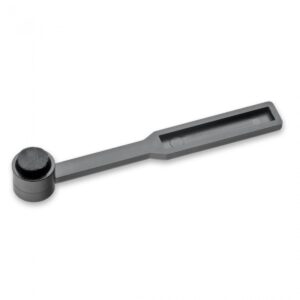
3. Pro-Ject Clean-IT Carbon Fibre Stylus Brush
 Key features
- Removes dust and dirt from stylus
- Made of conductive carbon fibres
- Eliminates static charges from stylus
Pros
- Actually works very well
- Inexpensive – especially when compared to the cost of replacing a stylus if damaged through improper cleaning
- Also useful for removing dust from the headshell and cartridge more broadly
Cons
- Requires some dexterity
So you’ve wiped down your records and used the brush to get all the dust out of the grooves, but you still have pops and crackles and tracking issues. On closer inspection, you notice rogue hairs and dust clinging to the stylus tip. What now? You Clean-It – and that’s exactly what this little brush is for.
Some people recommend giving the stylus a quick brush before every play. You can do that, but in most cases, occasional cleaning is perfectly fine.
I would suggest using something delicate on the stylus tip, as they are incredibly fragile. You don’t want to use a cloth on a stylus, as the friction could snag the arm and snap it. A small, gentle brush like this will be soft enough to clean the detritus without putting too much pressure on the arm.
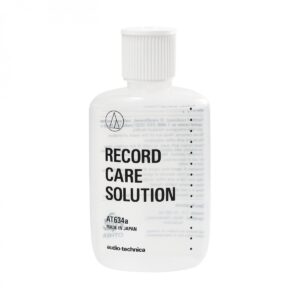
4. Audio Technica Record Cleaning Fluid
 Key features
- Lifts ingrained dirt and dust from your records
- Promotes a longer life for your equipment
- Incrementally marked bottle so you can see how much remains
Pros
- A little goes a long way
- Lasts for ages as you only need a dab at a time
- Reasonably inexpensive
Cons
- Wet cleaning takes more effort
The Audio-Technica Record Cleaning Fluid is ideal for vinyl lovers who want to keep their collection sounding sharp and looking respectable. Whether it’s a brand-new pressing or a second-hand find coated in dust and the lingering effects of a time when smoking indoors was considered cool (it’s not), this easy-to-use fluid helps clear the grime without damaging your records.
Just a few drops on a cloth are enough to lift surface dirt, cut down static, and reduce those unwanted crackles.
Cleaner records also mean less wear on your stylus, and unless you fancy replacing that regularly, it’s worth looking after. The compact bottle fits neatly into your setup or record bag, so it’s always nearby when your collection needs a bit of care. Whether you’re spinning daily or just dusting off your favourites now and then, this handy little bottle does the dirty work so your records don’t have to.
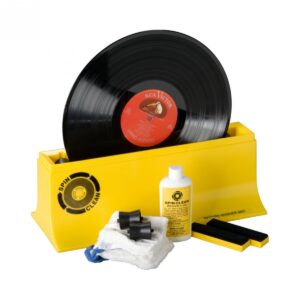
5. Spin Clean Record Washer System Mk II
 Key features
- Cleans both sides of the record simultaneously
- Effectively removes dirt and fingerprints
- Includes wash fluid, drying cloths, one pair of brushes, and rollers
Pros
- Quick and effective
- Everything is included
- Replacement brushes and fluid are available
Cons
- I wouldn’t get it out for just one or two vinyl, only if I were doing a small batch
You spin me right round, baby… and then probably right back again. The classic Spin Clean works just like that: by spinning your record vertically through a tray of solution. It might look rudimentary, but it genuinely does wonders for sorting your records out.
No power, no noise, no faff. Just a manual, hands-on clean that gets deep into the grooves, lifting out years of dust, static, and whatever’s been lurking since someone last played it at a house party in 1983.
The Spin Clean Record Washer System Mk II is ideal for anyone with a growing collection, especially if you’re regularly picking up second-hand vinyl that’s seen better days. It’s simple to set up, easy to use, and gentle enough for even your rarest pressings. You just pop your record in, spin it through the cleaning pads a couple of times, and let it dry. That’s it.
No more mystery pops or crunchy intros – just cleaner sound and a stylus that doesn’t have to fight for its life. Whether you’re a weekend spinner or a daily listener, this is one of those not-very-glamorous but totally essential bits of kit.
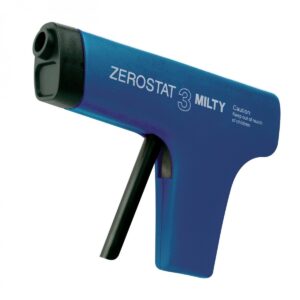
6. Goldring Milty Zerostat 3 Anti Static Gun
 Key features
- Neutralises static on vinyl and CDs
- No batteries or refills required
- Uses a piezo-electric crystal for ion generation
Pros
- You can pretend it goes “pew pew” when you’re zapping static
- Great for taming clingy inner sleeves and dusty turntable mats
- Reduces pops and crackles without any fluids or contact
Cons
- Doesn’t actually go “pew pew” when you zap static
Static: the invisible menace that turns your lovingly cleaned record into a dust magnet the moment you put it back in its sleeve. Inner sleeves cling, dust reappears out of nowhere, and your stylus starts crackling like it’s making popcorn.
Enter, the Goldring Milty Zerostat 3, a slightly sci-fi-looking tool that lets you zap static right out of your setup. And yes, you can absolutely pretend it goes “pew pew” while you’re doing it. In fact, we encourage it.
No fluids, no wires, no batteries. Just a gentle squeeze of the trigger and your record is neutralised. It works on vinyl, turntable mats, sleeves, and pretty much anything else that seems to attract fluff. Ideal for dry rooms, dusty collections, or those of us who seem to carry a permanent electric charge.
Whether you’re using it before a clean or just before a play, it helps keep the noise down and your gear dust-free for longer. And let’s be honest, in the war against static, Goldring shot first.
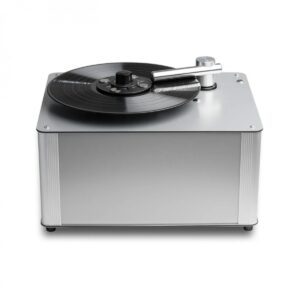
7. Pro-Ject VC-S3 Premium Record Cleaning Machine
 Key features
- Magnetic clamp
- Self-adhesive arm
- Vacuum motor
Pros
- Deep-cleans records in seconds using powerful vacuum suction
- Aluminium chassis and magnetic clamp keep everything secure and splash-free
- Removes fluid and grime fast, so your records are dry and ready to spin almost immediately
Cons
- Machines aren’t the gentlest
We’ve progressed as a society. We now have AI, seemingly infinite access to information (scary, isn’t it?), and even automatic machines to clean our records. How far we’ve come…
All jokes aside, the Pro-Ject VC-S3 is a pretty cool bit of kit. For some, it might seem excessive. For others, who are very into their records, this is the perfect equipment to add to your collection. I can particularly see DJs who use vinyl finding this cleaning machine useful. It provides the means to clean any old vinyl they pick up, as well as quickly clean off any smoke and debris from the previous night’s set.
Like I say, it’s a very cool thing. Niche? Perhaps. Time and effort effective? Extremely.
How to choose the best record cleaner for you
Choosing the best record cleaner for you really comes down to a few main factors: how many records are you cleaning? How dirty are they? And how old or delicate are they?
If you’re cleaning a series of vintage first pressings from the ’60s, you may want to do the process slowly and delicately by hand, in the interest of making sure that no mechanical process applies undue pressure to your records. This will take longer, but for peace of mind and protection, this would be the move.
If you have vinyl from later eras, such as the ’70s, that haven’t seen the light of day since the ’80s, you may want to explore the mechanical or automated cleaning options. Not only will it save you time, but you can also take solace in the fact that this vinyl is thicker and able to deal with the slight lack of finesse that comes with a mechanical process.
If you have The Beatles’ White Album, for example, we recommend cleaning by hand. But the entire back catalogue of Chumbawamba or Craig Charles that you picked up in the ’80s? Feel free to run that through one of the machine options.
Why should you clean your records?
There are lots of reasons to clean your records. Mainly, it’s about sound quality and preservation. Dust, dirt, and oils will collect in the grooves of your records over time. You can’t prevent it, and even microscopic dust particles can cause pops, crackles, and audible artefacts.
Having a clean groove lets the stylus sit deeper, resulting in improved tracking, clearer bass and treble, and less noise in the signal. Think of it like having lint and fluff built up in the charging port of your phone – every bit of lint makes the connection worse, resulting in slower charging.
The other aspect is preservation of both the record and the stylus. Every bit of dirt that gets “run over” by the stylus can cause particles to get ground into the vinyl, resulting in wear that no amount of cleaning can fix. This is especially problematic on older records that may not have been cared for particularly well.
The other issue is that every time your stylus runs over a bit of dirt, that stylus may collect the dirt on its tip, ultimately wearing the point down quicker and potentially mis-tracking altogether. Having had a long-haired cat, the amount of errant hairs floating in the air at all times never failed to both impress me and drive me insane when I see them collect on my stylus.
How often should you clean your records?
Some people will tell you to give your records a clean before every play, and in some regards that is correct, but it’s not the most practical in my opinion.
Realistically, I only clean them every dozen plays or so. So long as you are storing them correctly, away from heat and kept upright, upkeep can be minimal. I also give mine a dry clean whenever I get a new record. These come sealed in their plastic sleeves, but there are still some mould release agents that may have been floating around, so giving them a once-over before the first use is always a good idea.
If it’s an old second-hand record, I’ll always give it a proper wet clean. Anything from a previous owner, whether it’s dust, pet hair, fingerprints, or nicotine, can affect the condition of the vinyl, so giving your second-hand records a proper clean is always wise.
It’s also important to remember that you shouldn’t over-clean your records. Scrubbing and repeated use of fluids can cause unnecessary wear on the grooves. A full wet clean also takes time, so I would only do it when required. I usually have a cloth to hand before every play, just in case they need a quick wipe down.
FAQs
What should you not clean vinyl records with?
Here are some examples of what you shouldn’t clean vinyl records with:
- Alcohol-based or harsh cleaners, such as acetone
- Household cleaners
- Abrasive scrubbers – these will scratch your vinyl!
- Tissues – these will leave lint behind
What is the best method for cleaning vinyl records?
Generally speaking, the best method for cleaning your vinyl records is by hand. Arm yourself with an anti-static brush, a microfibre cloth, and a spray bottle with distilled water. Lay the record flat, give it a light misting (do not soak), and using the cloth or brush, distribute the solution. Do not scrub. Let the solution do the work, give it a wipe, and then rinse off with another amount of distilled water. Finally, blot dry with a clean, dry microfibre cloth.
Why is my vinyl skipping, but has no scratches?
Dust, static, warps, or turntable setup issues can all cause a vinyl record to skip. Check for dirt, clean the stylus, and make sure your tonearm is set up correctly. Even a slightly warped record or worn stylus can lead to skips without visible damage.
Final thoughts
If you’ve made it this far, congrats, you officially care about clean records, and honestly, that’s something to be proud of. Whether you’re the kind of person who gives everything a proper wet clean with all the gear, or just likes to give a quick wipe before a play, the important thing is you’re doing something.
Like most things in the world of hi-fi, cleaning your records doesn’t have to be overly complicated or expensive, but it is worth the effort. Your stylus will last longer, your records will sound better, and you’ll have fewer moments where you’re wondering if that pop was part of the track or just a bit of cat hair doing its thing.
Pick the method that suits your setup, your budget, and your level of fussiness.





0 Comments