

It’s that time of year again. No, not spring… awards season.
The Oscars are just around the corner, which means the usual debates are already in full swing. Best actor predictions, soundtrack favourites, arguments about whether a blockbuster deserves a nomination – it’s all part of the fun.
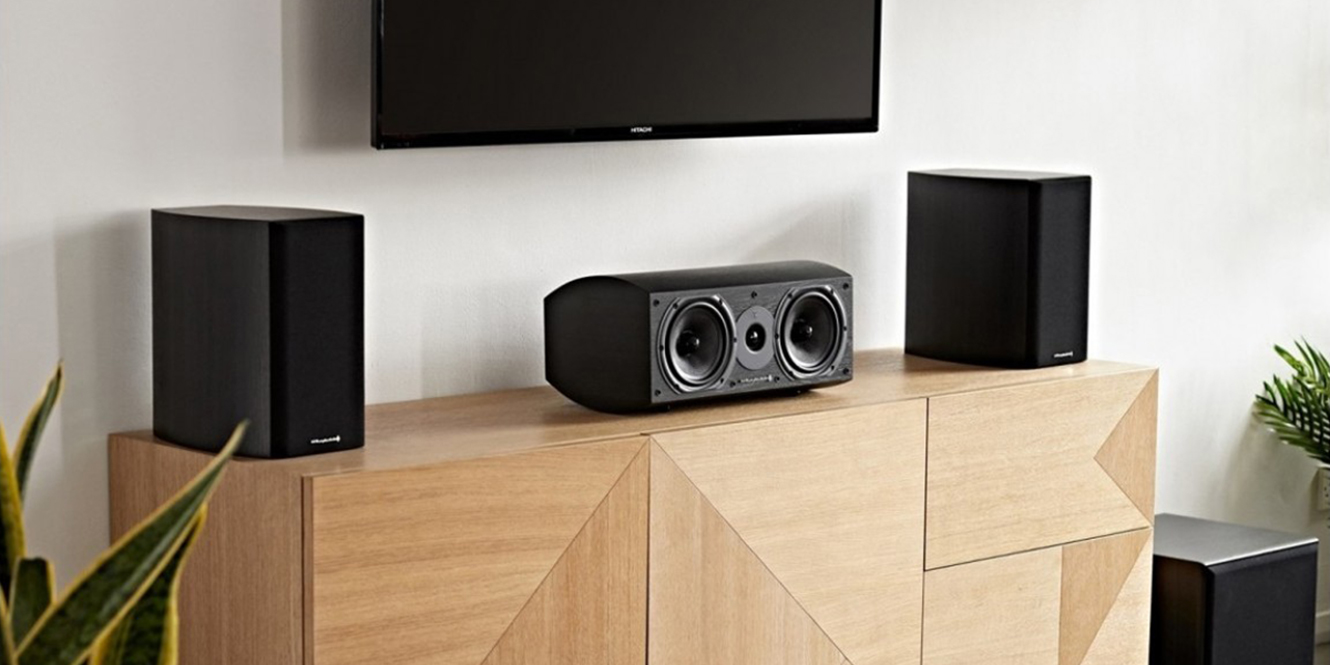
Of course, most of the winners and nominees will eventually be watched at home once their cinema runs end. Which means the living room has to become the cinema. If you missed out on the big screen experience and want to recreate it in your home, you’ll need one of the best surround sound systems to help get you there. I’ve drummed up a few ideas for you below.
In a hurry?
Here are the best of the best.
| JBL MA710 AV Receiver & Wharfedale Diamond 9.1 5.1 Speaker Package, | A great starting system. | Check the current price |
| Hisense HT Saturn 4.1.2 Wireless Sound System | The ultimate plug-and-play wireless system | Check the current price |
| Focal Theva Home Cinema Speaker System Builder | The best value to performance custom home cinema builder | Check the current price |
Why we’ve chosen these systems
Putting together a list like this is always a bit of a balancing act. Home cinema setups can range from full enthusiast-level systems with separate AV receivers and speaker packages, all the way through to simpler plug-and-play options that still deliver proper surround sound without turning your living room into a rack of equipment.
With that in mind, the systems here are ones I personally rate well, either from direct experience or from seeing how they perform in real-world setups. Just as importantly, each one fills a clear role. Some are aimed squarely at enthusiasts who want full control and the ability to expand their setup over time, while others are designed for people who simply want something that works straight out of the box with minimal setup.
Thankfully, surround sound has come a long way since the days of proprietary “home theatre-in-a-box” systems. If you were around in the late ’90s or early 2000s, you’ll probably remember the proprietary DVD player, amp, and speakers bundles. They worked well enough, but upgrade options were practically non-existent.
Modern systems are far more flexible, which means there’s now something to suit almost any room, budget, or level of enthusiasm for home cinema.

The best surround sound systems
1. JBL MA710 AV Receiver & Wharfedale Diamond 9.1 5.1 Speaker Package – The best for hitting the ground running
 Key features
- Extra channels on the receiver to allow you to expand and build on the package, or choose what functionality you want from it
- 110W RMS 7.2 channel setup
- Includes an MM phono input for vinyl enthusiasts
Pros
- Easily upgradable
- Sonically very flexible
- 8K/60Hz or 4K/12Hz pass through
Cons
- Bit bland looking
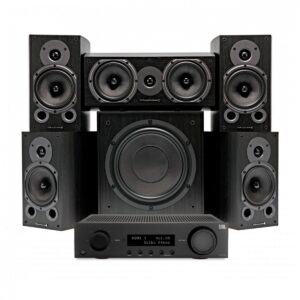
So I’m starting this whole thing off with what I’d look at as the best jumping-off point on our site, something that really caters to anyone and everyone. If you just want to make one purchase and have it be a one-and-done, self-contained system, the JBL MA710 AV Receiver & Wharfedale Diamond 9.1 5.1 Speaker Package is a very easy pick.
Once you’ve got everything set up and run your speaker cable, you’ll end up with something genuinely impressive for not an awful lot of cash.
At the same time, if you’re someone who wants to start with something that has good bones and build on it over time, this is also a great place to begin. Whether that means adding more speakers later to make use of the extra channels, upgrading the speakers gradually, or simply changing the configuration as your setup evolves, this system gives you plenty of room to grow while still being perfectly capable straight out of the box.
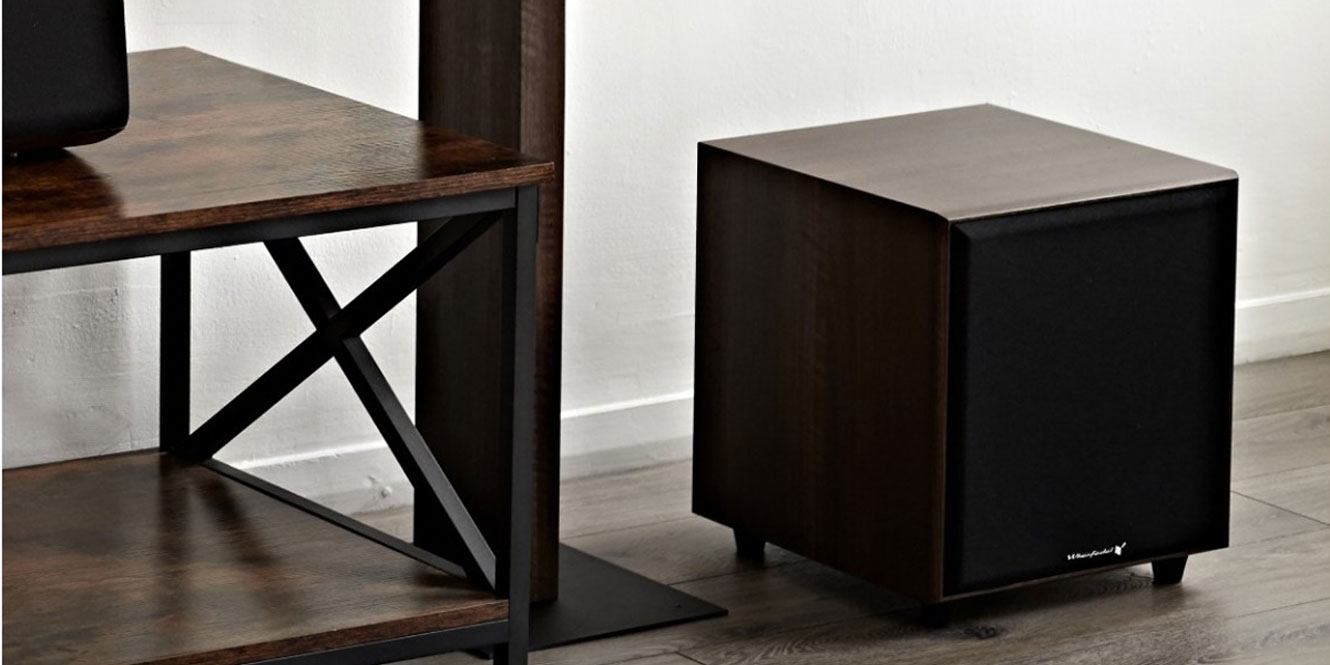
The Wharfedale 9.1 speakers themselves are something of a classic. They’re easy to navigate and listen to for extended periods thanks to their slightly softer, warmer tonality, which makes them very easy to live with day-to-day.
They also feature a front-ported design, which helps give their bass response a bit more direction and presence. As a result, they sound bigger and deeper than you might expect from speakers of this size without ever getting silly or becoming too much. That balance makes them work exceptionally well in most spaces, especially typical living rooms.
They’re also extremely inoffensive in the best possible way, meaning they perform well across a wide range of content, whether you’re watching films, listening to music, or doing a bit of both.
The fact that the package includes a matching subwoofer as well means the low end is properly fleshed out, rather than leaving all the heavy lifting to the speakers themselves. Altogether, it’s a brilliant place to jump in, whether your plan is to keep things simple or gradually expand the system.
2. Monitor Audio Bronze 300 7G 7.1.2 Dolby AV System – The best pre-configured full surround Atmos system
 Key features
- Matching a 7-channel surround system with Atmos speakers and a subwoofer
- Slim-profile on-wall speakers as part of the package
- 15” subwoofer for extra bass extension
Pros
- Choose from aesthetically discreet or striking finish options
- Easy-to-drive speakers that work well with a range of amplifiers
- Excellent bass response and dynamics from all speakers with the new 7th-gen design
Cons
- Only really suitable for larger spaces
Okay, Monitor Audio are a bit of a darling of the home cinema/hi-fi crossover world. Their main bread and butter has always been making hi-fi speakers first and foremost, and every speaker in this package comes from that lineage. The Monitor Audios Bronze series has always been excellent at pulling double duty in both music listening setups and home cinema systems, and that trend very much continues with the latest 7th Generation models.
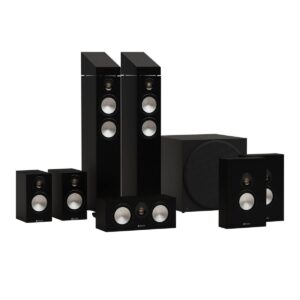
Essentially, what you’re getting in this Monitor Audio Bronze 300 7G 7.1.2 Dolby AV System package is a really comprehensive speaker solution that can handle pretty much every channel you could want in a modern surround setup. The Bronze 300 floorstanders take care of the front left and right channels, giving you a wide and confident front soundstage, while the bookshelf speakers can easily handle side fill duties.
The on-wall speakers work nicely as the rear channels, keeping things tidy and easy to place behind the listening position. Obviously, you can alternate these depending on how your room is laid out, but that’s roughly how I’d piece the system together to get the most out of it.
The Atmos speakers are equally happy sitting on top of the Bronze 300 towers firing upwards, or mounted higher up on the wall or ceiling if you want a more traditional height-channel placement. That flexibility means the system can adapt to different rooms without too much fuss.
Sonically, Monitor Audio speakers tend to lean towards the brighter and more detailed side of things, but not in a way that becomes cold or overly sharp. There’s plenty of clarity in the top end, which really helps with dialogue and subtle effects in films, while the midrange keeps things full and natural. The end result is a system that sounds energetic and precise, but still easy to live with for both films and music.
3. Monitor Audio Bronze 7G On-Wall LCR Speaker Package – The best discreet front stage solution
 Key features
- 6-inch C-CAM mid-bass driver
- New 7G crossover design improves separation
- Visually appealing, very minimalist
Pros
- Slimline wall-mountable LCR setup for upgrading the sound but keeping it discreet
- Down-firing bass ports to avoid wall resonance
- Mountable both vertically and horizontally
Cons
- To keep the clean aesthetic, you’ll want to run your cables in your walls
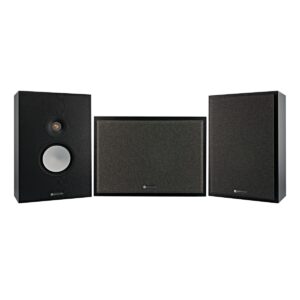
Sticking with Monitor Audio for a moment, the Bronze 7G LCR system is an excellent solution if you’re looking for something minimalist while still wanting to emphasise performance, without compromising the feng shui of your room by adding big speakers or a bulky soundbar. It’s a neat way to upgrade your TV audio while keeping everything visually clean and well integrated into the space.
LCR, rather unimaginatively, stands for Left, Centre, Right, and that’s exactly what you’re getting here: three separate on-wall speakers designed to create a proper front soundstage.
The usual approach would be to mount the left and right speakers vertically, either side of your TV, with the centre speaker mounted horizontally underneath the screen. This gives you the clear dialogue focus of a dedicated centre channel while still maintaining a wide stereo image for music, effects, and soundtrack elements.
Performance-wise, these speakers carry the same character that the Bronze series has always been known for. They’re clear and detailed, leaning slightly towards the brighter side without ever becoming sharp or fatiguing. Dialogue comes through cleanly and naturally, while the mid-bass driver gives enough body to effects and music that things still feel full rather than thin.
All this said, you don’t just have to stop at a simple LCR configuration. You could add another pair of the on-wall speakers and use them as rears, creating a fully discreet surround system that’s both aesthetically matched and sonically consistent.
The only real downside of this type of solution is the cabling. Visible wires trailing up the wall can spoil the clean look a little, so ideally, you’d run the cables inside the wall or through a channel. It might sound like a bigger job than it is, but if you’ve got cavity walls, it’s actually quite manageable, and of course, an installer can always do it for you if you’d rather keep things simple.
4. Hisense HT Saturn 4.1.2 Wireless Sound System – The best plug-and-play solution
 Key features
- Wireless surround speakers with Atmos support
- Sonically tuned by Devialet
- Full Dolby Atmos & DTS:X 3D spatial audio support
Pros
- Compact and powerful
- Multiband wireless configuration to prevent dropouts
- AI room correction software
Cons
- Extra functionality is only available with Hisense TVs
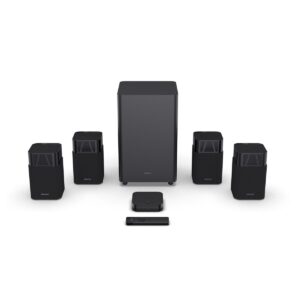
Now to do a complete tonal 180 on products, this Hisense Saturn Wireless System is a self-contained wireless surround solution. Instead of dealing with AV receivers, speaker cable runs, and piecing together a full system, everything you need comes in the box and is designed to work together straight away.
You’ve got a main soundbar handling your front channels, a wireless subwoofer taking care of the low end, and a pair of wireless rear speakers that also include upward-firing drivers for Dolby Atmos height effects. Setup is refreshingly simple by surround sound standards, and once everything is powered on, it links together automatically.
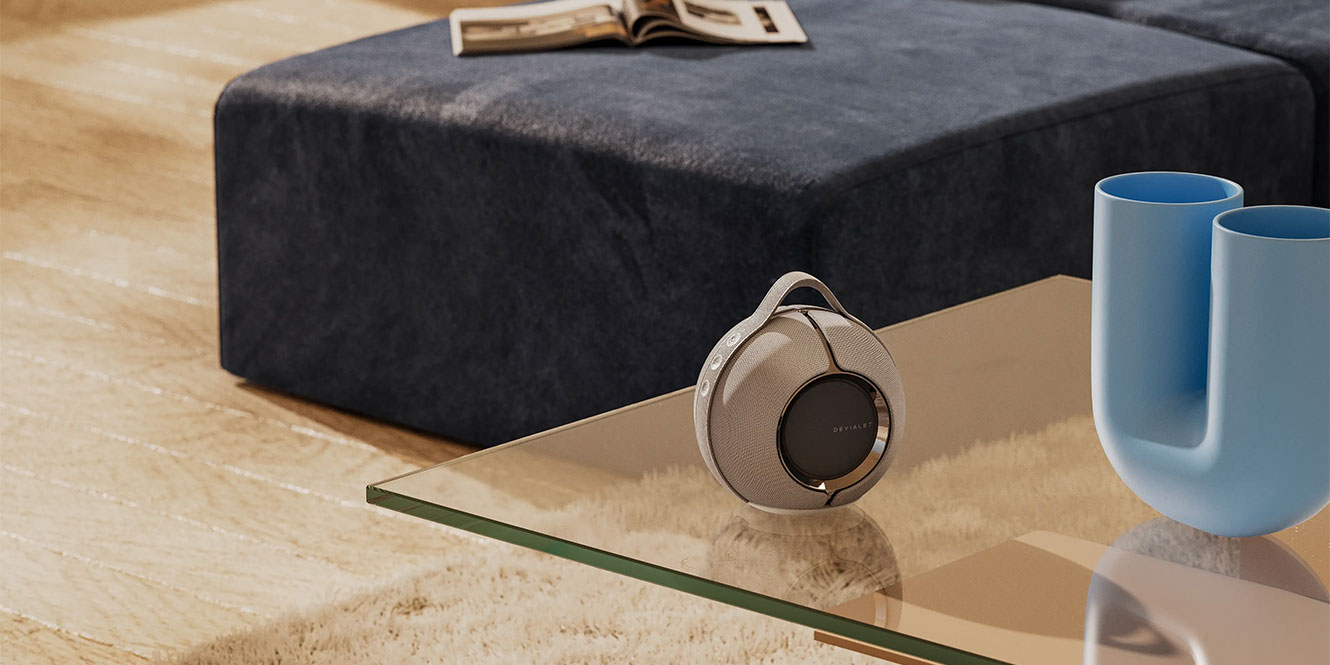
The idea here is convenience without completely sacrificing the immersive side of home cinema. Hisense have partnered with Devialet for the sound tuning, which gives the system a noticeably more refined presentation than you might expect from an all-in-one solution. It’s punchy and energetic when it needs to be, but still keeps dialogue clear and centred so films don’t turn into a wall of noise during busier scenes.
Support for full Dolby Atmos and DTS:X means the system can still make proper use of modern film soundtracks, and the upward-firing drivers help create a sense of height and space that you simply don’t get from a standard soundbar.
Because everything communicates wirelessly, placement is also much more flexible than a traditional surround system. The speakers only need power rather than long cable runs back to an amplifier, which makes the whole system much easier to integrate into a typical living room.
All things considered, this is a great option if you want proper surround sound with Atmos support, but don’t necessarily want the complexity of a full AV receiver setup.
5. Focal Theva Home Cinema Speaker System Builder – The best for high performance, but consider integration and customisability
 Key features
- Custom speaker package configurator allows you to build the package how you like
- Focal Theva N3-D speakers have Atmos speakers built into the top of them, with home cinema use in mind
- Slatefiber driver material provides a dynamic, rich, and balanced listening experience
Pros
- TNF Tweeter technology is borrowed from the previous Aria models (next up in the range)
- Floorstanders feature an in-built lean back into the stand design for improved timing response
- Excellent dynamics and frequency response across the Theva range
Cons
- The optional subwoofer is designed for use with smaller speakers
This one’s a little different from the rest of the systems on this list, because instead of giving you a fixed package, it lets you build the system exactly how you want it.
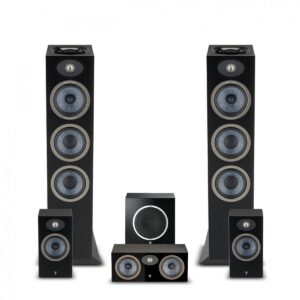
The Focal Theva Home Cinema Speaker System Builder on our site is essentially a configurator that allows you to piece together a full surround setup using speakers from the Theva range, choosing the exact combination that suits your room, listening habits, and overall setup.
The Theva series itself sits in a really nice spot within Focal’s lineup. It’s designed to deliver high-end performance while still being relatively accessible, and the entire range shares the same sonic DNA. You’ve got options ranging from compact bookshelf speakers and dedicated centre channels, all the way through to the larger floorstanding models like the Theva N3-D, which are specifically designed with home cinema in mind.
The N3-D is particularly interesting because it features integrated Dolby Atmos drivers built directly into the top of the speaker, meaning you can get proper height effects without needing to mount separate Atmos speakers on the ceiling. It keeps the system cleaner and easier to integrate while still giving you that immersive overhead dimension modern film soundtracks are designed for.
Across the range, Focal’s Slatefiber drivers give the speakers a really dynamic and balanced character, with plenty of detail and energy without sounding overly sharp. Combined with the TNF tweeter technology borrowed from the Aria range, the overall presentation is lively, precise, and very well suited to cinematic soundtracks.
Because this is a builder rather than a fixed bundle, it does require a bit more thought when putting the system together. The upside is you end up with something perfectly tailored to your space. And if you do get stuck or want a bit of guidance, you can always give us a call on 01706 878444, and we’ll help put together the ideal package for you.
6. ELAC Debut F6.2 5.1 Speaker Package – The best value floorstanding speaker package
 Key features
- Upgraded Aramid-Fibre Woofers
- 200w 10-inch powered subwoofer
- Dual driver centre speaker
Pros
- Classic styling to blend into rooms more easily
- Front ported centre speaker and bookshelf rears for more low-end directionality
- 3-way floorstanding speakers
Cons
- Floorstanders are rear ported
The ELAC Debut series has always been a bit of a go-to recommendation when someone wants a proper surround system without spending a small fortune, and this ELAC Debut F6.2 5.1 package is a great example of why.
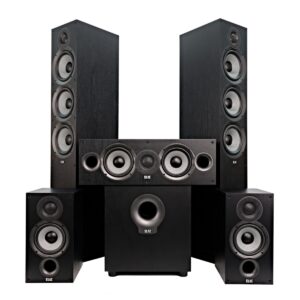
It’s a fairly traditional layout with floorstanders up front, a dedicated centre channel, compact bookshelf speakers handling the rear duties, and a powered subwoofer taking care of the low end. In other words, everything you need for a full surround setup without having to piece things together yourself.
One of the strengths of the Debut range has always been its balance between performance and practicality. The speakers feature ELAC’s upgraded aramid-fibre woofers, which give them a nice mix of control and punch in the lower frequencies, helping effects and music feel full without becoming overly boomy.
The 3-way design of the F6.2 floorstanders also helps keep the soundstage organised, with dedicated drivers handling different parts of the frequency range so things don’t get congested during busier scenes.
The centre speaker deserves a bit of credit as well. Dialogue is often where more affordable surround systems can fall down, but the dual-driver centre design helps keep voices clear and anchored to the screen, which makes a big difference when you’re watching films or TV.
The included 10-inch powered subwoofer rounds everything off nicely, giving explosions, soundtracks, and low-frequency effects the weight they need without overpowering the rest of the system.
Stylistically, the speakers keep things fairly classic and understated, which means they tend to blend into most rooms without drawing too much attention to themselves.
All in all, it’s a really solid choice if you want a traditional surround setup that performs well without demanding a huge budget or a massive amount of space.
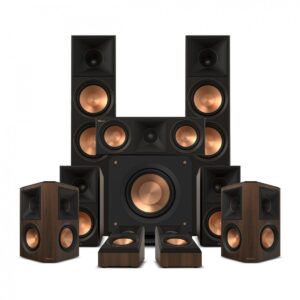
7. Klipsch Reference Premiere Series Speaker System Builder – The best for bright, lively cinema
 Key features
- Custom Klipsch configurator
- Features the LTS titanium diaphragm tweeter with Tractrix horn
- Cerametallic woofers minimise distortion and improve power handling
Pros
- Configurable between 5.0 and 7.4.4 channels
- Vented tweeter design reduces standing wave behind the diaphragm
- Klipsch’s Horn tweeter design has excellent detail and dispersion
Cons
- The sound profile can be a little marmite
The Klipsch Reference Premiere Speaker System Builder is another example of where we’ve leaned into the configurator approach rather than offering a fixed package. Much like the Focal builder earlier, this lets you piece together a surround system using speakers from the Reference Premiere range, allowing you to tailor the setup to your room and how far down the home cinema rabbit hole you want to go.
Klipsch systems are also capable of scaling quite dramatically. Depending on how ambitious you want to be, you can configure anything from a fairly straightforward 5.0 surround setup all the way through to something much more involved, like 7.4.4, which brings multiple height channels and subwoofers into the equation.
That kind of flexibility makes the builder particularly useful if you’re planning a dedicated cinema room or want the option to expand the system over time.
A big part of the Klipsch identity comes from their LTS titanium diaphragm tweeter paired with the signature Tractrix horn. It’s a design they’ve refined for years, and it gives the speakers a very distinctive presentation. The horn-loaded tweeter helps project sound efficiently into the room, which results in excellent clarity and detail, particularly with dialogue and fast-moving effects in films.
Meanwhile, the Cerametallic woofers help keep distortion low while maintaining strong power handling, meaning the system can get impressively dynamic when pushed.
Now, it’s worth saying that Klipsch speakers can be a little bit marmite in terms of their sound profile. They tend to be lively, energetic, and forward rather than soft and relaxed. For home cinema, though, that character often works extremely well, giving soundtracks a real sense of impact and presence.
And as with the other builder on our site, if you’re unsure where to start, we’re always happy to help put together a configuration that suits your space.
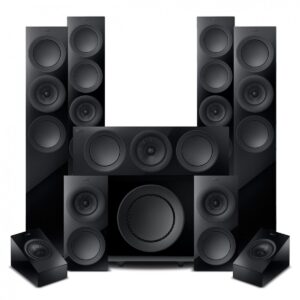
8. KEF R Meta Series Speaker System Builder – The best for extremely high performance in large rooms
 Key features
- KEF premium home cinema custom configurator
- Build a 7.4.4 system suitable for true immersive home cinema rooms
- Meta Absorption Material used throughout the whole range
Pros
- KEF’s proprietary Uni-Q driver array for greater control and crossover cohesion
- Acoustically apparent grilles (if you don’t like the driver look)
- MAT Technology reduces 99% of unwanted sound from the rear of the drivers
Cons
- Not exactly cheap
At the top end of things, we have the KEF R Meta Series Speaker System Builder, which is very much aimed at people looking to put together a serious home cinema setup rather than just upgrading their TV audio.
Much like the other builders we offer on the site, this configurator lets you piece together a system using speakers from the R Meta range, meaning you can tailor the package to your room size, layout, and how ambitious you want to be with the overall system.
The R Meta lineup sits firmly in KEF’s premium territory, and it’s designed with high-performance listening in mind. That makes it particularly well-suited to larger rooms or dedicated cinema spaces, where speakers need the headroom and control to properly fill the space without sounding strained.
Through the builder, you can configure anything from a more conventional surround setup right up to a 7.4.4 Atmos configuration, which gives you a full immersive layout with multiple subwoofers and height channels.
One of the defining features of the R Meta series is KEF’s Uni-Q driver array, which places the tweeter directly in the centre of the midrange driver. The idea behind this is to improve timing and dispersion, allowing the sound to radiate more evenly into the room while keeping everything tightly aligned.
Alongside that sits KEF’s Meta Absorption Material (MAT) technology, which absorbs around 99% of unwanted sound from the rear of the driver, helping to reduce distortion and keep the overall presentation extremely clean.
The result is a system that sounds incredibly precise and controlled, with excellent detail and spatial imaging. It’s not exactly cheap, but if you’re looking to build a genuinely high-end home cinema system that can scale into something truly immersive, this configurator gives you the tools to do it properly.
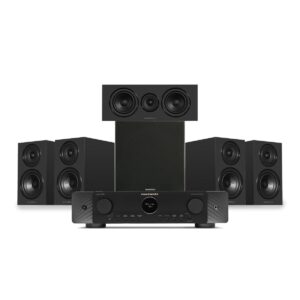
9. Marantz Cinema 70s Receiver & Wharfedale Diamond 12.1i 5.1 Package – The best slimline and compact AVR package
 Key features
- Slimline AVR with compact bookshelf speakers
- 8K/60Hz HDMI support with 4K/120Hz and 4K/1080p upscaling
- Denon Heos integration
Pros
- Slimline AV receiver makes it easy to house in limited cabinet spaces
- Compact bookshelf speakers for the rear and front L/R keep uniformity through the sound stage
- Matched dual woofer centre speaker for dialogue clarity
Cons
- The speakers limit the amp’s performance a little
Rounding things off, we have a system that’s ideal if you want a proper AV receiver setup but don’t necessarily have the space for a full-sized unit and large speakers everywhere. The Marantz Cinema 70s paired with the Wharfedale Diamond 12.1i 5.1 package is a really tidy solution for anyone building a surround system in a more compact room or living space.
The Cinema 70s receiver is one of Marantz’s slimline models, which means it keeps the same core functionality you’d expect from a modern AVR but in a much shallower and more cabinet-friendly design. That makes it much easier to fit into typical TV units where a full-sized receiver might struggle.
Despite the smaller footprint, it still supports 8K/60Hz HDMI, along with 4K/120Hz passthrough and video upscaling, so it’s perfectly happy sitting at the centre of a modern home cinema setup with streaming boxes or current-gen consoles.
On the speaker side, the Wharfedale Diamond 12.1i speakers keep things consistent across the soundstage. Using compact bookshelf speakers for both the front and rear channels helps maintain a nice tonal uniformity around the room, which can sometimes be lost when mixing different speaker sizes.
The dual-woofer centre speaker also does a solid job of keeping dialogue clear and anchored to the screen without sounding thin or underpowered.
Sonically, Wharfedale speakers tend to lean towards a slightly warmer and more relaxed presentation, which makes them very easy to listen to over longer film sessions. Effects still have weight, but nothing feels overly aggressive or fatiguing.
Overall, this is a really sensible option if you want a proper AVR-based surround system in a compact space, combining Marantz’s slimline design with a very approachable and well-balanced speaker package.
5.1 vs. Dolby Atmos
If you’re starting out with home cinema audio, one of the first questions you’ll run into is whether to build a traditional 5.1 surround system first or jump straight into Dolby Atmos. The short answer is that both have their place, but they focus on slightly different things.
A 5.1 system is the classic surround setup and still forms the foundation of most home cinema systems today. The “5” refers to five speakers – front left, centre, front right, and two rear surrounds – while the “.1” refers to the subwoofer handling the low frequencies. This layout creates the sense of sound moving around you horizontally, which already makes a huge difference compared to TV speakers or stereo setups.
For most people, building a solid 5.1 system first is the most sensible starting point.
Dolby Atmos, on the other hand, adds a vertical element to the sound. Instead of audio just moving around the room, Atmos introduces height channels, either through ceiling-mounted speakers or upward-firing drivers that bounce sound off the ceiling. This allows soundtracks to place effects above you as well as around you, which can make films feel noticeably more immersive.
Basically, a strong 5.1 base system will always do the heavy lifting. Once that’s in place, adding Atmos speakers is usually the next step if you want to push the system further into full cinematic territory.
How to choose the best surround sound system for your space
Before jumping straight into buying speakers, it’s worth taking a moment to think about how the system will actually fit into your room and how you plan to use it. Home cinema setups can range from simple plug-and-play systems to full multi-speaker installations, so a bit of planning up front can make a big difference to how well everything works once it’s installed.
Room size and layout
The size and shape of your room will play a big role in the type of surround system that makes sense. Smaller living rooms often work better with compact speakers or soundbar-style systems with wireless surrounds, while larger rooms can take advantage of full floorstanding speaker setups that are capable of filling more space.
Speaker placement is also important. Traditional surround systems rely on having speakers positioned around the listening area, so it’s worth considering where rear speakers, subwoofers, and height channels could realistically go.
Wired vs. wireless systems
One of the main decisions is whether you want a traditional wired system with an AV receiver or a more plug-and-play wireless setup.
AV receiver systems usually offer the best performance and flexibility, allowing you to upgrade speakers or expand the system later on. The trade-off is that they involve more setup and cable management.
Wireless surround systems, on the other hand, are far simpler to install. Rear speakers typically only need power rather than long speaker cable runs, which makes them much easier to integrate into a normal living room.
Speaker size and aesthetics
Not everyone wants large speakers dominating the room, and thankfully, there are now plenty of discreet options available. On-wall speakers, compact bookshelf speakers, and slimline soundbars can all deliver good surround sound without taking over the space.
It’s worth thinking about how visible you want the system to be, especially in shared living spaces.
Expandability and future upgrades
Some systems are designed to be fully self-contained, while others allow you to expand over time by adding extra speakers, subwoofers, or Atmos height channels.
If you think you might want to build a larger system in the future, starting with a receiver-based setup can give you much more flexibility down the line.
Budget and performance expectations
Finally, it’s worth deciding early on how far you want to go with the system. A well-chosen 5.1 system can already deliver a huge improvement over TV speakers, while larger Dolby Atmos setups are aimed more at dedicated cinema spaces.
The key is finding a system that fits both your room and how you actually watch films at home.
FAQs
What’s better, 7.1 surround or Dolby Atmos?
Dolby Atmos is generally considered better than 7.1 surround because it adds height channels that create a more immersive three-dimensional sound experience. Traditional 7.1 only expands speakers around the listener. When upgrading a 5.1 system, adding Atmos height speakers often delivers a bigger improvement than moving to 7.1.
Are soundbars better than surround sound?
Soundbars are not better than surround sound systems when true immersion and room-filling audio are the goal. Soundbars are compact and easy to install, making them ideal for simple setups. Surround sound systems use multiple speakers placed around a room to deliver more accurate directional audio.
What do surround sound numbers mean?
Surround sound numbers mean the number of speakers and subwoofers used in an audio system layout. The first number represents standard speakers placed around the listener. The second number refers to subwoofers for bass, and a third number, when present, indicates height channels used in formats like Dolby Atmos. For example, 7.4.4 means 7 surround speakers, 4 subwoofers, and 4 Atmos speakers.
Final thoughts
At the end of the day, the best surround sound system is always going to be the one that fits your room, your budget, and how far you actually want to go with your home cinema setup. For some people, that might mean a simple plug-and-play system that’s up and running in half an hour, while for others it’s the start of a much bigger project involving receivers, speaker placement, and carefully building a system over time.
The good news is that there are now far more options available than there used to be. As you’ve seen from the list above, the best surround sound systems can come in many different forms. Some are compact and discreet, designed to blend neatly into a living room, while others are more ambitious setups aimed at dedicated cinema spaces with multiple speakers and height channels.
A solid 5.1 system is still one of the best places to start, and from there you can always expand with additional speakers or Atmos channels if the bug really bites.
Ultimately, the goal isn’t just louder sound, it’s more immersive sound. When a system is set up properly, it stops feeling like you’re simply watching a film and starts feeling like you’re sitting inside it, which is exactly what good home cinema should do.





0 Comments