
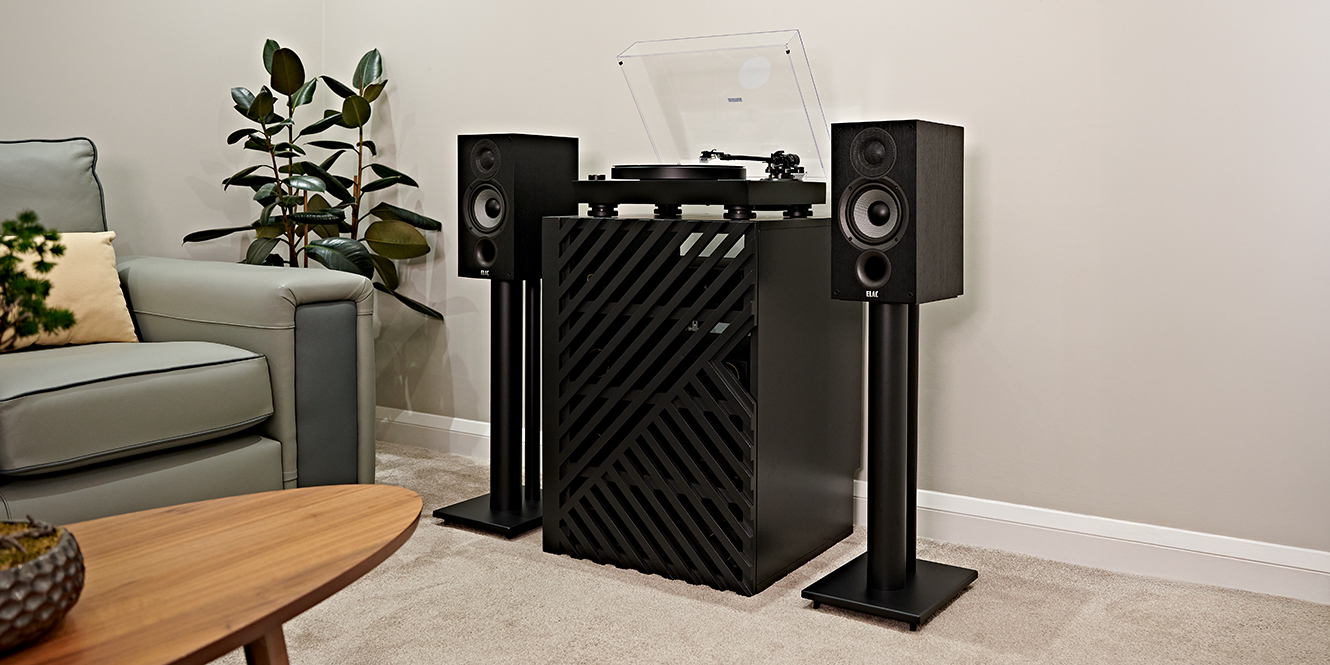

There comes a time in every audiophile’s life when they must confront a harsh truth: Plonking your speakers on a wobbly side table next to a houseplant and a scented candle does not count as acoustic optimisation.
You’ve invested in decent speakers, fiddled with toe-in angles, and maybe even downloaded test tones because some bloke in a decade-old forum thread said it’d fix… something. Imaging? Phase coherence? Who knows – but it sounded convincing at the time.
But if your speakers are wedged into an alcove or sharing shelf space with your amp, room reflections and vibrations will start to affect performance. Resonance is the killer of clarity. Reduce it with a speaker stand, and you’ll notice tighter bass, clearer detail, and a more coherent stereo image.
And let’s be honest – for a lot of us, we just want something that looks good under our speakers. If a pair of stands can elevate your sound and pull the room together, that’s peak.
So, just for you, we’ve rounded up the six best speaker stands, covering a range of budgets, styles, and setups. Enjoy.
In a hurry?
Here are our top picks for best, budget, and compact:
| Atacama Moseco 6 Speaker Stands | Best all-round speaker stand, with fillable columns and cable routing—balancing sound quality, design, and value effortlessly. | Check the current price |
| AVCOM 600mm Speaker Stands | A standout budget speaker stand, with a steel frame and flat-pack design, delivering reliable performance without unnecessary extras or cost. | Check the current price |
| IsoAcoustics Aperta 155 Stands | The best desktop speaker stand, with an isolating aluminium frame and tilt adjustment that improves clarity, focus, and nearfield performance. | Check the current price |
Why we’ve chosen these speaker stands
Good speaker stands do a few key things:
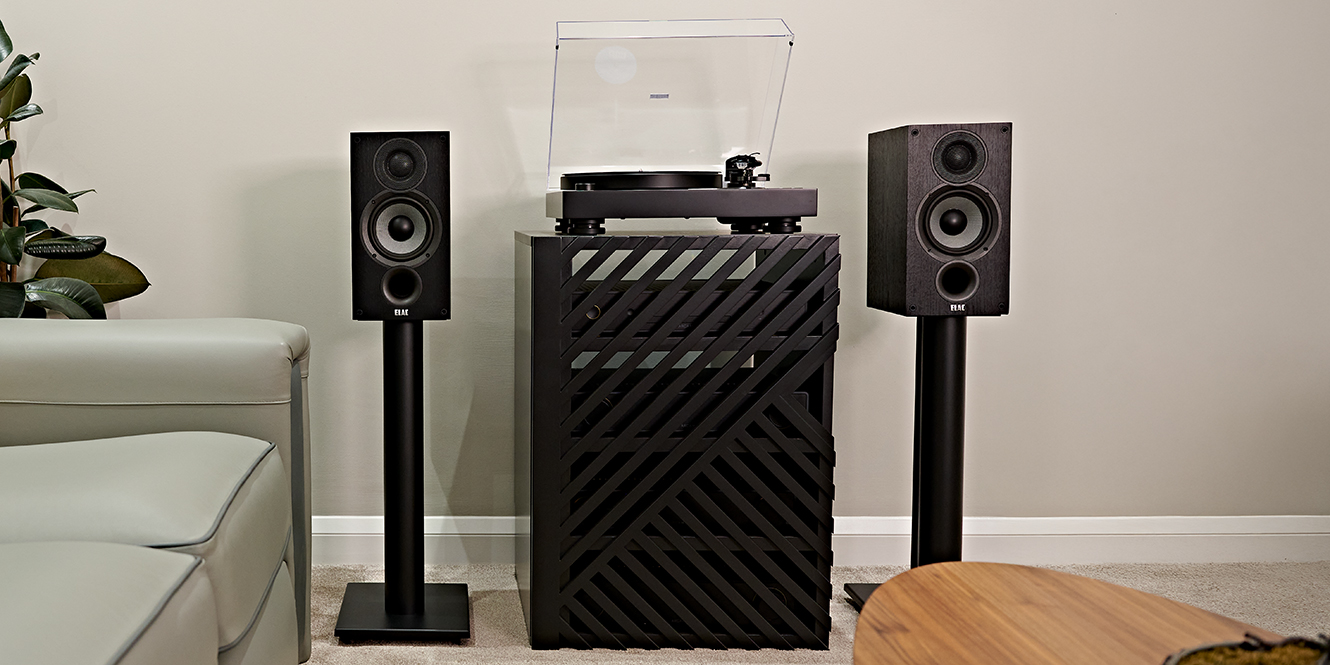
- Raise your speakers to the right listening height
- Provide a stable base so you’re not worrying about tipping
- Complement your setup without overshadowing it
That’s it – a practical design that improves both sound and aesthetics.
Some of the stands we’ve chosen offer extra features like isolation feet, tilt adjustment, or fillable columns to reduce vibrations. Others keep things simple, focusing on core performance at a reasonable price.
To increase the chances they’ll work with your setup, we’ve also focused on universally compatible designs. This means stands that suit a wide range of bookshelf and compact speakers without locking you into one brand, giving you flexibility now and room to upgrade later.
That said, if you’re buying stands for a specific model, it’s always worth checking whether the manufacturer offers a purpose-built option. These often match visually and may include tuned proportions or screw mounting points, unlike universal stands, which typically rely on the speaker’s weight to keep it in place.
We’ve added a couple of desktop-friendly options too, ideal for studio use or smaller setups where space is limited but proper speaker isolation is still a priority.
The best speaker stands
1. Atacama Moseco 6 Speaker Stands – The best all-round stand
 Key features
- Height: 615 mm (excluding floor spikes)
- Max load: 7.5 kg (per stand)
- Cable management: Yes
Pros
- What HiFi’s best speaker stand for ten consecutive years
- Twin-column structure with fillable and cable-management poles
- Affordable and high build quality – excellent value for money
Cons
- The weight limit and compact top plate may not suit heavier speakers
The Atacama Moseco 6 Speaker Stands have long been a favourite among hi-fi fans. With over a decade as What Hi-Fi?’s choice for best speaker stands, they’re proven performers that still hold their own against newer models.
There’s just something about the design. Twin carbon steel columns offer excellent isolation, helping your speakers deliver tighter, more focused sound. The front column can be filled with Atabites (Atacama’s inert filler, sold separately) to reduce vibration, while the rear column neatly hides cables. A natural bamboo base adds rigidity and a warm, understated finish that pairs well with most interiors or Atacama’s hi-fi racks.
Need a different height? The range includes the Moseco 5 (515 mm), Moseco 7 (715 mm), and the towering Moseco 10 (1015 mm). For heavier speakers or more demanding systems, the NeXXus Hi-Fi or NeXXus Pro Studio ranges are worth exploring – but for most setups, the Moseco 6 hits the sweet spot. A larger top plate is available too, in case your speakers need a bit more support.
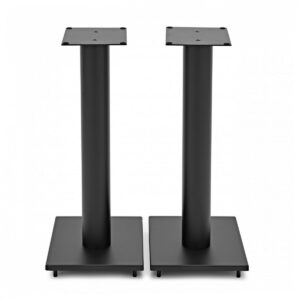
2. AVCOM 600mm Speaker Stands – The best budget stand
 Key features
- Height: 603 mm (with floor spikes)
- Max load: 20 kg
- Cable management: Yes
Pros
- Flat-pack and easy to assemble
- Steel construction with 20kg max load
- Compatible with filler for added stability
Cons
- Not much to complain about at this price point
If you’re not after anything fancy and just want an affordable speaker stand that does the job, the AVCOM 600mm is an easy pick. It arrives flat-packed for convenience and assembles quickly – no fuss, no drama. Once built, it feels stable, even without premium materials or branding.
The steel frame supports up to 20 kg per stand, which is more than enough for most bookshelf speakers. It’s also compatible with filler, so you can add extra mass to help reduce vibration – a nice bonus at this price point.
You won’t find the same level of finish or extras you’d get with more expensive models, and it’s slightly lighter than some higher-end options. But for the money, it’s hard to fault.
If you’re a first-time hi-fi buyer, a casual listener, or just looking for something simple and effective, this stand offers excellent value and a solid starting point.
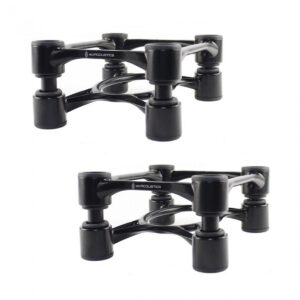
3. IsoAcoustics Aperta 155 Stands – The best desktop stand
 Key features
- Height: 76 mm
- Max load: 15.9 kg
- Cable management: No
Pros
- Adjustable tilt for more precise speaker positioning
- Excellent isolation improves clarity and imaging
- Compact, low-profile footprint fits most desktops
Cons
- Higher price than a typical desktop stand
The IsoAcoustics Aperta 155 are made for desktop setups, giving your speakers or studio monitors the support they need to sound their best. Designed by isolation specialists, these stands reduce vibration and smear, helping to tighten bass and sharpen stereo focus, particularly in nearfield listening environments.
Their low-profile aluminium frames fit comfortably on most desks, while the built-in tilt adjustment (up to 6.5°) lets you angle your speakers more precisely toward your ears. They’re an excellent choice for home mixing, desktop listening, or compact setups where space is limited but sound quality still matters.
They do cost more than basic desktop risers, but the sonic improvement is real, and something you’ll notice every day.
If you’re working with larger monitors, the Aperta 200 offers the same design with a higher weight capacity. And for taming low-end resonance, the Aperta SUB Stand brings the same isolation benefits to subwoofers.
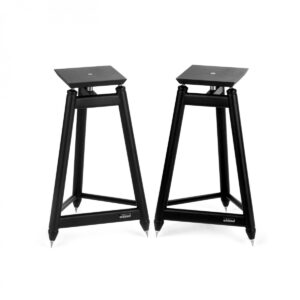
4. Solidsteel SS-5 Speaker Stands – The best premium stand
 Key features
- Height: 525 mm
- Max load: 40 kg (per speaker)
- Cable management: No
Pros
- Hand-welded steel tripod frame for stability and rigidity
- Decoupled MDF top plate with ball bearings to reduce resonance
- Fillable legs for mass damping
Cons
- Premium price reflects the boutique build
The Solidsteel SS-5 represents the core of Solidsteel’s long-standing approach to speaker support – rigid, resonant-free, and built with purpose. Each tripod frame is hand-welded in Italy and designed to minimise contact with the floor, while the MDF top plate is mechanically decoupled from the frame using stainless steel ball bearings, helping to reduce energy transfer between the speaker and stand.
The tripod structure adds an extra layer of practicality, too, particularly for uneven floors where three points of contact provide better stability than four. The hollow steel legs can also be filled with damping material to increase mass and reduce vibration. While the price reflects its premium construction, you’re getting a one-time purchase that’s built to perform and last.
Need a different height? The SS-6 (625 mm) and SS-7 (725 mm) offer the same acoustic benefits in taller formats, better suited to varied listening positions.
5. AVCOM Large Desktop Speaker Stands – The best budget desktop stand
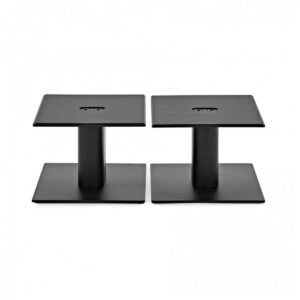 Key features
- Height: 120 mm
- Max load: TBC
- Cable management: No
Pros
- Compact, space-saving footprint for desk setups
- Anti-slip mats keep speakers stable and in place
- Excellent value at the entry-level price point
Cons
- Height is fixed and non-adjustable
These AVCOM Desktop Stands are a simple, cost-effective upgrade that can make a real difference to your listening setup. They’re perfect for desktop use or smaller stereo systems where you want to lift your speakers off the surface to reduce unwanted vibration, but where full-size floorstands aren’t practical.
They’re compact overall, but the wide square footprint adds stability and helps prevent tipping. Anti-slip mats are attached for extra grip, and the steel construction is solid. There’s no height adjustment, but at this price, it’s hard to complain. Assembly is quick and straightforward.
Both the medium and large sizes follow the same straightforward design, with different top plate dimensions to suit more speaker types. If you’re after a clean, affordable way to get your speakers off the desk or maybe even a media cabinet or credenza, they’re a smart place to start.
6. Norstone Alva Speaker Stands – The best wooden stand
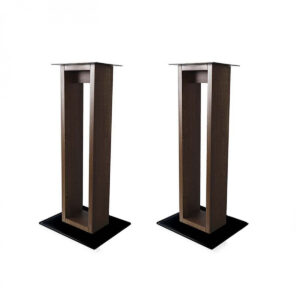 Key features
- Height: 600 mm
- Max load: 20 kg
- Cable management: No
Pros
- Weighted base and robust build for added stability
- Wooden MDF construction adds natural resonance control
- Aesthetic design is visually unique
Cons
- MDF may not isolate as well as metal and is not fillable
The Norstone Alva is a stylish alternative to the usual metal stands you see on the market, with a design that feels more at home in living spaces. Built from MDF with a tempered glass base, it’s a dense platform and helps control resonance naturally – an advantage of wooden materials when used correctly.
The construction doesn’t allow for mass loading, and MDF won’t isolate quite as well as steel. Still, the trade-off is a warmer aesthetic and a stand that visually complements home setups where steel might look too industrial. Speaker weight is worth checking too – 20 kg per stand is fine for most bookshelf models, but bulkier designs might need more support.
For a wooden stand with a considered visual and acoustic design, the Alva ticks the right boxes. It’s a neat option if you’re looking for something different without compromising stability or sound positioning.
How to choose the best speaker stands for your setup
The best way to choose speaker stands is to start by sitting in your usual listening position. Get comfortable, sit naturally – you wouldn’t suck your gut in while getting measured, and the same logic applies here. The more natural your posture, the better the fit will be.
Measure up
Once you’re sitting comfortably, measure the distance from the floor to your ears. Your speaker stands should raise the speaker’s tweeter to roughly that height. For example, if your ears are one metre off the ground and your speaker’s tweeter is 30 cm from its base, look for stands around 70 cm tall.
Most bookshelf speaker stands fall between 50 cm and 75 cm, with 60–65 cm often hitting the sweet spot. Taller stands – around 90 cm – are usually designed for rear surround speakers in home cinema setups, not stereo listening.
Picture the layout
Now, visualise your space:
- Form an equilateral triangle between your head and each speaker for balanced imaging
- Leave room behind and to the sides of each speaker to minimise surface reflections and bass bloom
Consider the details
- Weight rating – Make sure the stand can support your speakers safely
- Floor type – Use spikes for carpet, rubber feet or shoes for hard flooring
- Fillable columns – Some stands allow you to add filler to reduce resonance
- Cable management – Useful for tidy setups, especially in living rooms or multi-use spaces
- Assembly – Some stands are quick to build, others may require a bit more effort
In general, the more you spend, the more refinements you’ll get – but even entry-level stands can offer great results if they get the fundamentals right.
FAQs
What is the best material for speaker stands?
The best material for speaker stands is generally metal, particularly steel. Due to its superior vibration resistance, it ensures greater sound clarity as well as structural integrity. Wood is also used, but it’s more prone to colouration and vibrations.
Are heavier speaker stands better?
Heavier speaker stands are considered better because the added mass helps isolate the speakers. This improves audio precision and bass response. Weight also prevents accidental knocking, toppling, and movement during playback.
What is the best speaker setup?
To achieve the best speaker setup for a stereo system, focus on placement, symmetry, and stand optimisation. Place speakers in an equilateral triangle with the listener, toe them in slightly, position them 30–60cm from walls, and align tweeters to ear level using stable, filled stands.
Final thoughts
The world of speaker stands can feel like a rabbit hole once you start climbing the price ladder. You begin to wonder how much difference there really is – and whether you’re about to spend more on stands than on speakers.
But it doesn’t have to be complicated. If you’re just getting started, there are plenty of excellent options from trusted manufacturers, many offering a choice of heights to suit your setup. As long as the stands are stable and include some basic isolation, like rubber pads or carpet spikes, you’re already giving your speakers a far better platform than a bookshelf, side table, or stack of old magazines.
And if you’ve invested in higher-end gear, going premium is a perfectly valid move. Better materials, mass-loading options, and improved engineering can help your speakers sound their best.
The best speaker stands are the ones that support your system without overcomplicating things, so you can focus your upgrades where they matter most: your amp, DAC, turntable, or speakers themselves. Need help choosing your next upgrade? We’ve written plenty. Explore our hi-fi guides to see where your money goes furthest.





0 Comments