

Bass is something everyone appreciates in one way or another. It might be the overwhelming rumble of a techno or house set, the tight, percussive thump of a Meshuggah live album, or the warm, steady presence that rounds out a bit of yacht rock. Whatever the style, bass plays a big role – and it’s one of the hardest things to get right.
That’s especially true with Bluetooth speakers. The market is saturated; plenty of models promise deep bass, but few actually deliver anything satisfying or controlled. Luckily, I’ve spent a lot of time with Bluetooth speakers – probably more than is reasonable. So if you’re after proper low-end response without sacrificing the mids and treble, you’re in the right place.
Here’s my pick of the best Bluetooth speakers for bass – each one offering genuinely satisfying low-end without losing sight of the overall sound.
In a hurry?
Here are our top three picks:
| JBL Flip 7 | Compact, powerful, and well-rounded sound, the absolute perfect benchmark. | Check the current price |
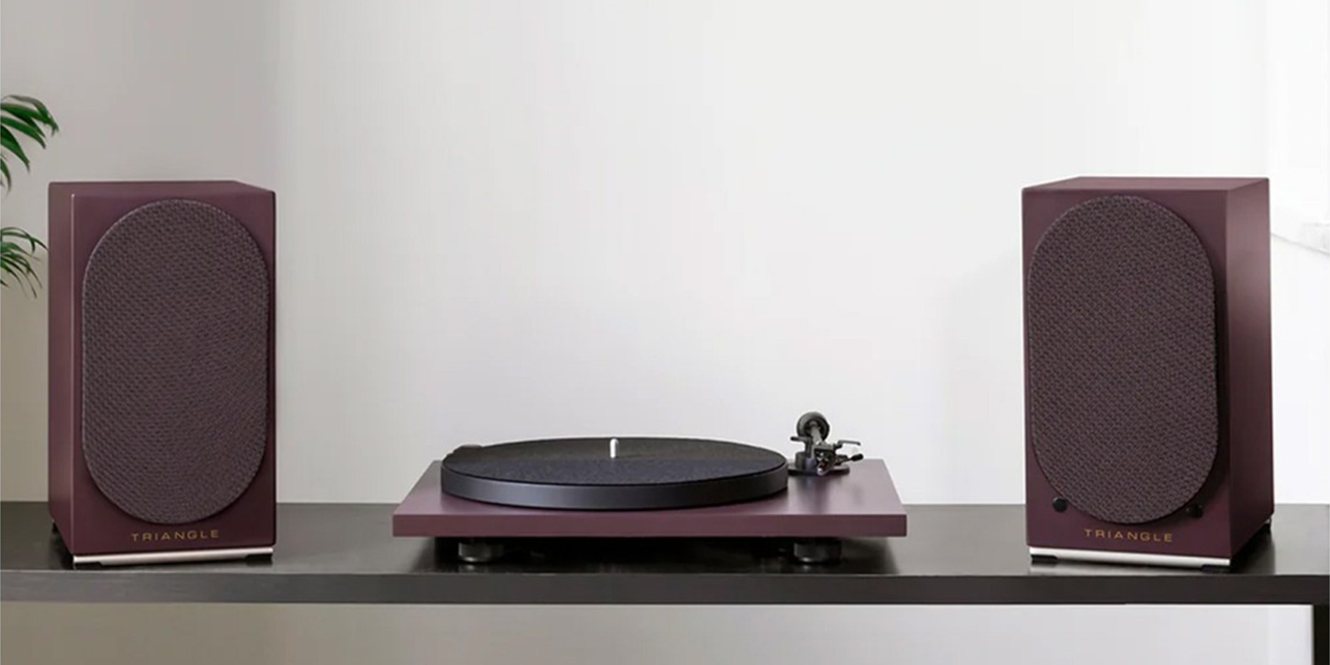
| Triangle AIO Twin | Excellent sound stage, plenty of bass response, and features built-in network streaming | Check the current price |
| JBL Party Box 320 | More bass than you could ever need, loud enough for 90% of situations. | Check the current price |
Why I’ve chosen these Bluetooth speakers
I’ve picked out these speakers based on actual hands-on experience. The Bluetooth speaker market is, frankly, wildly oversaturated. You can pick something up for a fiver or spend thousands on a high-end design piece – and sound quality doesn’t always scale with the price. With so many options out there, it’s easy to end up with a speaker that’s all hype and no substance.
This list focuses on bass, but not in the one-note, overblown way some manufacturers approach it. I’ve revisited the Bluetooth speakers I’ve used, tested, or spent serious time listening to, and thought carefully about how the low-end actually feels. Does it hit in the right way? Does it complement the rest of the sound, or does it just overpower everything?
I’ve been careful to avoid anything that leans too far into bass at the expense of balance. A good speaker should give you punch and depth in the low-end, while still keeping vocals clear and instrumentation detailed. Everything on this list achieves that – solid bass response without turning the rest of your music into a blur.
For context, here are the tracks I typically use to test bass response:
- Skrillex: Tears / Rumble
- Andrea Chahayed: Belong / The Words
- Meshuggah: Rational Gaze (Ophidian Trek Live)
- Tom Misch & Yussef Dayes: Nightrider
- Crosby, Stills & Nash: Just a Song Before I Go
- Amelie Lens: Breath
- Bongbeck: Wintersun (the whole EP)
The best Bluetooth speakers for bass
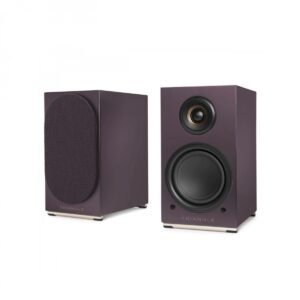
1. Triangle AIO Twin Active Speakers (Pair)
 Key features
- 24-bit/192 kHz high-resolution audio streaming
- Built-in phono stage for turntables
- Bluetooth 5.0 with aptX HD support
Pros
- Hi-fi grade sound quality with Bluetooth convenience
- Wide connectivity, including optical, USB, and sub out
- Stylish finish with multiple colour options
Cons
- Not the loudest or the most bass-centric, but very well balanced
I’ve started the list with these as they are genuinely one of my favourite speakers on the market. I have a real soft spot for them; they serve as a kind of mnemonic propinquity for me when it comes to hi-fi. Triangle made the first speaker I ever heard, where I thought, OK, I actually hear something special here.
The Triangle AIO Twin is a continuation of the LN01A model, which was the best bookshelf Bluetooth speaker you could buy at the time. It keeps the same core speaker performance but adds some excellent extras. Most notably, it has the Triangle AIO streamer built in, along with an optical connection, which essentially turns it into a much more well-rounded product.
The overall sonic presentation of the AIO Twin is excellent and very well balanced across all frequency ranges, with a bass extension that is deep and controlled without becoming overpowering. They perform brilliantly on stands, shelves, side tables and even wall mounts. Honestly, I struggle to fault these speakers as they are simply excellent.
Their size allows them to sit gracefully in almost any setup, yet the performance they deliver is something to behold. Compared to the LN01A, the AIO Twin also benefits from an upgraded Bluetooth module (taken from the AIO streamer), as well as network streaming functionality to make the most of hi-res formats, giving you greater flexibility and options.
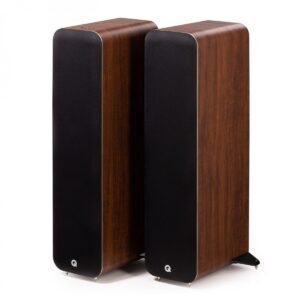
2. Q Acoustics M40 HD Wireless Music System
 Key features
- Compact floorstanding speaker
- C3 Continuous Curved Cone drivers
- Bluetooth 5.0 with aptX HD and low-latency support, streaming up to 24bit/192kHz via USB
Pros
- Full hi-fi scale sound in a slim, compact (for a floorstander) form
- Wide connectivity, including phono, optical, USB, and Bluetooth
- Excellent low-frequency extension for their size (down to 38Hz)
Cons
- Not the most articulate sound, can get a bit bass-heavy
The Q Acoustics M40 scratch a very interesting itch. They’re floorstanders, which already carry a certain appeal, but they’re also active, with the amp built in – meaning these are technically all you need to realise your floorstanding hi-fi ambitions.
As floorstanders, they have two key advantages when it comes to bass. First, Q Acoustics’ cabinet design tends to be deeper than most hi-fi manufacturers’, allowing for greater low-end presence. Second, the taller cabinet naturally extends the bass response further. So yes, the bass performance here is pretty impressive.
Like the AIO Twin above, one of the speakers is the “thinking” version of the pair, housing the amplifier along with all the terminals and connections, including optical and USB inputs. That makes them a handy option for use as part of a TV or AV setup, or even connected to a PC via USB.
Q Acoustics’ sound generally leans towards the bassier side, which is great if you listen to a lot of low-end-heavy music. The trade-off is that midrange and treble definition can sometimes take a slight step back – and the same applies here.
Placement is key: being rear-ported, you’ll want to avoid boxing them into corners or placing them too close to a wall, as that can turn punchy bass into something a bit mushy. Get the positioning right, though, and the M40s are a seriously convenient solution to the floorstanding hi-fi dilemma.
3. JBL Flip 7 Portable Bluetooth Speaker
 Key features
- AI Sound Boost/tuning
- Waterproof, dustproof, and drop-proof with an IP68 rating
- Lossless audio playback and Bluetooth 5.4
Pros
- Excellent balance of portability, durability, and sound quality
- Long-lasting battery with up to 16 hours of playtime
- Auracast for linking multiple JBL speakers wirelessly
Cons
- Bass depth is limited, but still impressive for its size
The Flip series is the entry point to a whole pastiche of JBL speakers to come – and in my opinion, it’s the gold standard for what a good Bluetooth speaker should be. They manage to tick almost every box you’d want from something portable: tough build quality, solid performance, decent bass for the size, and the kind of reliability that means you can throw one in a bag and forget about it until you need it.
They’ve become such a staple that it’s hard to argue against them.
When I first got into this industry, we were on the Flip 4 – and even then, it was clear JBL had figured out something other brands were still fumbling with. Each generation since has been steadily refined and improved.
The Flip 5 was, for me, the peak of the physical design. It was so well put together – clearly engineered with the expectation that it would get knocked about, taken to beaches, parks, festivals, or just left on a kitchen counter with zero care.
I used to joke that they were indestructible, and genuinely told customers that if anyone ever managed to damage one, they should bring it in – because none of us had ever seen one fail.
Since then, we’ve moved through the Flip 6 and now onto the Flip 7. While the bombproof quality arguably peaked with the 5, the internals have kept improving. The newer models now include AI-powered sonic tuning, meaning the speaker actively analyses the incoming signal and adjusts its EQ curve to suit. Bluetooth itself has also advanced, offering more bandwidth for a cleaner, more stable stream.
And then there’s Auracast. Where JBL’s old PartyBoost only let you pair a couple of identical models, Auracast allows you to link up to 99 compatible JBL speakers across the current range and play them in sync. It sounds ridiculous on paper, but in practice it’s brilliant fun – and it shows just how far Bluetooth speakers have come.
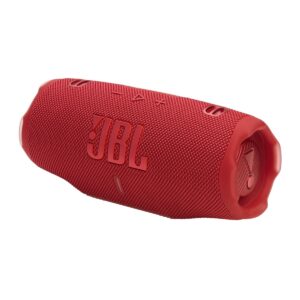
4. JBL Charge 6 Portable Bluetooth Speaker with Powerbank
 Key features
- AI Sound Boost/tuning
- IP68 waterproof, dustproof, and drop-proof design
- Built-in powerbank with up to 24 hours of battery life
Pros
- Bigger, fuller sound than the Flip 7
- Doubles as a portable charger for your devices
- Durable build with detachable carry strap for portability
Cons
- Heavier and less packable than the Flip series
The natural step up after the Flip series is the Charge, and this is where things start to get physically substantial. The Charge 6 takes everything that was brilliant about the Flip and simply does more of it. It’s bigger, louder, tougher, and has more bass – just more of everything. On paper, that sounds like a no-brainer, and if your indomitable quest is for bigger sound and deeper bass, it delivers.
The trade-off, however, is size and weight. The Charge takes up roughly twice the volumetric space of a Flip, and that can be a very real issue if you’re backpacking, flying regularly, or just need something genuinely compact. It’s not a deal-breaker, but it’s worth keeping in mind.
Sonically, the Charge is excellent. Like the Flip, it uses JBL’s tried-and-tested passive radiator design, but scaled up with larger radiators that shift more air at a slower pace. The result is bass that feels fuller and more commanding, without smothering the mids and highs.
It handles audiobooks with the same poise it brings to house, rock, or industrial – fleshing out lower voices while still keeping treble detail intact. It won’t give you the sub-bass extension of a proper hi-fi setup, but within the portable speaker category, it does a convincing job of sounding far bigger than its physical size suggests.
The beauty of the Charge is in that balance: portability with enough punch to fill a room, withstand some rough treatment, and offer serious listening across a wide range of genres. JBL have become masters at tricking your ears into thinking you’re listening to something larger – and the Charge continues that tradition brilliantly.
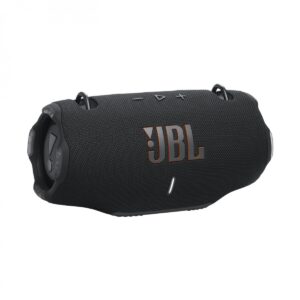
5. JBL Xtreme 4 Portable Bluetooth Speaker
 Key features
- Massive JBL Pro Sound with dual woofers and tweeters
- IP67 waterproof and dustproof with rugged build
- Up to 24 hours of playtime plus built-in powerbank
Pros
- Powerful bass response that holds up even at higher volumes
- Great for outdoor use thanks to a durable, weather-ready design
- Auracast support for linking multiple JBL speakers
Cons
- Heavier and less portable than the Charge 6
Beyond sounding like the title of a snowboarding video game, the Xtreme 4 is the “eldest” brother of the portable JBL pastiche. Everything I’ve said about the Charge being a step up from the Flip applies again here. The Xtreme is large, yes. Loud, absolutely. Bassy, of course. And we love it for what it is: a substantial speaker built for a rougher life.
This is the sort of speaker you throw in the boot of the car without thinking twice. It’s the one you take on a campout with your mates, or down to the crag if you’re in the mood to share music rather than keep it private with headphones. It’s not trying to be dainty or minimal. It’s unapologetically chunky – designed with the expectation that it’ll be hauled around, placed on less-than-ideal surfaces, and generally used in the real world.
In that sense, it feels like the natural conclusion of what JBL have been honing since the Flip: a speaker that balances brute force with just enough finesse to avoid sounding like a blunt instrument.
Where the Xtreme 4 really earns its place is in how prodigious it feels once you live with it. The sound is big and unashamedly bold, and the kind of bass it produces is enough to surprise anyone hearing it for the first time.
Take it outside and it projects with a sense of authority that makes it perfect for group listening – whether that’s a barbecue, a beach afternoon, or just music in the park. Indoors, it has more than enough weight to dominate a room without straining.
It’s straightforward, reliable, and impressive in a way that makes you forgive the bulk – because that size directly translates into performance that smaller speakers simply can’t match.
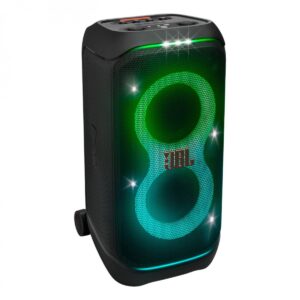
6. JBL PartyBox Stage 320 Portable Bluetooth Speaker
 Key features
- Dual 6.5-inch woofers with 25mm dome tweeters
- 240W RMS output with Bluetooth 5.4 and extra mic/guitar inputs
- Up to 18 hours of battery life with a quick-charge option
Pros
- Deep, distortion-free bass that can handle party volumes
- Clear mids and highs that don’t get lost behind the low end
- Replaceable battery and sturdy wheeled design for portability
Cons
- Pretty heavy, and the wheels aren’t really made for off-roading.
We’ve been on quite a run of JBL speakers, and this is the final entry in the list. I’ll stand by these choices – because, in all honesty, JBL make some of the best Bluetooth speakers in an otherwise saturated market, and the PartyBox 320 is no exception.
I still remember the first time we unboxed one. Expectations weren’t high – it looked eye-catching, with its lights and slightly gimmicky styling – but after spending some time with it, we low-key grew to love it. In fact, we nicknamed it “Big Geoff”, which says a lot about the personality it brings to a room.
The PartyBox range as a whole – whether you’re looking at the 520, the 710, or the Ultimate – shares the same DNA. They’re bass-heavy, party-oriented, and completely unapologetic about it. And why would they be? They’re literally called PartyBox. Subtlety isn’t on the menu.
These things are built to get people moving, and the 320 is no different. It’s more compact than its larger siblings but still more than capable of filling a house, garden, or small gathering with prodigious sound.
There’s almost a kind of parallax when you compare it with more portable JBL models like the Flip and Charge. On one hand, you still recognise the familiar JBL sound signature. On the other, the 320 feels like it’s been scaled up and let loose with a different sense of purpose.
Of course, with great volume comes great responsibility… and a fair bit of heft. The built-in wheels help, but they’re not miracle workers. They’re not off-road tyres, and the 320 is still reasonably heavy. It’s fine for rolling across a patio or moving from the car to the living room, but it’s not the speaker you want to be dragging through a muddy field or across sand. At that point, you’re either carrying it or regretting your choices.
But once it’s in place, the sound speaks for itself. The bass is excellent – especially with Bass Boost mode engaged, if you really want to lean into it. Whether you’re hosting a party, cranking up a playlist, or just indulging in some sub-bass, the PartyBox 320 delivers in spades.
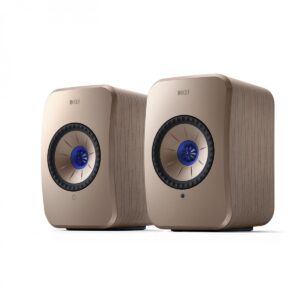
7. KEF LSX II Wireless Hi-Fi Speaker System (Pair)
 Key features
- 11th-gen Uni-Q driver with Music Integrity Engine DSP
- HDMI ARC, USB-C, and optical inputs for TV/PC integration
- AirPlay 2, Chromecast, Roon Ready, and Bluetooth streaming
Pros
- Detailed, hi-res audio with wide stereo soundstage
- Resolved the network instabilities of previous models.
- Compact design without sacrificing premium performance
Cons
- Lacks some low-end output compared to their big brother, the LS50
The KEF LSX II bring us back to that more traditional wireless speaker formula from the start of this list – and I’ll say right away that calling them just Bluetooth speakers feels like a disservice, because they’re much more than that. Still, within the context of this article, they absolutely deserve a spot.
They can function as Bluetooth speakers, and they do so with a level of performance that’s frankly leagues above most of the competition.
They’re essentially smaller and, in my opinion, more interesting-sounding versions of the LS50W MKIIs. Shrinking something that already worked so well was always going to present challenges, and the designers have clearly thought carefully about how to extract every bit of performance from the more compact cabinet and drivers.
But rather than feeling compromised, the LSX II come across as more cohesive and nuanced – a system optimised to work together as a whole. The balance across the frequency range is excellent, with clarity and tightness that never drift into sounding clinical.
One of the real surprises is the bass performance. For speakers of this size, you’d expect them to give up fairly quickly in the sub-bass range – but they’re perfectly happy reaching down without distorting or breaking up.
Of course, there are physical limits, but within those boundaries, the sound remains controlled and genuinely impressive. Whether you place them on stands, a shelf, or a desk, they carry themselves with confidence and never sound small, even though they very much are.
Add to this the fact that they can connect wirelessly via Bluetooth, AirPlay, or Chromecast, and their appeal becomes clear. These aren’t just speakers – they’re a complete system, wrapped into a compact and beautifully designed package. That makes them compelling to the point of being hard to argue with.
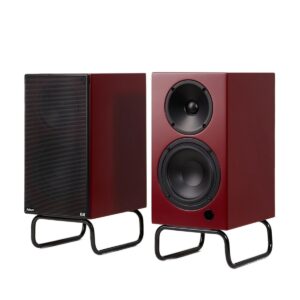
8. ELAC Designer Series Debut ConneX Adsum Active Bookshelf Speakers (Pair)
 Key features
- 50W output with XBass Enhancer
- HDMI ARC, USB, phono, optical, and Bluetooth aptX connectivity
- 4.5-inch woofer with rear-firing port for deeper bass
Pros
- Strong bass performance for compact size
- Wide range of modern and legacy connectivity options
- Stylish Adsum design crossover makes it a feature piece in any room
Cons
- Smaller driver and bass port limit bass extension
I’ll preface this by saying I’ve used the ELAC and Devialet spots as an excuse to throw around a few art terms – mainly because it’s the end of the day and, given their artistic roots and design ethos… why not?
Whenever a fashion brand teams up with an audio company, much like the people’s champion, my eyebrow raises, and my metaphorical glasses slide down my nose. Nine times out of ten, you end up with a product that already exists – just in a different colourway, or with a logo slapped on it. Very cool, sure, but rarely something that feels worth the extra.
There are exceptions, of course. Bowers & Wilkins did it well with the P8 McLaren edition, which genuinely felt considered – and now I’d add the ELAC x Adsum Debut ConneX collaboration to that short list.
As someone who was reasonably into fashion once upon a time (not that you’d know anymore), Adsum was a name I was aware of. It was never really my cup of tea stylistically, but I respected what they were doing in that clean, functional, New York-inspired space. Their decision to cross over into hi-fi with ELAC might seem slightly rogue at first glance, but in practice, it’s resulted in a pair of visually striking speakers.
What they’ve done is build on the Debut ConneX DCB41 platform, which in its standard form is a perfectly solid – but slightly anonymous – active bookshelf speaker. With Adsum’s input, it’s been reframed into something with far more design presence. The proportions remain the same, but the finishes and detailing introduce a kind of brutalist vocabulary, with pared-back lines and a more architectural feel.
There’s a tactility to the surfaces that makes them as pleasing to touch as they are to look at, and the design work gives the speakers an aesthetic cohesion missing from their more utilitarian siblings.
Tonally, they’re well judged. The bass extension is impressive for a speaker of this size and format, with a compact rear port that helps it dig deeper than you might expect. No, they’re not going to overwhelm you with the best bass you’ve ever heard – but what they do offer is a balanced and honest presentation.
The low end is present and controlled, working in harmony with the mids and highs to create a sense of gestalt between form and function. The whole experience feels greater than the sum of its parts.
It’s a rare example of a crossover where both parties have brought something meaningful to the table – and the result feels far more than just skin deep.
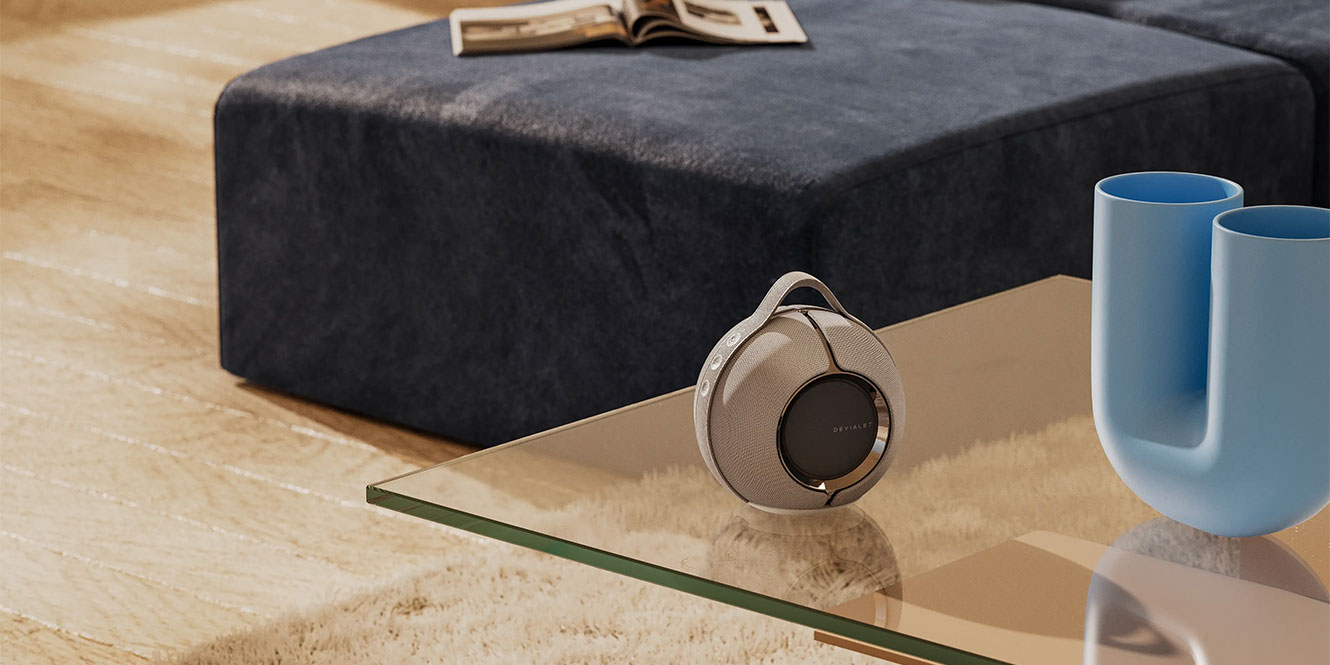
9. Devialet Phantom Ultimate 108 dB Wireless Speaker (Single)
 Key features
- 108 dB of distortion-free sound
- Bass reaches down to 14 Hz
- Sleek, sculptural, compact design
Pros
- Exceptionally wide frequency range
- High-end finish options to suit interiors
- Seamless stereo pairing capability
Cons
- Premium pricing puts it in the high-end luxury bracket
The Devialet Phantom Ultimate shows just how far wireless speaker technology has come. Despite being relatively small, it delivers up to 108 dB of rich, room-filling sound without distortion. The bass dives to 14 Hz, offering that deep, chest-thumping quality many speakers struggle to reproduce, while the higher frequencies reach 35 kHz.
Visually, it’s also well refined. The curved shell has a sophisticated sculptural quality, and with Light Pearl or Forest Green finishes available, it’s easy to match to your space. For even extra elegance, there’s the Opéra de Paris edition. Plus, the speaker is compact enough to sit comfortably on a shelf or the dedicated stand, but always looks and feels premium.
You can pair the speaker with a second Phantom Ultimate for a step-up in performance using Devialet’s wireless syncing. This gives you a broad and immersive stereo image that makes vocals feel beautifully natural and instruments naturally spaced.
What does “good bass” actually mean in a Bluetooth speaker?
In a Bluetooth speaker, good bass means you can feel the low end doing its job – without it overwhelming everything else. You don’t want a speaker that just booms for the sake of it, but equally, you don’t want something so lean that it sounds tinny or anaemic.
For me, proper bass sits in the 40Hz to 120Hz range. Below that, you’re into sub-bass territory, which you tend to feel more than hear. Above that, you’re edging into the lower mids, which add warmth but aren’t quite what most people would describe as “bass”. Good bass should support the rest of the mix, not compete with it.
To explain why this is tricky in small speakers, think of it this way: audio is just air moving. Treble involves fast oscillations with short wavelengths. Bass involves slower oscillations with much longer wavelengths – and that takes more energy and air movement to reproduce properly.
Imagine two pieces of string: one with lots of tiny wiggles (treble) and one with a few big, wide wiggles (bass). The bigger wiggles take up more space – and that’s harder to keep in time.
This is why larger drivers and more powerful amps make a difference. Active subwoofers often push hundreds of watts, not just for volume, but to move a big cone with precision. In Bluetooth speakers, designers have to cheat that physics, which is why some manage bass better than others.
Brands to look out for
With so many Bluetooth speakers out there, a few brands have managed to carve out a real identity. Each brings its own angle – and understanding the differences can help you figure out what’s right for you.
JBL are probably the most obvious. Their range covers everything from tiny Clip speakers you can hang off a backpack to the massive PartyBox series that’s basically a mobile PA. They’re popular because they just work: big sound, plenty of bass, and built to be thrown around without fuss.
Q Acoustics take a different approach. Their M40s rely on larger cabinets, which means more air movement and more natural bass. They’re not chasing nightclub volume, but if you want something that feels closer to a hi-fi setup – with Bluetooth convenience – they’re a solid shout.
Then there’s KEF with the LSX II. These cost more than most Bluetooth speakers, but what you get is proper hi-fi engineering in a compact package. Their Uni-Q drivers deliver loads of detail, and the soundstage feels far bigger than the box they come out of.
What your budget can get you
As with most things in life, how much you put in usually determines the quality you get out. It’s only a rule of thumb, of course – but it definitely applies to Bluetooth speakers.
At the entry level, you’ve got the truly portable options. The JBL Clip series is a great example. They come in at minimal cost, yet still manage to deliver solid performance. They’re small, practical, and surprisingly durable, which is why they stand out in the budget category. You’re not going to get club-level bass, but for a speaker that clips to your bag and keeps the music going, they punch well above their weight.
Step up a level and you reach what I’d call the sweet spot. The JBL Flip series lives here, and the Flip 7 in particular has become something of a gold standard in my mind. It’s compact, tough, and delivers bass that sounds much bigger than the box it comes from. This tier offers the best balance of portability and performance – and it’s where most people will find the ideal compromise.
Push the budget further and you move into more serious listening. Here, you’re looking at active speakers that support Bluetooth but sit more in the hi-fi camp. Options like the Q Acoustics M40s or Triangle AIO Twins use larger cabinets, more powerful amplification, and better driver design. That means deeper bass, clearer mids, and a presentation that feels more like a traditional hi-fi setup than a typical Bluetooth speaker.
These aren’t about chucking in a rucksack – they’re about becoming part of your living space.
So whatever you spend, there’s something worthwhile. It’s just a matter of deciding whether you want pure portability, a balance of both worlds, or hi-fi sound with Bluetooth convenience.
FAQs
What is the highest quality audio in Bluetooth?
The highest quality audio over Bluetooth currently comes from codecs like LDAC and aptX Adaptive. These allow for higher bitrates than the standard SBC codec, resulting in more detail and less compression. In the context of Bluetooth speakers, this means that when both your phone and your speaker support these codecs, you’ll hear a clearer, more dynamic sound.
What Bluetooth speaker has the best sound quality?
The Bluetooth speaker with the best sound quality really depends on how you plan to use it. If you’re travelling and want something light and portable, the JBL Flip or Charge 7 is a great fit. For hosting parties and filling larger spaces, the JBL PartyBox range makes more sense. And if you’re after high-resolution, hi-fi-grade sound in a home setup, something like the KEF LSX II is hard to beat.
What speaker brand is best for bass?
The best Bluetooth speaker brand for bass is almost certainly JBL, as they’ve mastered the art of extracting low-end performance from wireless designs. Their smaller Bluetooth models use passive radiators to squeeze out impressive punch, while the larger PartyBox speakers deliver huge, room-filling bass that feels more like a full sound system than a portable speaker.
Final thoughts
So here we are again. You’ve stuck with me through another series of tangents and references, and now I’m sitting here wondering what the final word on all of this should be.
I’ll keep it simple. If portability and convenience are what you’re after, grab yourself a JBL Flip or Charge. You won’t be disappointed. They’re tough, reliable, and for a Bluetooth speaker with a focus on bass, you really couldn’t ask for more.
But if you do want to ask for more, take a look at the Xtreme or even the PartyBox range. The bass, the punch, the sheer sonic presence is fantastic – though of course, you give up some portability as you move up in size.
Then you’ve got the more hi-fi-leaning options from Triangle, Q Acoustics, KEF, ELAC, and Devialet. These aren’t just Bluetooth speakers in the traditional sense – they’re proper hi-fi systems that happen to include Bluetooth.
They’ll give you more detail, more nuance, and a clearer sense of scale. Think of Bluetooth here less as the main attraction, and more as a gateway into broader streaming setups, especially if you’re not already familiar with them.



0 Comments