
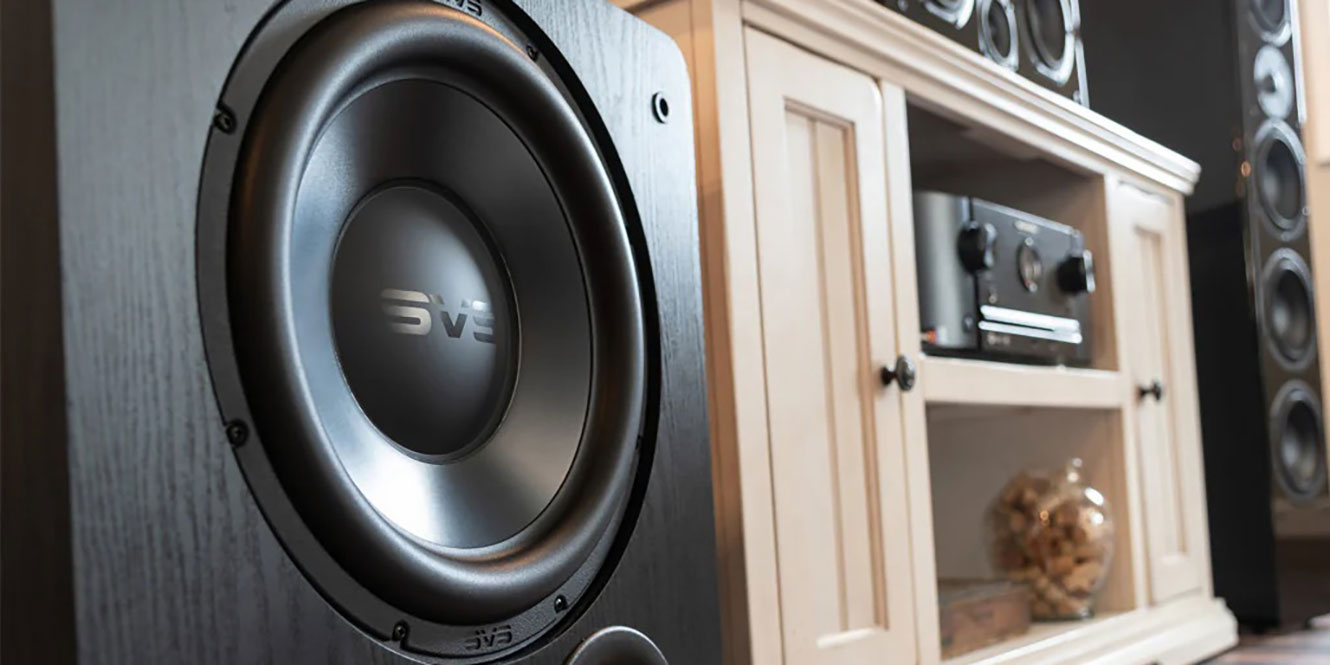

Most people are generally aware that if you add a subwoofer to a pair of speakers, you get more bass. And yes, in principle, that’s true. You can just slap a sub into a system, and it’ll probably make things sound bigger. But if you actually want to integrate a subwoofer properly, there are a few things worth thinking about first.
The obvious question is: how many subwoofers do I need? Annoyingly, the answer isn’t just “one”, “two”, or “as many as you can sneak into the room before someone notices”. It depends on your space, your main speakers, and what you’re using the system for. A compact stereo setup in a small room has very different needs to a dedicated home cinema with multiple seats.
It’s also about scale. The sub needs to make sense with the rest of the system and the room it’s going in. A tiny sub won’t do much for big floorstanders, and a huge sub in a tiny flat could become more of a problem than an upgrade.
Subwoofers now come in all sorts of sizes, shapes, and finishes too, so placement and aesthetics are super important.
So, let’s get into how many subwoofers you actually need!
Key takeaways
| Setup | Best for | Why use it? |
|---|---|---|
| 1 subwoofer | Smaller rooms, stereo setups, or one main listening position | Adds low-end weight without overcomplicating the setup |
| 2 subwoofers | Medium to larger rooms, home cinema, or multiple seats | Gives smoother, more even bass across the room |
| 3-4 subwoofers | Dedicated cinema rooms or awkward spaces | Helps reduce bass dead spots and gives more consistent coverage |
How many subwoofers do I need?
Assessing the space and matching your subwoofer
Before deciding how many subwoofers you need, be conscious of the space you’re working with. You don’t need to get weirdly intense with it, but measuring the room is useful. A 3x2m bedroom, a normal living room, and a larger open-plan space will all deal with bass differently.
You should also think about where you’ll be sitting. If you’ve got one main listening position, one well-placed sub might be enough. If you’re covering a full sofa, multiple seats, or a proper home cinema setup, two subs can make more sense. In larger or open-plan rooms, bass can wander off a bit, so more than one subwoofer may be the better answer.
You also want the sub to suit the rest of your system. A 12-inch sub isn’t automatically better if it’s wrong for your room, your speakers, or what you actually listen to. If you’re using large floorstanders with decent-sized bass drivers, a tiny compact sub probably won’t add much beyond a bit of extra rumble. Likewise, if you’ve got small bookshelf speakers in a small room, a huge cinema sub might be more hassle than help.
The aim is for the subwoofer to support your main speakers, not sound like it belongs to a completely different system. When it’s matched well, you shouldn’t really notice it as a separate thing. The whole setup should just feel like it has more depth, weight, and control.
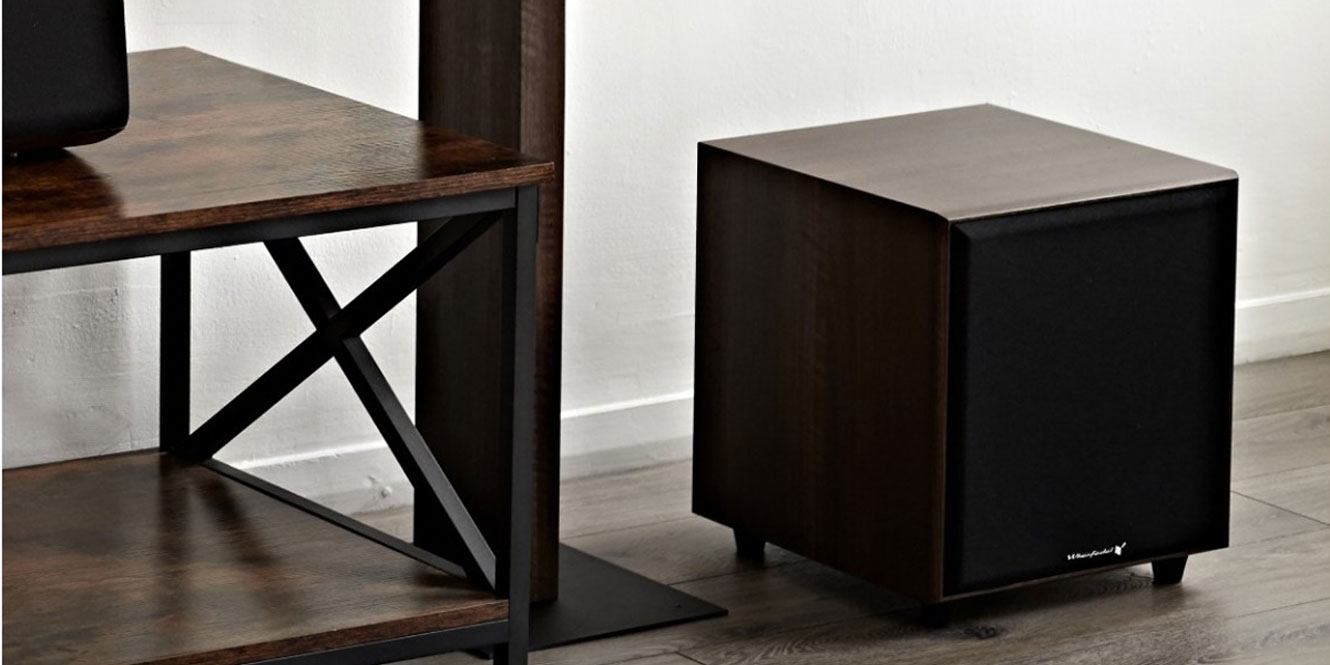
Also, don’t ignore how it looks. Once a subwoofer gets big enough, you’re probably not hiding it, so finishes, colours, and furniture-friendly designs start to matter. REL offer a lot of their subs in various finishes to match aesthetics, such as the T/9X range in a variety of colours, including some vintage racing colours to make more of a ‘thing’ of them, as well as their Classic 99, and Planar series.
REL also offer a Room Setup Tool and a Speaker Pairing Tool on their site, which are excellent resources to look at, even if you aren’t in the market for a REL subwoofer.
One subwoofer
For a lot of people, one subwoofer is absolutely enough. If you’re working with a smaller room, a stereo setup, a desk system, or one main listening position, I’d usually start with one good sub rather than immediately assuming you need two.
The big benefit is simplicity. One sub is easier to place, easier to cable, and easier to dial in. You can spend a bit more time getting the crossover, level, and positioning right, rather than trying to balance multiple boxes at once. And when it’s set up properly, it shouldn’t sound like “a subwoofer has been added”. It should just make your speakers feel like they reach a bit lower and carry a bit more weight.
This is especially true for music. A well-matched sub can add depth to bass guitars, kick drums, synth lines, and film scores without turning everything into a nightclub. The mistake is thinking one sub needs to do all the heavy lifting. It doesn’t. It needs to support the main speakers.
That’s where scale matching comes in. If you’ve got compact bookshelf speakers, a smaller sub might be ideal. If you’re running bigger floorstanders, especially with larger bass drivers, you’ll want something with enough size and control to keep up. Or, in some setups, two smaller well-placed subs might integrate more naturally than one oversized box trying to do everything by itself. But that leads us nicely onto…
Two subwoofers
This is where things get interesting, because two subwoofers doesn’t just mean “double the bass”. I mean, yes, technically you’ve got more bass available, but that’s not really the point. The real reason to run two subs is to make the bass behave itself.
With one subwoofer, you can end up with a great result in one seat and a slightly weird result somewhere else. Move along the sofa and suddenly the bass might feel heavier, thinner, or like it’s gone missing entirely. That’s not always the sub’s fault. Rooms do strange things to low frequencies.
Adding a second sub can help smooth that out. By placing two subs in different parts of the room, you can usually get more even low-end coverage across the space. That might mean one at the front and one towards the back, with the phase or delay adjusted so the bass reaches you in time.
Get that wrong and you can end up with phase cancellation, where the sound waves start working against each other and all that hard work basically undoes itself. Annoying, but very real.
Two subs can also work nicely with larger main speakers. Rather than asking one big sub to do all the heavy lifting, a well-matched pair can share the job and feel more natural in the room. They don’t need to be huge either. In some spaces, two smaller subs will be easier to place and blend than one enormous box trying to dominate everything.
So if one subwoofer is the simple option, two subwoofers are usually the more balanced option.
Three or four subwoofers
Three or four subwoofers is where you’re getting into more serious home cinema territory. For most people, this isn’t the starting point. It’s what you look at when you’ve got a larger room, multiple seating positions, or a space that just refuses to behave with one or two subs.
The main benefit is consistency. Low frequencies are awkward, and rooms love making them even more awkward. You can have one seat where the bass feels huge, another where it feels thin, and another where everything gets a bit woolly. Adding more subs, placed carefully, can help smooth those differences out so the bass feels more even across the room.
This is especially useful in a dedicated cinema room, where you’re trying to give everyone a similar experience rather than making one seat sound brilliant and the rest feel like afterthoughts.
That said, three or four subs only really make sense if you’re willing to set them up properly. Placement, phase, delay, crossover, and level all matter. If you just throw four subwoofers into a room and hope for the best, you’re not building a bass system. You’re creating a low-frequency argument.
FAQs
What do subwoofers do?
Subwoofers reproduce low-frequency sounds that standard speakers often struggle to deliver with depth and power. They make bass, drums, explosions, and other low sounds feel fuller, adding greater impact and realism to music, films, and games.
Do subwoofers just play bass?
Subwoofers primarily play bass and other low-frequency sounds rather than the full audio spectrum. They handle frequencies that regular speakers may reproduce less effectively, providing deeper bass while allowing the main speakers to focus on midrange and treble.
Do you actually need a subwoofer?
A subwoofer is not always necessary, but it can significantly improve sound quality when deep, powerful bass matters. Smaller speakers often benefit most from one, while large full-range speakers may already provide enough bass for everyday music and listening.
Final thoughts
So, how many subwoofers do you need? For most people, the answer is probably one good, well-matched subwoofer. If you’re working with a smaller room, a stereo setup, or one main listening position, that will usually get you the low-end support you’re after without making the setup more complicated than it needs to be.
Two subwoofers are great if you want smoother bass across a wider seating area, especially in a home cinema or larger living room. Three or four is more specialist territory, and really only worth looking at if you’ve got the space, the system, and the patience to set them up properly.
The main thing is to think about scale. Match the sub to your speakers, match it to your room, and be realistic about what you actually need. More bass is fun, obviously, but better bass is what you’ll actually want to live with.








0 Comments