
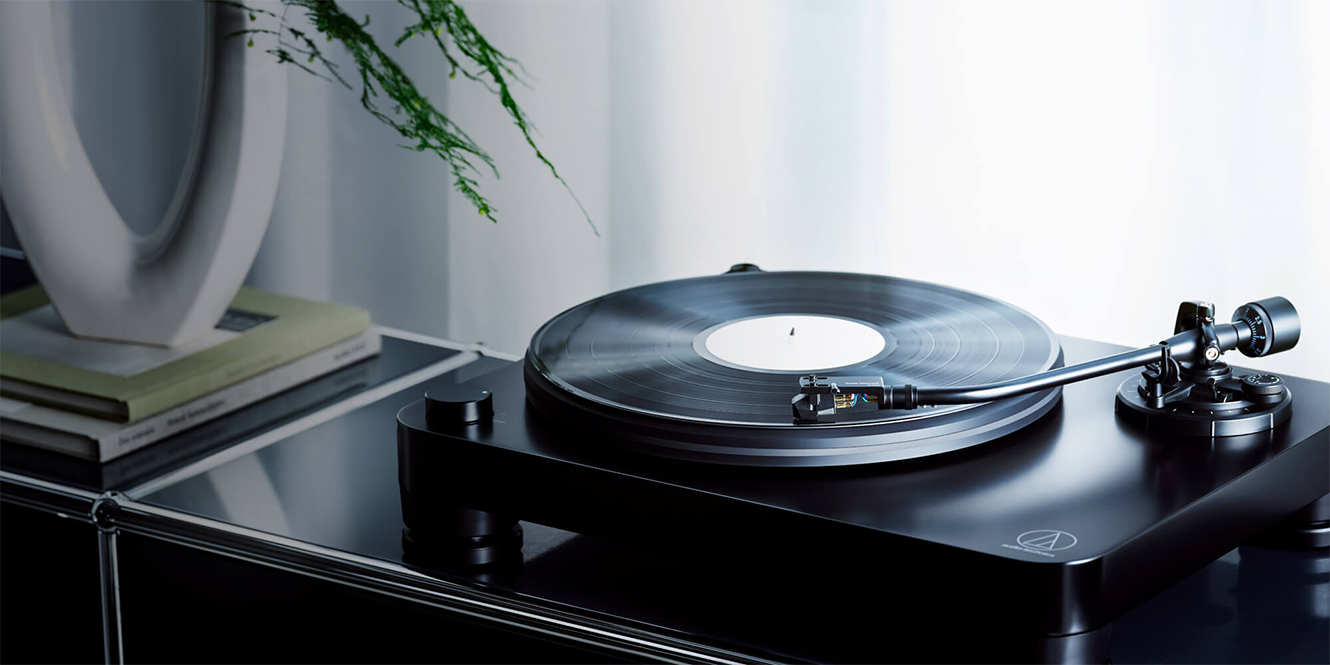

Buying a turntable can get weirdly complicated very quickly. One minute you just want to play some records; the next you’re knee-deep in cartridge types, tonearms, phono stages, and tracking force and working out whether your amp has the right input round the back.
That is why a built-in preamp turntable makes a lot of sense for many people. It lets you plug straight into a normal line input, active speakers, or a wider hi-fi system without needing a separate phono stage from day one. Some decks go even further, adding USB recording, wireless streaming, automatic operation, or simple speed switching to make vinyl feel less like a technical exam.
For this list, I’ve picked the best turntables with built-in preamps that suit different types of listeners. Some are great first decks, some leave more room for upgrades, and a few sit in that very useful middle ground where convenience and proper hi-fi thinking meet.

In a hurry?
Here are our top three picks:
| Turntable | USP | Shop now |
|---|---|---|
| Technics SL-1500CS Hi-Fi Turntable with Delta-Sigma Drive | Best premium pick, with Delta-Sigma Drive technology for improved rotational accuracy, | Check the current price |
| Audio-Technica AT-LP7X Fully Manual Belt-Drive Turntable | Built-in MM/MC phono stage. | Check the current price |
| Denon DP-450 Hi-Fi Turntable with USB | Auto-lift playback stop feature. | Check the current price |
What is a preamp, and why do you need one?
A preamp, or phono preamp, is the part of a vinyl setup that boosts the tiny signal coming from your turntable’s cartridge. Records do not produce the same strong “line-level” signal as a phone, CD player, streamer, or other modern audio source. Without a preamp, the sound from a turntable would usually be far too quiet, thin, and lacking in detail.
A preamp also applies the correct EQ curve to the music. When records are made, bass is reduced, and treble is boosted, so the groove can be cut properly. The phono preamp reverses this during playback, bringing overall balance back to how the music should sound.
You need a preamp because most speakers, amplifiers, and receivers are not designed to handle a raw phono signal on their own. Some turntables have a built-in preamp, which makes setup easier because you can connect straight to powered speakers or a standard line input.
Other turntables need an external phono preamp or an amplifier with a dedicated phono input. In simple terms, the preamp is what makes your records loud enough, balanced enough, and clean enough to listen to properly.
The best turntables with built-in preamps
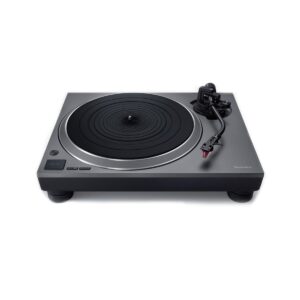
1. Technics SL-1500CS Hi-Fi Turntable with Delta-Sigma Drive
 Key features
- Coreless direct drive motor
- Built-in phono stage
- Ortofon 2M Red cartridge
Pros
- Very easy to get playing
- Excellent speed stability
- Properly solid Technics build
Cons
- Premium price for a plug-and-play deck
Technics are the ‘dons’ of direct-drive turntable design, and the SL-1500CS feels like the civilised hi-fi version of that legacy. It has the proper engineering underneath, but without making you earn every record side through fiddly setup.
The built-in phono stage means you can plug straight into a normal line input, while the supplied Ortofon 2M Red cartridge gets you playing without immediately having to think about cartridge matching. It is not a cheap shortcut deck, though. It is more like Technics taking the faff out of a serious one.
The big story is still the motor. Its coreless direct drive system keeps rotation steady without the belt changes or warm-up fuss you get elsewhere, while Delta-Sigma Drive helps reduce tiny motor irregularities and vibration. Speed stability is one of those things you only really notice when it is wrong. Here, the deck just feels locked in.
You also get 33, 45, and 78 rpm speeds, a two-layer damped aluminium platter, and a solid S-shaped tonearm with proper adjustment.
The auto-lift is a small but very welcome touch, raising the tonearm at the end of a record to help reduce stylus wear. So yes, the SL-1500CS is expensive compared with simpler built-in preamp turntables, but it backs that up with the sort of build and control that makes vinyl feel reassuring rather than fragile.
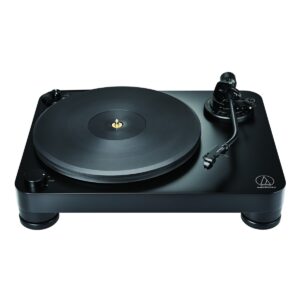
2. Audio-Technica AT-LP7X Fully Manual Belt-Drive Turntable
 Key features
- Fully manual belt-drive operation
- Switchable MM/MC phono preamp
- AT-VM95E cartridge included
Pros
- Flexible setup for different systems
- Solid, resonance-resistant build
- Easy cartridge upgrade path
Cons
- Fully manual operation will not suit everyone
This is Audio-Technica doing the sensible hi-fi thing: less show, more proper turntable. The AT-LP7X is fully manual, so you’re cueing records yourself rather than pressing a button and letting the deck do the thinking. That will appeal if you like the ritual of vinyl, but it does mean it asks for a bit more attention than the more automatic options here.
The build is where it starts to justify itself. You get a 20mm acrylic platter, a heavy 40mm MDF plinth, adjustable isolation feet, and a J-shaped tonearm with adjustable vertical tracking angle. In normal language, that means it has been built to keep vibration down and give you room to fine-tune things later, rather than locking you into one basic setup.
The built-in switchable MM/MC phono stage is the clever bit. You can use the supplied AT-VM95E moving magnet cartridge now, connect straight to an amp or active speakers, then explore a moving coil cartridge later without immediately needing an external phono stage. The VM95E also gives you an easy upgrade path through Audio-Technica’s VM95 stylus range. It is still a fairly hands-on deck, but that is exactly why it works.
The AT-LP7X feels like a turntable you can grow into, not just grow out of.
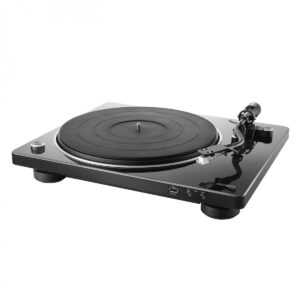
3. Denon DP-450 Hi-Fi Turntable with USB
 Key features
- USB-A vinyl recording
- Built-in switchable phono equaliser
- S-shaped tonearm with auto-lift
Pros
- Records vinyl to WAV or MP3
- Plays 33 1/3, 45, and 78 rpm
- Easy to connect to most systems
Cons
- USB recording is useful, but basic
The Denon DP-450 is a good pick if you want vinyl to feel a bit more casual, not something that turns the whole thing into an active experience. It still behaves like a proper turntable, with manual cueing and a solid S-shaped tonearm, but Denon have added a few touches that make it easier to live with.
The auto-lift is the obvious one. When the record reaches the end, the arm lifts itself up, which is handy if you’re prone to leaving a side spinning while making a brew.
The USB-A recording is the other big reason to look at it. You can record straight from vinyl to MP3 or WAV without routing everything through a complicated computer setup. It is not a full studio archiving system, but for saving older records, rare finds, or albums that never made it to streaming, it does the job neatly.
It also plays 331/3, 45, and 78 rpm records, so it’s more flexible than many modern lifestyle decks. The built-in switchable phono equaliser keeps setup simple too, letting you plug into a normal line input or bypass it later for a separate phono stage. Add the removable dust cover, tidy plinth, and Denon’s usual unfussy design, and you have a deck that feels practical without being boring.
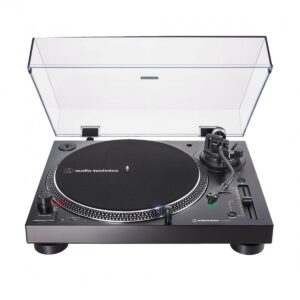
4. Audio-Technica AT-LP120XUSB Direct Drive Turntable with USB
 Key features
- Direct-drive manual operation
- USB output for recording
- Built-in phono preamp
Pros
- Very feature-rich for the money
- Plays 33, 45, and 78 rpm
- VM95 cartridge gives easy upgrade options
Cons
- Manual setup may feel fiddly at first
This is still the easy all-rounder pick for me, mainly because it does so much without suffering from price creep.
The AT-LP120XUSB is not trying to be the most stripped-back audiophile deck here. It’s more useful than that. Direct drive, three speeds, USB recording, pitch control, anti-skate, a stroboscopic platter, a built-in phono preamp, and a supplied AT-VM95E cartridge all make it feel like a deck with a lot tucked under its lid.
It’s fully manual, so there is still a bit of setup and involvement, but that is no bad thing if you want to learn how a turntable actually works. The built-in preamp can be switched between phono and line output, which makes it easy to plug into a normal amp input now, then move to an external phono stage later.
USB is handy too, especially if you have older records you want to digitise without overcomplicating the process. Add the VM95 stylus upgrade path, detachable headshell, and sturdy 8kg build, and it becomes a very sensible jack of all trades.
5. Pro-Ject Elemental Phono USB Final Edition Turntable
 Key features
- Pick-it 25A cartridge
- Built-in phono stage
- USB-B recording output
Pros
- Very simple to set up
- Acrylic platter and isolation base included
- Striking minimalist design
Cons
- Manual speed change is less convenient
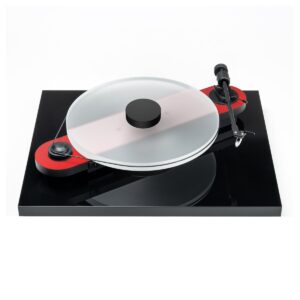
The Elemental is a bit of an oddball, but in quite a good way. Instead of hiding everything inside a big rectangular plinth, Pro-Ject has gone for a stripped-back design where you can see the thinking.
It looks more like a piece of brutalist architecture or maybe something more Bauhaus. Either way, you can’t deny it looks a hair more interesting than a normal bit of hi-fi furniture, which will either sell it to you instantly or put you off completely. Personally, I’m not super into the whole exposed design thing, but I can appreciate what they were going for.
The Final Edition version adds some genuinely useful extras. You get a pre-fitted Pick-it 25A cartridge, an acrylic platter, record puck, built-in phono stage, and Ground-it E isolation platform, so it’s not just minimalist for the sake of it. Setup should be fairly painless too, with tracking force and anti-skate pre-set. It plays 33 and 45 rpm records, although speed change is manual.
The USB-B output is handy if you want to archive records without building a separate recording chain.
6. Rekkord F110P Fully Automatic Floating Sub-Chassis Turntable
 Key features
- Fully automatic playback
- Built-in phono stage
- Floating sub-chassis design
Pros
- Very easy to use day to day
- Connects straight to line inputs
- Good vibration control for the price
Cons
- The AT3600L cartridge is fairly basic
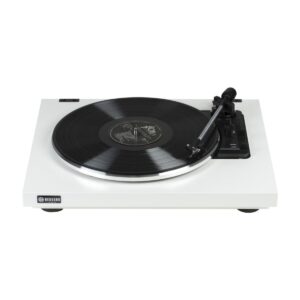
This is the one for anyone who likes the idea of vinyl, but not the little rituals that can sometimes make it feel tedious. The F110P is fully automatic, so it lifts, positions, plays, and returns the tonearm for you. That makes it a nice living-room turntable, especially if more than one person in the house is going to use it, or if someone isn’t as confident using a turntable.
It still has a few proper hi-fi touches, though. The floating sub-chassis helps isolate the platter and tonearm from outside vibration, while the solid aluminium platter and MDF chassis give it a bit more substance than the usual entry-level deck. The built-in phono stage is handy too, as you can plug it straight into an amp, powered speakers, or another system with a normal line input.
You get 33 and 45 rpm speeds, plus a pre-fitted Audio-Technica AT3600L cartridge, so it is ready to go without much fuss.
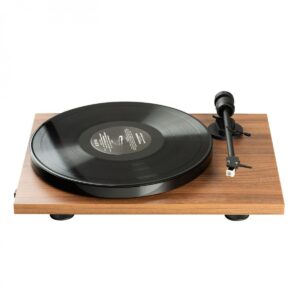
7. Pro-Ject E1 Phono Turntable with AT3600L Cartridge
 Key features
- Built-in MM phono stage
- Electronic 33 and 45 rpm speed control
- Pre-fitted Audio-Technica AT3600L cartridge
Pros
- Very easy to get started
- Clean, traditional hi-fi design
- Works straight into line inputs
Cons
- No Bluetooth or USB recording
This is probably the tidiest Pro-Ject option here: a proper belt-drive deck that does the basics properly without asking you to build a system around it. The E1 Phono is partially assembled out of the box, with the AT3600L cartridge already fitted and adjusted, so you avoid the usual first-turntable panic over tracking force and alignment.
It’s a relatively basic deck, but an extremely easy one to get your head around. I’m a firm believer in less is more, keep it clean and simple, and the E1 range is that embodied.
The built-in MM phono stage is the big practical win. It means you can plug straight into an amp or active speakers with a normal line input, then switch it out later if you buy a separate phono stage. You also get electronic speed control for 33 and 45 rpm records, a 218.5mm aluminium tonearm, anti-vibration feet, and an ABS polymer platter.
It’s not packed with tricks like Bluetooth or USB, but that is sort of the point. It keeps things clean, simple, and very easy to live with.
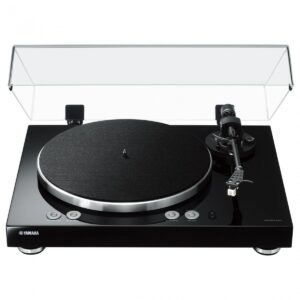
8. Yamaha MusicCast Vinyl 500 Turntable
 Key features
- MusicCast wireless multi-room support
- Built-in Wi-Fi, AirPlay and Bluetooth
- Belt-drive turntable with straight tonearm
Pros
- Streams vinyl to MusicCast speakers
- Works with amps with or without phono inputs
- Built-in streaming adds extra flexibility
Cons
- Not the purest choice if you only want vinyl
This is the turntable for people who want vinyl, but don’t necessarily want the whole room built around one rack of hi-fi. The MusicCast Vinyl 500 is a proper belt-drive deck, with 33 1/3 and 45 rpm speeds, an aluminium die-cast platter, and a straight tonearm, but the clever bit is how it fits into a wider Yamaha system. The best way I can sum this up is it’s more of a lifestyle product in terms of what it offers, without any compromise on the actual aspect that is important… i.e., being a turntable. So this deck is a big “W” for the people at Yamaha
MusicCast lets you send records wirelessly to compatible speakers, soundbars, and other MusicCast kits around the house. That is great if you want vinyl in more than one room without running cables everywhere, like you are wiring a small venue.
It also has Wi-Fi, AirPlay, Bluetooth, Spotify Connect, and streaming services built in, so it’s not just a record player. You can connect it to an amp with or without a phono stage, too, which makes it far easier to slot into an existing setup.
Built-in vs. external preamp
A built-in phono preamp is the easy route, and there’s nothing wrong with that. It means you can plug the turntable straight into a normal line input on an amp, active speakers, or even some wireless systems. For a first setup, that is a massive headache removed. Fewer boxes, fewer cables, less wondering why everything is incredibly quiet.
The trade-off is that built-in preamps are usually designed for convenience first. Some are very good, but they can limit how far the turntable grows with the rest of your system.
An external preamp gives you more control. You can choose one that suits your cartridge, your amp, and the sort of sound you like. It’s also useful if you want to move from a moving magnet cartridge to a moving coil later. The downside is obvious: extra cost, extra space, and another bit of kit to think about. For most beginners, built-in is easier. For tinkerers, external is where the fun starts.
FAQs
Is it better to have a turntable with a preamp?
A turntable with a preamp is better for most listeners who want a simple setup and broad compatibility. It sends a line-level signal to powered speakers, receivers, or amplifiers. Separate preamps can still offer higher upgrade potential.
How can I tell if my turntable needs a preamp?
You can tell if your turntable needs a preamp when it only outputs a phono-level signal. Very quiet sound, thin bass, or needing the volume extremely high are common signs. Check for a phono/line switch or built-in preamp label.
What does a built-in phono preamp mean?
A built-in phono preamp means the turntable has the phono stage inside the unit. It boosts the cartridge signal to line level and applies equalisation. This lets the turntable connect directly to powered speakers or standard audio inputs.
Final thoughts
The best turntable is not always the most expensive one, or the one with the longest spec sheet. It is the one that fits how you actually listen.
For a first setup, a built-in preamp turntable can remove a lot of the early faff. You can connect it more easily, keep the system tidy, and start playing records without immediately buying another box. If you’re more hands-on, you might prefer a deck that lets you bypass the internal preamp, swap cartridges, or add a separate phono stage later.
That is the nice thing about turntables now. You can keep things simple, go fully old-school, or land somewhere between the two. As long as the deck suits your system, your records, and your patience levels, you are on the right track.






0 Comments