


Are you amassing a nice music collection and now wondering how to store vinyl records correctly? You’ve come to the right place; as a team, we have plenty of experience in keeping and maintaining vinyl, and we’re here to give you the dos and don’ts, regardless of whether you’re just starting out or own a few hundred vinyl records.
The main thing to remember is to keep your records as static-free as possible and store them upright, as opposed to laying them down flat.
So, let’s dive into our top tips!
Key takeaways
- Handle your records with care: Don’t think it’s strange to wear anti-static cloth gloves
- Clean them after use: Remove oily and waxy residue, plus keep static build-up to a minimum
- Create the right environment, away from direct sunlight: Our actions, sunlight, heat, and humidity can destroy your vinyl records
- Choose suitable storage: Select the right kind of storage to keep your vinyl safe
- Store them upright: Storing your vinyl records flat is the worst thing you can do!
How to store vinyl records
Handle your records with care
Is there a wrong way to handle vinyl records? Believe it or not, the answer is yes!
Human hands produce oil, and this is not good for vinyl records. Whenever we touch our precious vinyl records, we will inadvertently transfer this substance.
There are also many other things we can accidentally leave on vinyl records, including hair and dust. To limit the amount of grime that is transferred, you should try to only touch the label area and outer edge of the record, completely avoiding the surface tracking grooves.
We also recommend buying a pair of anti-static cloth gloves to completely eliminate any static when handling your vinyl records.
Clean them after use
We mentioned above that our hands transfer oil and grime, which means not only should you handle your records with care, but you should also clean them regularly with the right fluids. Something like the AVCOM Cloth and Fluid Record Cleaning Set and distilled water is great for a thorough clean.
Tap water, on the other hand, is as damaging to vinyl as bleach or washing-up liquid!
We’ve also mentioned static – this makes that loud popping and crackling sound when you play a record. Simple cleaning tools like the AVCOM Antistatic Carbon Fibre Record Cleaner Set enables you to reduce static build-up. You should sweep from the outside of the vinyl record to the spindle.
We also recommend the Pro-Ject VC-E 2 Compact Record Cleaning Machine for keen music lovers with a large collection, and the AVCOM microfibre Record and Turntable Cleaning Cloth for quick cleaning.
It’s important to add that after cleaning, be sure that vinyl records are dry and returned to their sleeve covers!

Create the right environment
Sunlight, heat, and humidity are not your vinyl records’ friends, and storing them in the right environment ensures they’ll last longer.
Firstly, avoid blowing away dust from your vinyl – this can transfer tiny saliva particles! You don’t want these on your vinyl, as, if not cleaned, they will damage the record.
Secondly, steer clear of direct sunlight – this can discolour and fade your record’s labels and sleeves and cause the vinyl to warp.
Room heat and humidity bring dangers to your vinyl records as well, which is why it’s important to create the right environment to store them in.
Temperatures between 18°C and 21°C (65–75°F) are ideal, while humidity levels of around 35–50% help prevent mould from forming on the vinyl surface. Mould can damage the vinyl, but it poses an even greater risk to the paper and cardboard elements, which will break down and decompose over time.
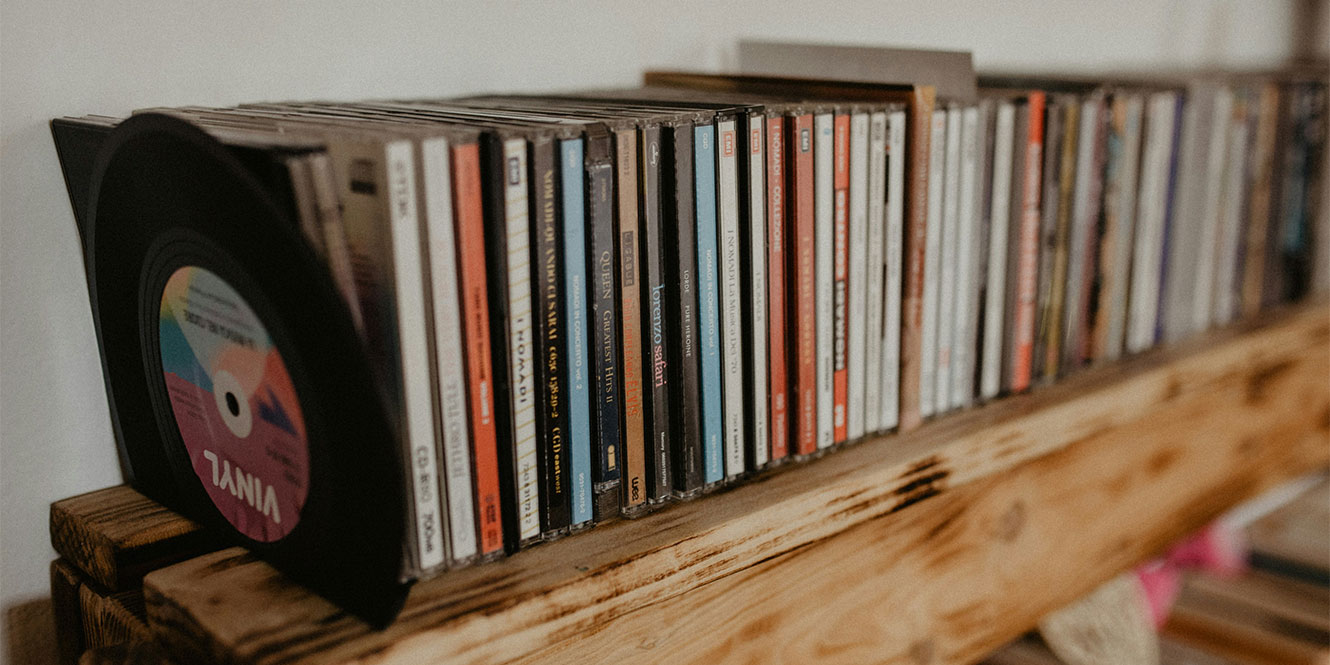
Taking the right steps will help ensure your vinyl records outlast both CDs and tapes, which tend to degrade more quickly due to environmental conditions. Thanks to their physical properties, vinyl records are considered the longest-lasting form of physical media – provided they’re properly cared for.
Choose suitable storage
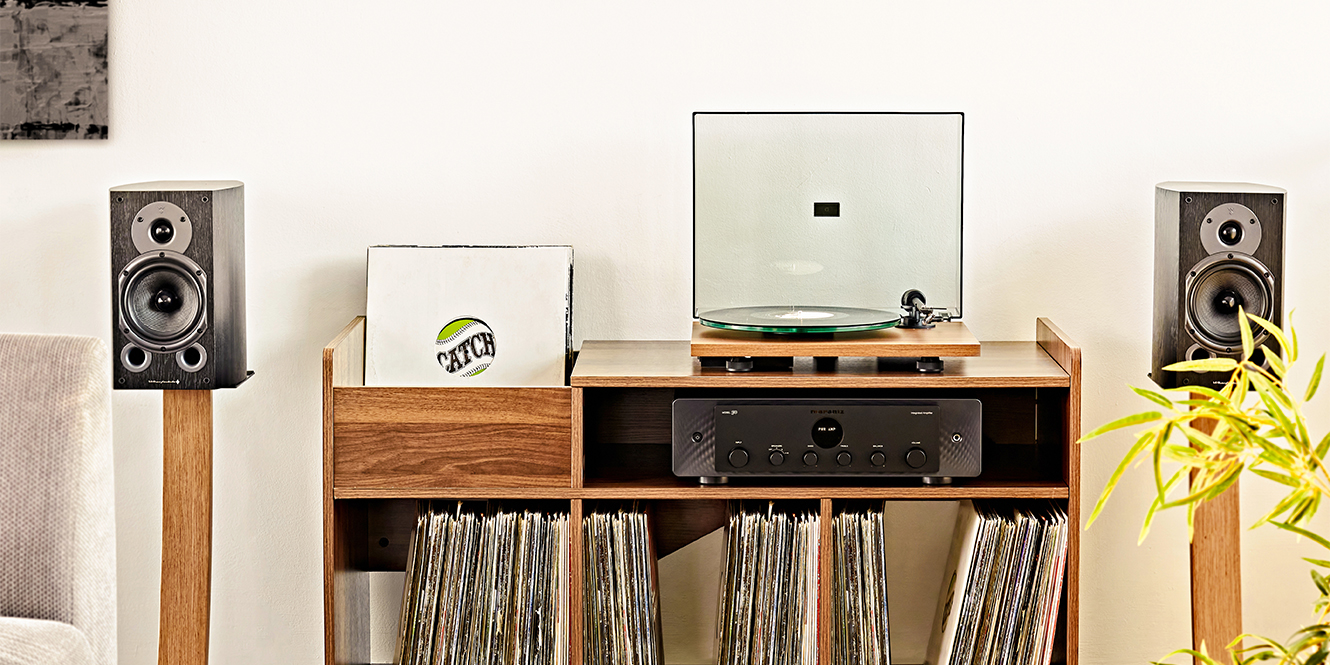
But “suitable”, we mean storage that suits the size of your collection and gives it ample space to grow. There are simple storage options, such as the AVCOM Record Storage Rack, which can sit on a shelf and provide adequate support and separation. This is a practical choice for anyone just starting out with a turntable and hi-fi setup.
If you have a larger collection, the AVCOM Short Hi-Fi Rack not only keeps vinyl records secure but also offers a stable base for an integrated stereo amplifier and turntable.
Anyone with a significantly larger collection might consider the AVCOM Record Collectors Unit, which can hold over 400 records while also providing a sturdy platform for audio equipment.
So, whether your vinyl collection is small or extensive, there’s a suitable solution to keep it safely stored.
Store them upright
You may have seen those amazing vinyl record collections with floor-to-ceiling shelving. They look cool, but did you notice anything about how they’re stacked? They’re stored upright!
Why? Simply put, the label is to blame. Storing records upright helps minimise the effect of the slight gap created by the label, as gravity applies equal pressure across all records. When records are stacked on top of each other, this uneven pressure can cause them to warp. The more records you stack, the worse the issue becomes – especially for those higher up in the stack – as the gap created by each label adds up.
Another factor that can lead to unwanted warping – even if your records are stored upright – is mixing 7″, 10″, and 12″ records together. This introduces similar issues to storing them flat, as the varying sizes cause uneven pressure. Over time, gravity causes the records to lean on each other, leading to warping in different ways.
This can lead to unwanted vibrations during playback, making it difficult for your turntable to track properly, potentially rendering the record unplayable. In such cases, the record may be considered worthless unless you invest in something like the Pro-Ject Flatten-IT Warped Vinyl Flattener.
FAQs
Is it better to store vinyl records flat or upright?
Storing vinyl records flat (horizontally) is not good for them; you should always aim to store them upright (vertically) to avoid unnecessary warping.
What is the best way to store my vinyl record albums?
If you are looking to store your records for a very long time, you could use the AVCOM Heavy Duty 12” Record Sleeve. This will keep them protected while in storage.
What destroys vinyl records?
Things like oil from your hands, grime, dust, and heat can destroy vinyl records, but if you clean them regularly and store them correctly, they’ll last for years.
Final thoughts
By now, you’ve probably realised there’s much more to storing vinyl records than it first appears. Hopefully, this guide will help you get the most out of your collection, while our cleaning tips will ensure you can enjoy your LPs for many years to come!







0 Comments