
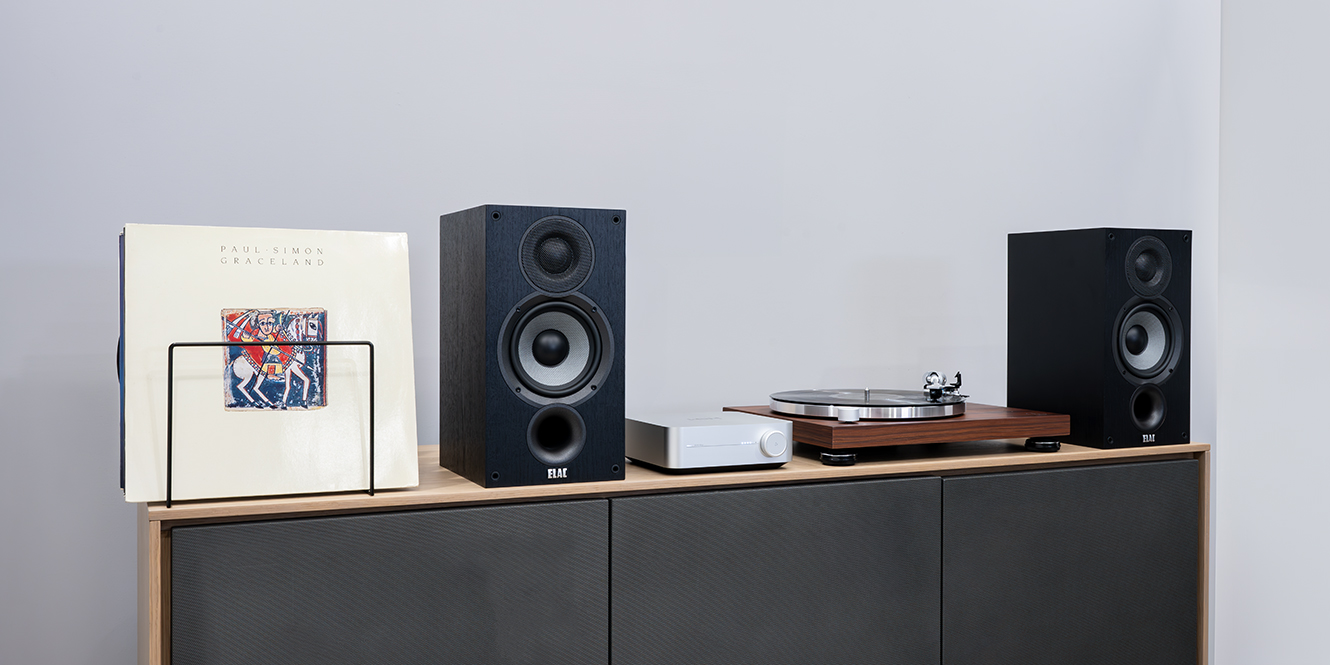

So you’ve ordered a turntable online, waited for the next-day delivery, unpacked it with a mild reverence, and finally, dropped the stylus on your very first record.
That’s when it happens.
Your favourite artist’s voice suddenly launches two octaves higher and sounds like they’ve been possessed by the ghost of Alvin and his chipmunk cronies.
Yep… that’s vinyl. Or, more specifically, vinyl played at the wrong speed. From tiny singles to heavyweight LPs, you might never have thought twice about those little numbers — 33⅓, 45, 78 RPM — until your record collection started sounding like it was recorded in a helium chamber… or underwater.
Let us guide you through vinyl record sizes and speeds. We’re going into this assuming it’s your first time figuring out what all the numbers mean, but if you’re here for the love of the hobby or just to check out the more niche record sizes, you’re more than welcome too!
In a hurry?
There are three primary record sizes: 12-inch, 7-inch, and 10-inch. The table below summarises these formats:
| Vinyl record size | What it’s used for |
|---|---|
| 12-inch | The standard for full-length albums. This is probably what you imagine when somebody says record. |
| 7-inch | Used for singles – short tracks, often one per side. Ideal when you just want the hits. |
| 10-inch | The old middle ground between singles and albums. Now sometimes used for EPs or reissues, but not as common. |
The table here summarises the different speeds:
| Vinyl record speeds | What it’s used for |
|---|---|
| 33⅓ RPM | Most albums run at this speed. Slower spin means more music per side. |
| 45 RPM | Common for singles and some high-quality reissues. Offers slightly better sound. |
| 78 RPM | Found on older shellac records. Mostly historic and not used for modern vinyl releases. |
Vinyl record sizes
Record formats are often referred to by their diameter. For example, a “12-inch” record is literally 12 inches across. The size affects how much music the record can hold, how it’s used, and even how it sounds.
12-inch records
The 12-inch record is the classic LP (Long Play) and the one most people picture when they think of vinyl. It became the go-to format for full-length albums in the late 1940s, thanks to its ability to hold around 20 minutes of music per side without losing sound quality.
That extra space gave artists room to breathe and design big, beautiful album cover artwork, too. If you’re buying new records today, chances are they’ll be 12-inch. It’s the most common vinyl size by far, and what most modern turntables are built to handle straight out of the box.
7-inch records
This one’s the classic single. First introduced in the late 1940s, the 7-inch record was designed to replace older shellac discs, which were more fragile and bulky. The new vinyl was smaller, lighter, and more durable. Plus, it was capable of much higher audio fidelity.
It quickly rose to prominence in the ‘50s and ‘60s, as artists began releasing one song per side. That made it ideal for hit singles, jukeboxes, and radio play. Even now, the format lives on, often used for special editions, limited runs, and collectable releases.
10-inch records
The 10-inch record is a bit of an odd one — not quite a single, not quite a full album. It was a common size in the shellac era (think 1930s–40s), but once 12-inch LPs took over in the 1950s, the 10-inch began to fade from the mainstream.
That said, it never truly disappeared. Today, it lives on as a niche choice for short albums, EPs, and special edition pressings.
Unconventional sizes
If we describe 10-inch as “an odd one”, then everything beyond that tips into the bizarre. Vinyl’s history is full of strange formats, from tiny 2-inch novelties to enormous 16-inch transcription discs made for radio. You’ll find 3-inch records designed for mini turntables, 5-inch punk singles with barely a minute of music, 6-inch children’s stories pressed on coloured plastic, and the occasional 8-inch EP tucked into a box set.
Most of these outliers either appeared before vinyl standards were fully established or were created for very specific purposes like jukeboxes, magazine inserts, niche players, or simply as collector bait. They rarely follow industry norms and might need specialist gear to play properly, if at all. If one does turn up nowadays, they’re more conversation starter than a casual listening format. Interesting though.
Vinyl record speeds
As well as its size, a record might also be described by its rotation speed: 33⅓, 45, or 78 RPM (meaning revolutions per minute, or more simply, how many full spins the record makes in a minute).
It’s an important detail because playing a record at the wrong speed can make it sound unnaturally fast or slow, distorted, and completely off. Fortunately, the correct speed is usually printed on the record label or sleeve.
33⅓ RPM
This is the most common speed you’ll come across today, especially for full-length albums.
Most 12-inch records are made to spin at 33⅓ RPM (often just called “33”), offering around 20–22 minutes of music per side. A slower spin lets more music fit per side, without sacrificing too much sound quality. If you’re buying new records or reissues, chances are they’ll be 33s, and just about every modern turntable can handle them straight out of the box.
45 RPM
45 RPM is most often used for 7-inch singles, typically with one song per side, though it’s not exclusive to that format. It’s a faster alternative to 33⅓ RPM, and with that extra speed comes better sound quality.
When a record is designed to spin faster, like at 45 RPM, more of the groove moves under the stylus each second. This gives the stylus more detail to work with, especially in high frequencies and dynamic shifts, resulting in more accurate playback.
That’s why many audiophile reissues are cut at 45. They don’t need the longer playtime of a full LP — and if they do, the music’s simply spread across more discs to prioritise sound quality over storage. Just check whether you’ll need a 45 RPM adapter. Some 7-inch records have large centre holes, originally designed for jukeboxes, and won’t fit a standard spindle without one.
78 RPM
78 RPM records were the standard format for music through the first half of the 20th century. Made from shellac, they’re heavier and more brittle than vinyl, and typically hold just 3–5 minutes of music per side.
They’re mostly of interest to collectors today, but if you’re planning to explore them, check that your turntable supports 78 RPM — not all do. Models like the Audio-Technica AT-LP120XBT-USB and Pro-Ject Debut Carbon EVO are great options, the former especially if you plan to digitise or sample older recordings.
You’ll also need a dedicated stylus, such as the Ortofon 2M 78 or Audio Technica AT-VM95SP. Standard styli aren’t suitable for 78s and can damage both the record and the sound. Always consult your turntable’s manual before spinning anything from this era.
Not interested in the oldies? Don’t worry — unless you’re actively seeking out 78s, it’s unlikely you’ll need the compatibility when shopping for turntables.
FAQs
What are the standard vinyl record sizes?
The standard vinyl record sizes are 12-inch, 7-inch, and 10-inch. These correspond to different playback speeds and use cases. Commercially, 7-inch and 12-inch are the most common; 7-inch for singles and 12-inch for full albums or extended mixes. 10-inch records are generally older or speciality records.
How do I know if my record is 33, 45, or 78 RPM?
You can tell if your record is 33, 45, or 78 RPM by checking the label near the centre. If that’s missing, estimate by size, groove width, or briefly testing speeds — but don’t play at the wrong speed for long, as it can affect sound and wear your disc and stylus.
Are 12-inch vinyl 33 or 45 RPM?
12-inch vinyl is typically 33⅓ RPM, especially for standard LPs. However, they can also be 45 RPM, particularly when used for high-fidelity pressings. If an album is split across multiple sides, with two or more records, it’s often an indicator that it’s 45 RPM for better sound quality, with wider groove spacing.
Final thoughts
Whether you’re building your first collection or dusting off inherited classics, understanding vinyl record sizes and speeds helps take the mystery out of what’s on your turntable.
From the familiar 12-inch LPs to 7-inch singles and the occasional 10-inch or 78 RPM throwback, you don’t need to memorise every variation, just get familiar with what your gear supports and what kind of listening experience you’re after. That way, you’ll enjoy your records the way they were meant to be heard, without risking damage to your system or collection.
Vinyl’s a journey, and knowing your formats makes the ride smoother (and a lot more fun). Got a favourite record or a format question? Drop it in the comments — we’d love to hear what’s spinning on your deck.




0 Comments