
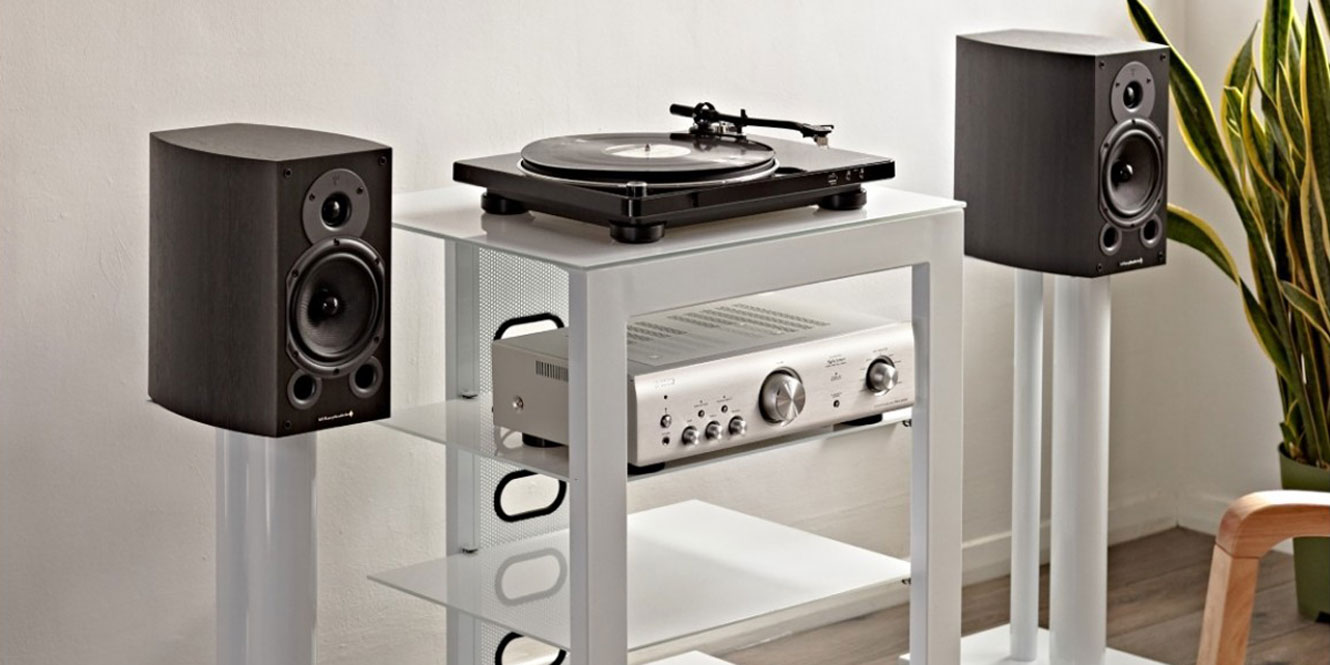

It’s hard to say what kind of magic spell the engineers at Wharfedale cast when they designed and manufactured the Wharfedale Diamond 9.1 speakers, but they’ve certainly enjoyed years of eternal youth.
Even now, after two decades and counting, these noteworthy little speakers provide a fresh sound that we can’t help but love. In this Wharfedale Diamond 9.1 review, we take a deep look at this award-winning speaker and pinpoint what makes it a top choice, even when compared to newer speakers on the market. Lauded by the hi-fi community for decades, let’s see what makes a Diamond shine.
Key Takeaways
Want to know if the Diamond 9.1 is for you? Here are some of its best features… and a few cons, for a balanced argument.
| Pros | Cons |
|---|---|
| A reliable crowd-pleaser for the past two decades | Lacks the bass to be a good party speaker, but excels at everyday use |
| Remarkably clear, flat frequency response | The vinyl finish may reduce the perceived value for some |
| Bi-wire compatible, with gold-plated 5-way binding posts |
Tonally matching Diamond 9.CS Centre Speakers and the Diamond SW-150 Subwoofer are also available for home cinemas. For the full setup, check out our Wharfedale Diamond 9.1 5.1 Home Cinema Package.
Wharfedale Diamond 9.1 Review
Sound quality
 Alright, let’s start with the heart of the matter; sound quality.
After hooking these speakers up, we grabbed a few discs from our showroom. Honestly, it felt like we’d just taken part in a lucky dip: Paul Simon’s One Trick Pony, Jeff Wayne’s War of the Worlds (both on vinyl), and Blur’s Parklife on CD. OK, a bit of a weird mix, but it gave us a chance to test out a few setups.
The needle dropped on our first pick, and just before we were treated to the upbeat introduction to One Trick Pony, the warm record crackle came clearly through the Wharfedale Diamond 9.1, setting the tone for our listening session.
These speakers had no problem keeping up with the lively salsa of “Late in the Evening”.
The next thing I remember, we’re bobbing our heads along to the music. The vocals had good definition and you could pick apart the instruments, especially once the track really got going. It was the same with Jeff Wayne’s “The Eve of the War” as Richard Burton’s haunting narration came into play.
The bass, while not powerful like some other speakers we’ve tested, was at least well-controlled without overwhelming the mid-range, which also carried very little colouration.
We switched to CD, and the energetic attitude of Blur’s “Girls & Boys” was relayed very well. The 9.1 delivered a surprisingly wide frequency response, offering a capable treble performance without sounding harsh, all whilst allowing the distinctive guitar riffs and synth lines to shine through.
For a bookshelf speaker with a five-inch woofer and an asking price under £150, the controlled bass, lively sound, and good definition are seriously impressive.
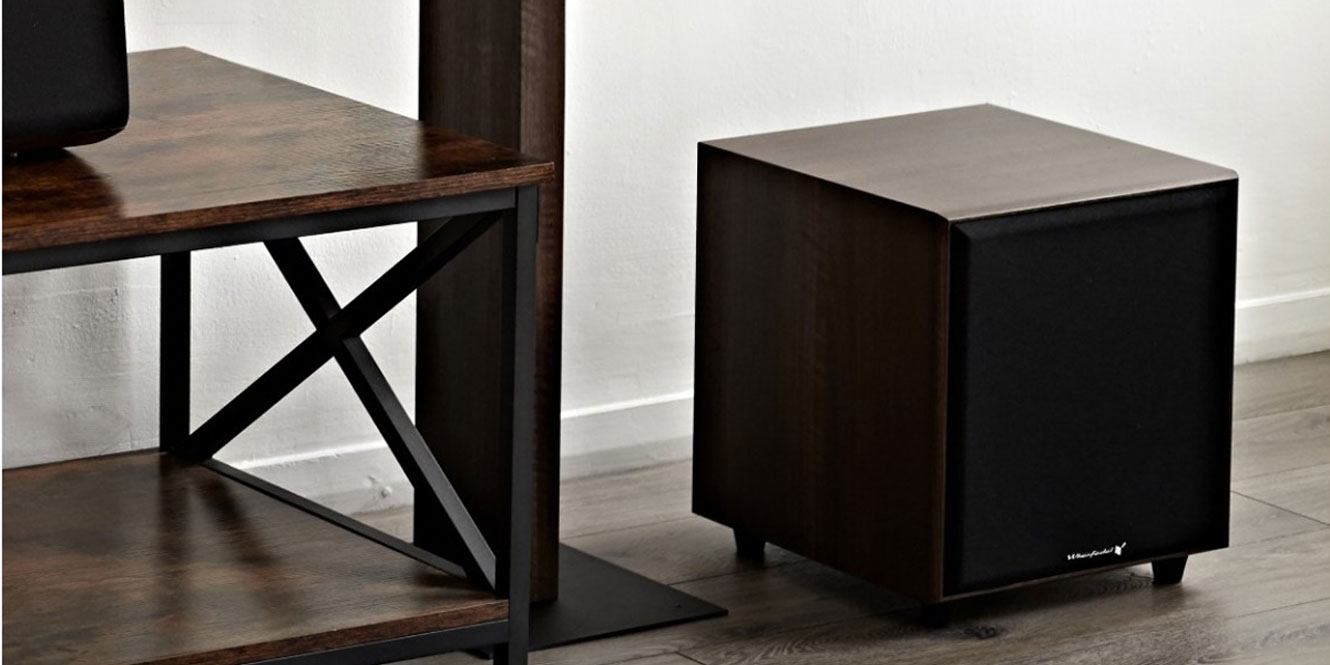
If you’re looking for something a bit boomier for parties or dedicated home cinema, our solution would be to add the range’s Wharfedale Diamond SW-150 Subwoofer, which – as well as still being in production alongside the 9.1 – comes in identical colourways, meaning you don’t have to settle for a mismatched hi-fi or home cinema system.
Frequency response
Moving onto the technical specification, the Wharfedale Diamond 9.1 Bookshelf Speakers feature a 25mm textile tweeter and a 130mm (approx. five-inch) Kevlar cone bass/midrange driver. While these diameters are pretty standard for a bookshelf speaker of this size, the use of woven Kevlar ensures that the driver remains stiff during more intense play, whilst keeping weight (and cost) low.
When compared to other bookshelf speakers in a similar price range, particularly passive models which often get overshadowed by active speakers between £100 and £150, this one strikes a good balance between highs and lows. In other words, it doesn’t play favourites with either end of the frequency range and achieves a measured response of 50 – 24,000 Hz.
That’s why the Wharfedale Diamond 9.1s are one of our go-to choices when matching with entry-level gear. The six-ohm nominal impedance means that they can comfortably pair with a wide array of amps, receivers, and mini systems without causing undue strain on audio setups.
Plus, they’re bi-wire compatible. That’s quite a rarity in speakers at this level, and it gives you the freedom to integrate these speakers into a wider range of configurations.
Design and aesthetics
 It’s always exciting opening a nice big speaker box.
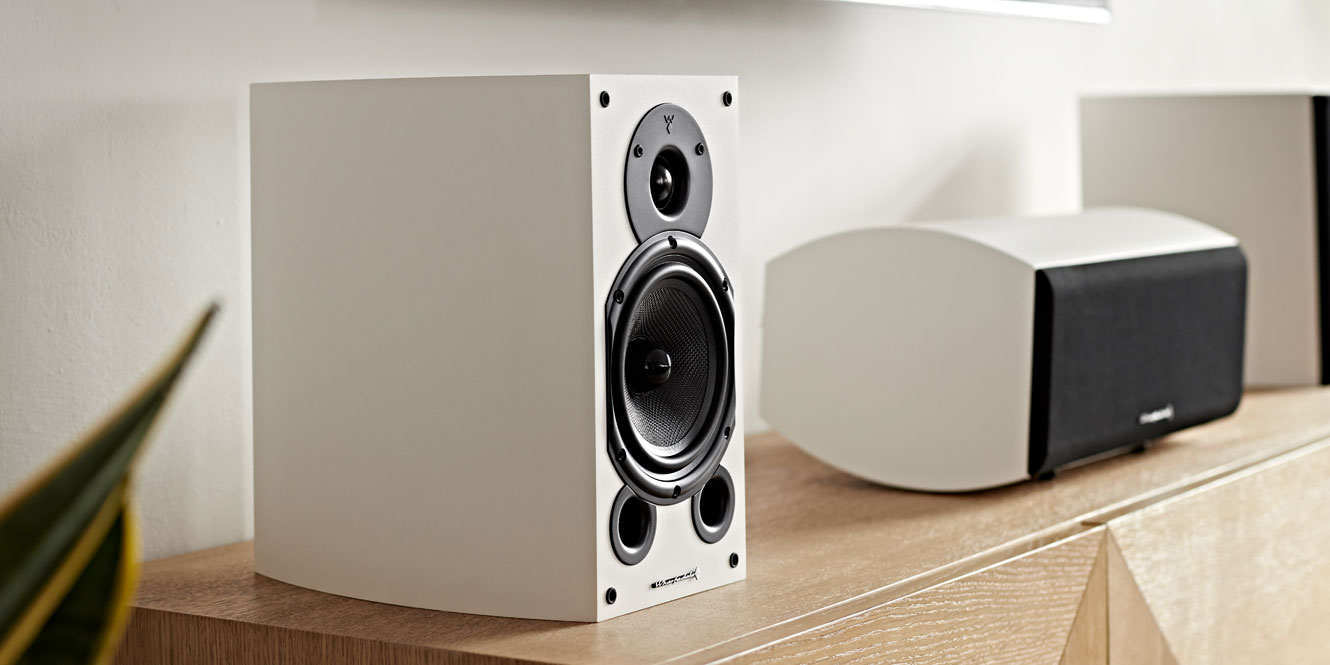
Once you get through the packaging, the first thing to catch your eye about the Diamond 9.1 is its curved cabinet. They almost look like they’d be aerodynamic if you put them on the open road, and have this surprisingly sophisticated feel about them.
On that note, there’s some substantial weight to the 9.1; not heavy, just sturdy. You don’t often come across that in speakers at this price point or lower.
If we split them in half, you’d be able to see the thick MDF cabinet walls and internal bracing that make up the structure, with plenty of stuffing to provide a bit of extra dampening.
None of this is a purely aesthetic choice. It’s all about efficiency.
This speaker achieves surprising levels of accuracy because its drivers are free to do their thing with minimal interference from cabinet vibrations or standing waves.
All of this aside, the main draw is the twin ports built into the front of the speaker. They not only direct more sound towards your listening position but also relieve pressure inside the cabinet. It’s also a smart design that gives your setup flexibility – you don’t need as much space at the back for the ports to work their magic, which makes the 9.1 a great option for shelf placement or more compact music systems.
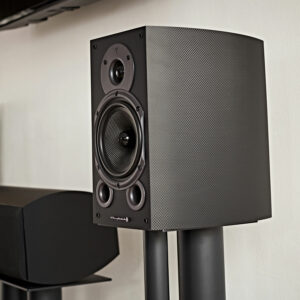
If the cabinet does have one drawback, it’s the vinyl finish, but hey, that’s a reasonable trade-off to keep the price so low. Plus, you’ve got four colour options to choose from: black or walnut wood effects, matte white, and a relatively recent addition – carbon fibre, which we think fits quite well with the texture of the Kevlar cone.
Specifications
General
| Dimensions (each) (W x H x D) | 194 x 296 x 278 mm |
| Package dimensions (W x H x D) | 480 x 390 x 340 mm |
| Weight (each) | 5.5 kg |
| Colours | Black Ash, Walnut Pearl, Carbon Fibre, White |
Audio
| Crossover frequency | 2.3 kHz |
| Drivers | High frequency: 25mm textile tweeter Low frequency: 130mm Kevlar bass/midrange cone |
| Frequency response | 50 – 24,000 Hz |
| Nominal impedance | 6 ohms |
| Power handling | 20 – 100 Watts |
| Sensitivity | 86 dB |
FAQs
Is the Wharfedale Diamond 9.1 good?
The Wharfedale Diamond 9.1 is exceptionally good for the money. For less than £150, they present great value, including features usually only found at higher price points like bi-wire compatibility, dual front-firing bass reflex ports, and thick, braced MDF cabinet walls.
Which Wharfedale Diamond is best?
The best Wharfedale Diamond is currently the Diamond 12 Series. These are the latest generation of Diamond speakers and have been commended by the wider hi-fi community. The closest modern equivalent to the 9.1 is the 12.1, offering multi-award-winning sound quality at an affordable price point.
How much does the Wharfedale Diamond 9.1 weigh?
The Wharfedale Diamond 9.1 weighs 5.5kg per speaker. They’re fairly lightweight but still have a substantially sturdy feel. They can also be shelf, cabinet, or stand mounted, making them the perfect starting point for high-fidelity audio or as part of an easy-listening secondary music system.
Final thoughts
If you’re looking for an affordable and reliable speaker for everyday use that’s also stood the test of time, the Wharfedale Diamond 9.1 could be the perfect place to start. While the competition at this price point is just as intense as it was 20 years ago (if not more so) we still think these speakers stand toe-to-toe with other brands.
There’s a reason they made it onto our list of best bookshelf speakers and it’s probably the same reason they remain so popular.
So, what’s your take on it? What would you add to our Wharfedale Diamond 9.1 review? If you’ve got the Wharfedale Diamond 9.1, we’d love to hear which amp or system you’ve paired them with. Drop your thoughts in the comments below, and feel free to suggest what you’d like us to check out next!




Hi there!
I’m using these Wharfedale Diamond 9.1 in combination with my computer and together with an Advance Paris X-i75 amplifier and a Tascam CD-RW900 MkII Professional CD Rewritable Recorder. The amplifier is connected to my computer directly via the USB. Having now been played for about 40 hours, I can only say that these speakers sound incredibly good and for a computer system it hardly gets any better, especially considering the astonishingly low price. The computer room is quite small at 8 sq.m. so therefore these speakers can perform a very good and punchy bass. When I play e.g. FLAC files from the computer digitally all the way into the amp and then out to these speakers, it sounds absolutely amazing. I can really recommend these little monsters and when you test them out in the living room (25 sq.m.) in the big music system, they don’t need to be ashamed of themselves either. Unbelievably price worthy!
Fake! Shame on you Wharfedale! The original Wharfedale weight is 5,5, kg this fake quality wise reduced ones are made in china and are just around 1.2 kg lighter. Less quality in wood and magnets. Dont buy it!