
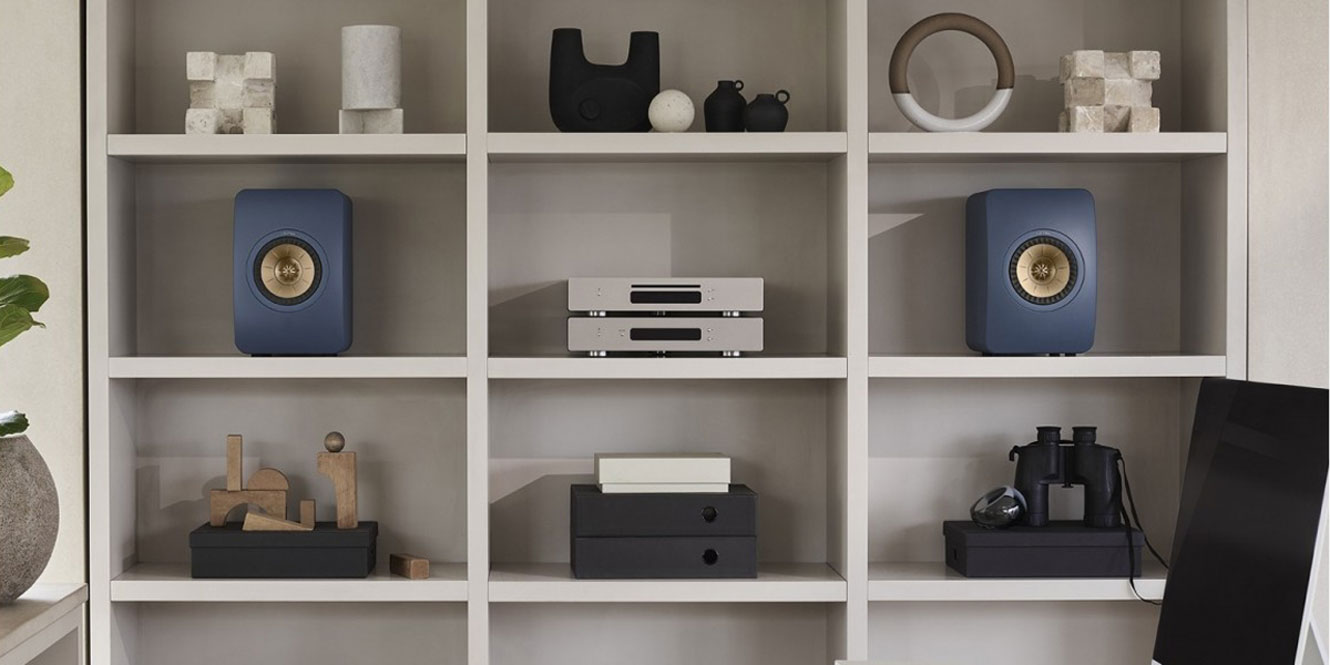

When it comes to playing music at home, bookshelf speakers are to your amplifier what wheels are to a sports car; where the rubber meets the road.
The performance of your entire hi-fi system can rest on finding complimentary equipment, and with so many incredible choices on the market, it’s easy to feel the pressure when it comes time to decide.
That’s where we can lend a hand.
Our showroom is a treasure trove for top-quality home audio. We’re fortunate enough to demo some of the best products on the market and mix and match different equipment combinations. In this article, we’ll examine 13 of the best bookshelf speakers currently available, spanning budget hi-fi to high-end models, with choices from mantlepiece to centrepiece in size and scale.
We’ll also give you some pointers on how to choose your speakers and finish by answering some frequently asked questions. Our hope is that, by reading this article, you’ll feel more confident when selecting your new home audio speakers.
In a hurry?
At a glance, here are our three favourite bookshelf speakers at the minute and why to buy them!
| Wharfedale Diamond 9.1 | Curved cabinet edges reduce standing waves for accurate sound. Great starter speaker. | Find out more |
| ELAC Designer Series Debut ConneX Adsum | Compact and stylish speakers with ELAC's XBass Enhancer. No external amp is required. | Find out more |
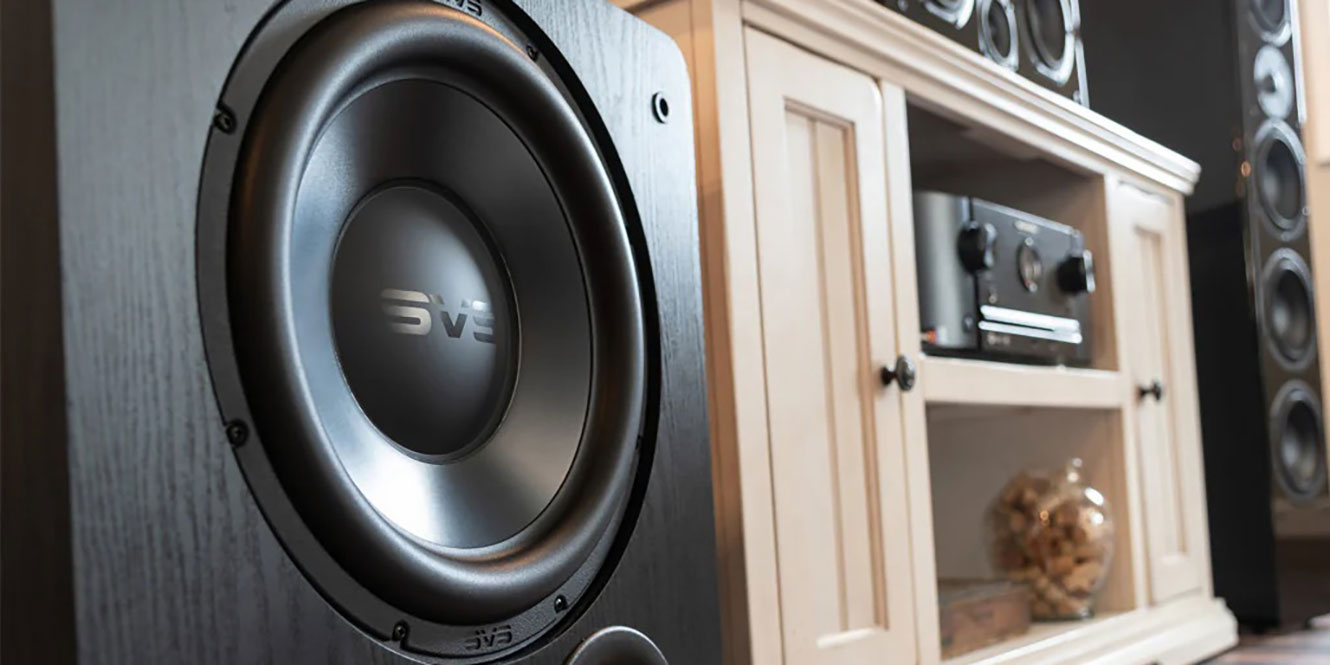
| SVS Ultra Evolution | Incredibly detailed sound, free from distortion - all thanks to a diamond-coated aluminium tweeter with an advanced vapour deposition process and a rigid cabinet. | Find out more |
The best bookshelf speakers
1. Wharfedale Diamond 9.1 Bookshelf Speakers
Best budget bookshelf speakers under £200
 Specifications:
- Dimensions (W x D x H): 194 x 278 x 296mm
- High-frequency driver: 1” (25mm) textile tweeter
- Low-frequency driver: 5” (130mm) Kevlar bass/midrange cone
- Frequency response: 50 – 24,000 Hz
- Nominal impedance: 6 ohms
- Sensitivity: 86 dB
- Recommended amplifier: 20 – 100 W
Pros:
- Incredible value for money
- Budget-friendly and bi-wire compatible
- Front-facing bass ports make placement nearer to back walls a little easier
Cons:
- Honestly, at this price point, there’s not much to criticise
Recognised all over the world for some truly iconic designs, most notably the Linton and Dimond series, Wharfedale have built a reputation for quality over the last 90 years.
In the early 2000s, the Wharfedale Diamond 9.1 Bookshelf Speaker made a name for itself as a rejuvenation of the Diamond series. Now, twenty years on, it remains an incredibly popular model and still worth every penny.
As such, the Diamond 9.1 is a great choice for budget-friendly setups. In fact, it’s a strong contender for best value for money. They’re a no-fuss sort of speaker and very easy to get up and running. They’re also surprisingly versatile, featuring gold-plated, bi-wire compatible binding posts; quite a rarity at this price point.
They’re also big for the price.
The internally braced, almost aerodynamic-looking curved cabinet houses a five-inch Kevlar bass/midrange cone, which is a great combination for bass. This might make them too bulky if you’re looking for desk speakers, though.
The Diamond 9.1’s complex curved cabinets are a standout design feature and unheard of at this price point. They help to eliminate standing waves, thereby increasing the accuracy of audio reproduction from the speaker.
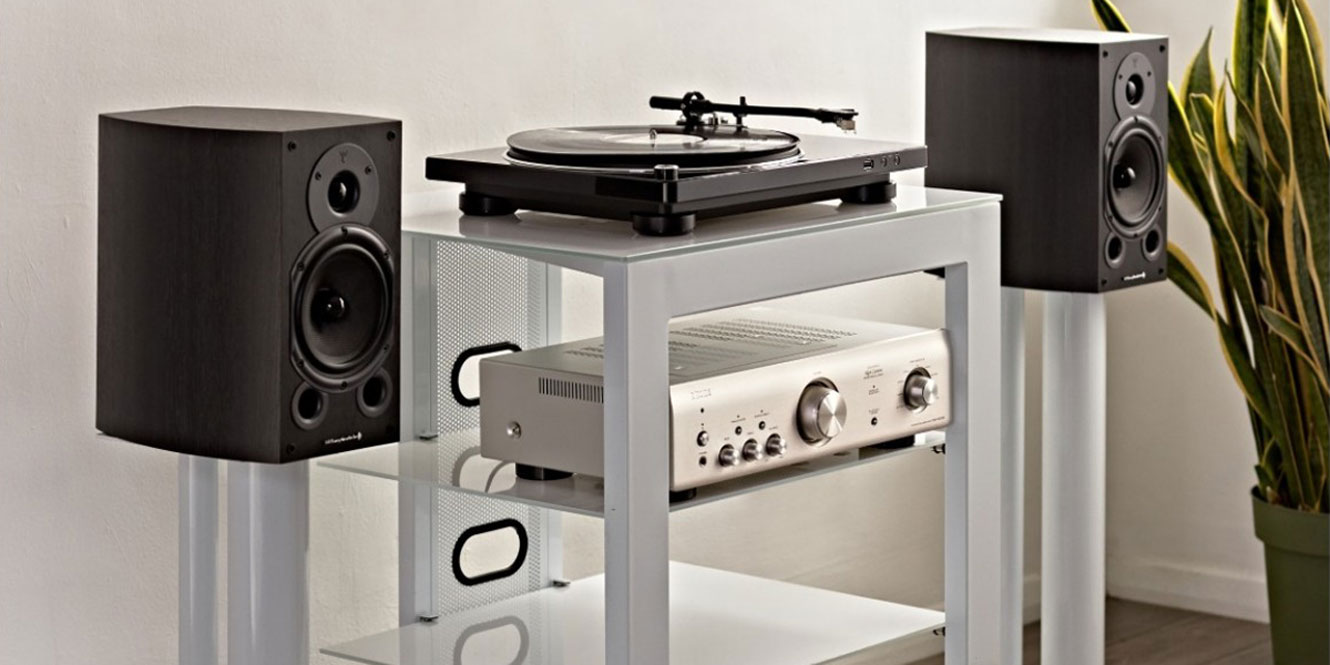
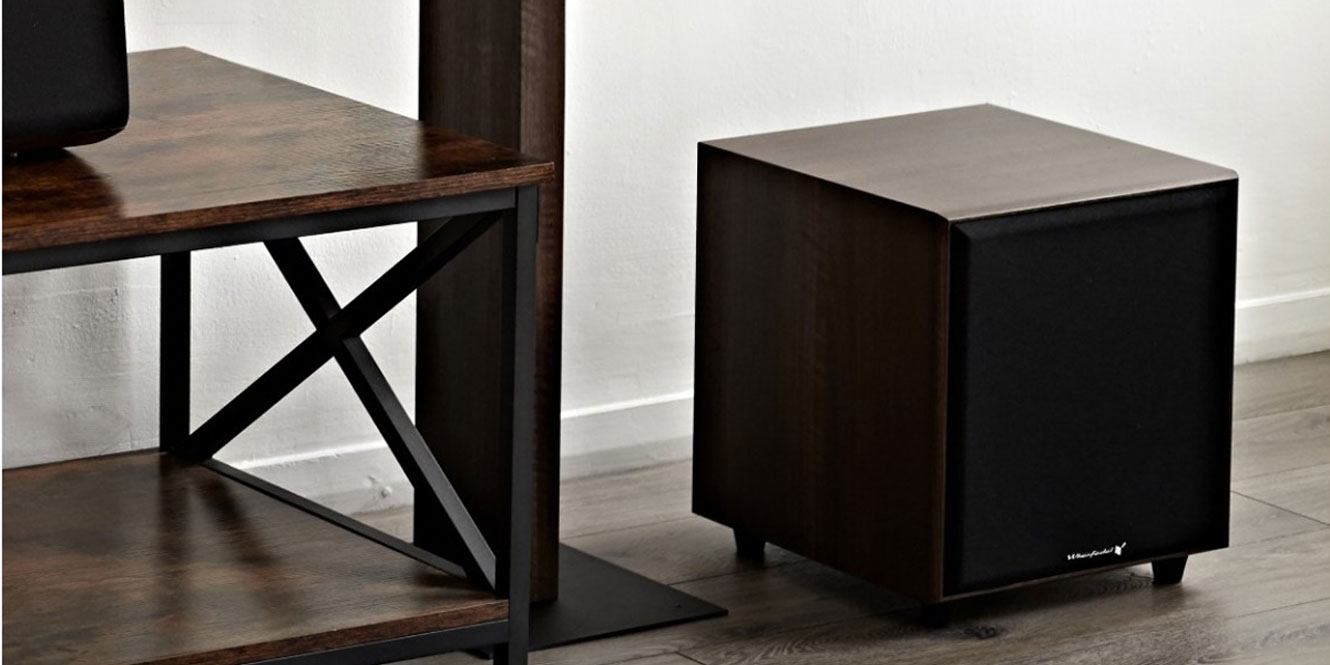
With a front-ported bass reflex, the Diamond 9.1 is less demanding for room placement and can be set up a little closer to a rear wall than other speakers. They’re also great for budget home cinemas when paired with the Wharfedale Diamond 9.CS Centre Speaker and Diamond SW-150 Subwoofer.
2. Monitor Audio Studio 89 Bookshelf Speakers
Best bookshelf speakers for precise control and pristine performance
 Specifications:
- Dimensions (W x D x H): 157 x 361 x 340mm
- High-frequency driver: 1 x MPD III Tweeter
- Low-frequency driver: 2 x 4 1/4” (108 mm) RDT III Bass-mid Drivers
- Frequency Response, Free-Field (-6dB):
- Frequency Response, In-Room (-6dB): 53 – 60 kHz
- Nominal impedance: 6 ohms
- Sensitivity: (2.83V @ 1m, Free-Field) 86 dB
- Recommended amplifier: 50 – 300 W
Pros:
- The result of decades of innovation and development
- Detailed sound courtesy of ‘point-source’ driver array
- Versatile placement options
Cons:
- Requires sturdy support
The Monitor Audio Studio 89 Bookshelf Speakers are a fantastic example of refined audio engineering. They deliver precise, clear sound across all frequencies courtesy of the ‘point-source’ driver array, which integrates twin 4.25-inch RDT III mid-bass drivers with a high-performance MPD III transducer. This combination ensures a balanced, detailed sound with excellent depth.
Housed in a robust cabinet featuring HiVe II slot-porting, the Studio 89s are built to last, with the innovative design reducing unwanted air turbulence and enhancing sound clarity. The crossover is meticulously crafted to maintain the purity of sound, minimising distortion and preserving the integrity of your audio.
Despite their compact size, these speakers pack a punch, offering a powerful sound that belies their dimensions. They’re also versatile in terms of placement – whether on stands, a sturdy shelf, or close to a wall, the Studio 89s can fit pretty much anywhere.
3. Q Acoustics Q 3020c Bookshelf Speakers
Best budget bookshelf speakers for stereo hi-fi
 Specifications:
- Dimensions (W x D x H): 175 x 281 x 279mm
- Frequency response: 60 Hz – 30 kHz
- Nominal impedance: 6 ohms
- Sensitivity: (1m, 2.83Vrms @ 1kHz) 87.0 dB
- Recommended amplifier: 25 – 90 W
Pros:
- Balances compact home audio with a larger cabinet
- Well-defined bass and treble, which gives excellent detail at their price
- Solid cabinet design, with bevelled edges and P2P bracing to reduce resonance
Cons:
- Larger cabinet dimensions, especially depth, can make placement harder
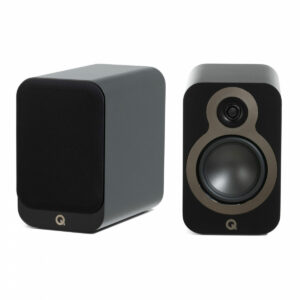
The Q Acoustics Q 3020c Bookshelf Speakers are more affordable than the Monitor Audio Studio 89s, but they provide a powerful, defined sound that you’d expect in speakers at higher price range.
The deep cabinet naturally gives the sound a bit more oomph, although you’ll need to factor in the extra size when making space for the speakers.
As well as the deep cabinet, the 3020c speakers deliver a great bass response and crossover with high frequencies thanks to the C3 (Continuous Curved Cone) technology. The curved design ensures that sound is dispersed well and the bass dynamics are deep and controlled. Hermetically sealed tweeters then prevent interference from the mid/bass drivers, guaranteeing detailed high-frequency content.
The cabinet has been manufactured with point-to-point bracing, drastically reducing resonance compared to previous iterations of the speaker. Once again, this is a key innovation to improve overall performance without catapulting the 3020c out of its price range.
4. ELAC Designer Series Debut ConneX Adsum
Best budget smart speakers
 Specifications:
- Dimensions (W x D x H): 140 x 170 x 247mm
- In-built amplifiers: 2 x 50W Class D
- High-frequency drivers: 1 x 3/4″ soft dome tweeter
- Low-frequency drivers: 1 x 4.5″ polypropylene woofer
- Frequency response: 66Hz-25,000Hz (anechoic); 50Hz-25,000Hz (in-room)
Pros:
- Clean, contemporary design
- Full-bodied sound with adjustable bass
- Comprehensive support for digital and analogue devices
Cons:
-
No onboard EQ or app control
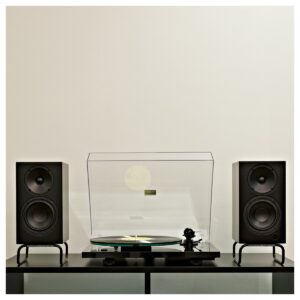
They might be compact, but the Debut ConneX Adsum speakers pack a lot in. Designed in collaboration with clothing label Adsum, they bring together ELAC’s respected audio engineering with a sleek, urban style.
As well as a 4.5-inch long-excursion woofer, the speakers come with ELAC’s XBass Enhancer and a rear-firing port to keep the low end both deep and tidy. If you prefer a more neutral sound, the XBass can be switched off, giving you control over how much presence you get from the lower frequencies. Essentially, it’s flexibility, style, and performance in one package.
Connectivity-wise, there’s HDMI ARC for linking straight to your TV, USB for handling high-res files up to 96kHz/24-bit, and Bluetooth aptX for smooth wireless streaming. For analogue gear, you’ve got line-in, optical, and even a built-in phono stage — which means your turntable doesn’t need an external preamp. There’s also a sub out if you ever feel like adding more weight to your setup.
5. Q Acoustic 5020 Bookshelf Speakers
Best budget bookshelf speakers for home theatre
 Specifications:
- Dimensions (W x D x H): 180 x 293 x 284mm
- High-frequency driver: 1” (25mm) hermetically sealed, floating tweeter
- Low-frequency driver: 5” (125mm) C3 Continuous Curved Cone mid/bass
- Frequency response: (-6dB) 53 Hz – 30 kHz
- Nominal impedance: 6 ohms
- Sensitivity: (2.83V @ 1kHz) 87.9 dB/w/m
- Recommended amplifier: 25 – 100 W
Pros:
- New C3 driver, currently unique to the 5000 series
- Isolated tweeter module resistant to cabinet pressure
- Sturdy construction, featuring P2P, with very low resonance
Cons:
- Perhaps lacking a little punch in favour of dynamic range
- Typical for Q Acoustics, a deep speaker which may make placement tricky
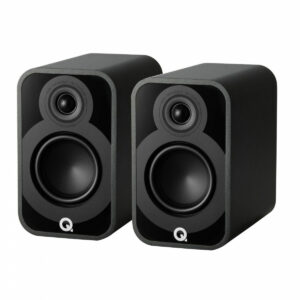
Back again with Q Acoustics, we’ve chosen the Q 5020 Bookshelf Speaker. So, what makes this so different from the Q Acoustics 3020c?
Whilst they do look similar, with the same curved edges and anti-resonance P2P internal bracing, the 5000 range is the stepping stone between the 3020c and Concept 30, borrowing the idea of a hermetically sealed tweeter to achieve cleaner high-frequency performance.
What’s the key distinction of the 5000 series, then?
Q Acoustics’ newly developed Continuous Curved Cone drivers have the capability to achieve remarkable transparency and scale even at lower frequencies. They also deliver a slightly deeper bass, which is a considerable plus when you consider the extra cost.
The C3 design, dropping the dust cap in favour of a continuous surface, can be found throughout the range. Consequently, being in the midst of a full Q 5000 series surround sound system is an utter delight.
Overall though, the Q Acoustics Q 5020 is a good point of entry for those after a budget home audio system with a little extra to spend. You won’t be disappointed by the performance.
6. Bowers & Wilkins 606 S3 Bookshelf Speakers
Best bookshelf speakers for mid-level step-up
 Specifications:
- Dimensions (W x D x H): 189 x 328 x 344mm
- High-frequency driver: 1” (25mm) titanium dome
- Low-frequency driver: 6.5” (165mm) Continuum cone bass/midrange
- Frequency range: (-6dB) 40Hz – 33kHz
- Frequency response: (+/-3dB) 52Hz – 28kHz
- Nominal impedance: 8 ohms
- Sensitivity: (2.83Vrms @ 1m) 88 dB
- Recommended amplifier: 30W – 120 W
Pros:
- A refinement over previous generations
- The titanium tweeter, rather than aluminium, improves definition
- More accurate imaging thanks to close driver units and better cabinet bracing
Cons:
- Great presence, but could sound a bit more energetic
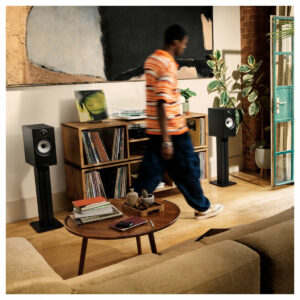
This is one of the newest speakers on our list, but it’s already making waves. Released in August 2023, the Bowers & Wilkins 606 S3 may not look drastically dissimilar from its predecessor, the 606 S2, but let’s be real – If it ain’t broke, don’t fix it.
The look of the 606 is as timeless as it is neat and it’s a perfect fit for just about any environment. The 607 S3 – which, despite the higher number, is the smaller speaker – is the compact alternative if you’re setting up a surround sound system or maybe just need something a bit more low-key than the 606.
Bowers & Wilkins have introduced a new decoupled titanium dome tweeter to the S3. This succeeds the aluminium dome used in previous generations and significantly increases transparency and openness when comparing the two. The tweeter is also situated much closer to the driver, which provides a boost to high overall imaging without drastically increasing cost.
When you consider the amount of trickle-down technology the 600 series has seen over the years, the 606 S3 is a great taste of Bowers & Wilkins, even if it’s just the appetiser. A cracking introduction to the mid-range.
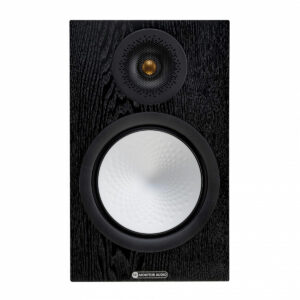
7. Monitor Audio Silver 100 7G Bookshelf Speakers
Best bookshelf speakers for larger rooms
 Specifications:
- Dimensions (W x D x H): 230 x 332 x 377mm
- High-frequency driver: 1” (25mm) C-CAM gold dome with UD Waveguide II
- Low-frequency driver: 8” (203mm) C-CAM mid-bass with RST II
- Frequency response: 35 Hz – 35 kHz
- Nominal impedance: 8 ohms
- Sensitivity: (2.83V @ 1m) 87.5dB
- Recommended amplifier: 40 – 120 W
Pros:
- Incredibly good bass for its size
- Can deliver great accuracy even at lower volumes and is easy to power
- Capable higher frequencies, very revealing of detail without brightness
Cons:
- Slightly bulkier cabinet than most speakers at this price
- Great in mid-sized rooms, but may overpower smaller rooms
You can’t really go wrong with Monitor Audio.
Their Bronze range is a hugely popular entry-level choice for first-time audio enthusiasts. However, we’ve decided to highlight the Silver instead. Specifically, the Monitor Audio Silver 100 7G Bookshelf Speakers.
With five finishes to choose from, including gloss and wood veneer in several natural tones, these speakers sit between the smaller Silver 50 and three larger floorstanding models, offering a variety of configuration possibilities.
So, why the Silver 100?
Well, this speaker is a real space-saver. It’s a wider bookshelf speaker for sure, with a depth on par or slightly above others at its level, but it needs these added dimensions to house the eight-inch C-CAM mid/bass RST II driver. Spoiler warning for those who haven’t skipped ahead: this is the biggest driver on our list.
Along with the proprietary HiVe II rear port, the Silver 100 inherently has a bit of extra kick. Monitor Audio themselves have stated that the 100 7G was designed to provide the bass extension usually only present in floorstanding speakers. Again, if you’re looking for something akin to a large stereo system but lack the space, go for this.
You could always add a subwoofer if you want, but that’s not to say it’s all about that bass! The Silver 100 7G is a capable all-rounder, with detailed vocal performance and an excellent level of clarity.
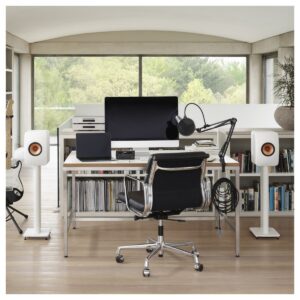
8. KEF LS50 Meta Speakers
Best bookshelf speakers for technical innovation
 Specifications:
- Dimensions (W x D x H): 200 x 280.5 x 302mm
- High-frequency driver: 1” (25mm) vented aluminium dome with MAT
- Low-frequency driver: 5.25” (130mm) aluminium cone (Uni-Q Driver Array)
- Frequency range: (-6dB) 47 Hz – 45 kHz
- Frequency response: (+/-3dB) 79 Hz – 28 kHz
- Nominal impedance: 8 ohms
- Sensitivity: (2.83V @ 1m) 85 dB
- Recommended amplifier: 40 – 100 W
Pros:
- 12th gen Uni-Q array exhibits impeccable time alignment and open dispersion
- Sets the bar for transparency and audio realism, with expressive soundstage
- Excellent build quality, with heavy bracing and MAT dampening
Cons:
- Accuracy is favoured over bass and may benefit for subwoofer
Metamaterial Absorption Technology. That’s what defines KEF speakers these days. “MAT” for short. It might be something you’re already familiar with if you’ve had an eye on KEF, joining what could almost be described as a pantheon of signature technology.
The moment you take the KEF LS50 Meta Speakers out of the box, you know you’re holding an audiophile-level speaker. They’re absolutely gorgeous and feel structurally sound, with curved edges and internal bracing tested to reduce distortion. Peering from the centre of the otherwise featureless front panel, the Uni-Q driver array stares at you; an almost cyclopean gaze.
Poetics notwithstanding, at 5.25 inches across, it’s incredible how much power is centred within this relatively small driver array. For those who haven’t encountered it before, Uni-Q integrates a 25mm tweeter in the centre of the mid/bass cone, producing driver alignment and dispersion that is unique to KEF.
This complex design has been refined once more with the introduction of the MAT.
Looking more sci-fi than hi-fi, this maze-like construction of tubes absorbs up to 99% of unwanted sound from the rear of the driver. This drastically reduces distortion and allows the driver to move more freely, for much higher transparency. Overall, the KEF LS50 Meta is capable of incredible detail. It’s also available in some pretty striking colourways, with driver finishes that range between golden, copper, and crimson.
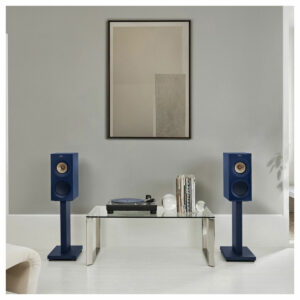
9. KEF R3 Meta Bookshelf Speakers
Best compact standmount speakers
 Specifications:
- Dimensions (W x D x H): 200 x 336 x 422mm
- High-frequency driver: 1” (25mm) vented aluminium dome with MAT
- Mid-frequency driver: 5” (125mm) aluminium cone (Uni-Q Driver Array)
- Low-frequency driver: 6.5” (165mm) hybrid aluminium cone
- Frequency range: (-6dB) 38 Hz – 50 kHz
- Frequency response: (+/-3dB) 58 Hz – 28kHz
- Nominal impedance: 4 ohms
- Sensitivity: (2.83V @ 1m) 87 dB
- Recommended amplifier: 15 – 180 W
Pros:
- Again, Uni-Q drivers offer wide dispersion, aiming to create a ‘whole room’ sweet spot
- Immersive speakers with a convincing soundstage and level of separation
- Floorstanding levels of bass performance from a compact speaker thanks to a three-way driver array
Cons:
- Eclipses most bookshelf speakers in height, definitely more standmount in scale
- With a lower nominal impedance than the LS50, they’ll be trickier to pair with an amp
Right! Let’s not cover old ground.
For anyone who skipped the KEF LS50 Meta and jumped straight to this speaker: the Uni-Q driver is outstanding, and Meta technology… doubly so.
In all seriousness, the fact that KEF are able to take their established speaker ranges and improve them tenfold by implementing Metamaterial Absorption Technology is a testament to its engineering and execution.
The KEF R3 Meta Bookshelf Speaker is the first three-way speaker on the list.
Thanks to the Uni-Q array, the R3 can comfortably accommodate three dedicated drivers in a relatively compact cabinet. This array includes a 25mm MAT tweeter inside the footprint of the five-inch aluminium cone midrange. With room to spare for a separate 6.5-inch hybrid aluminium cone bass unit, you get a standmount with much closer performance to a floorstanding speaker.
Now that’s a big claim, but if you actually get a chance to listen to the R3 Meta, we think you’ll agree.
Everything has been optimised for better performance and distortion control. Not to mention, allowing the five-inch driver to concentrate solely on the midrange greatly bolsters vocal clarity.
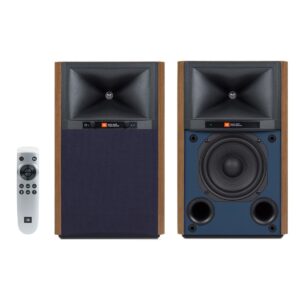
10. JBL 4305P Wireless Studio Monitor Speakers
Best bookshelf speakers for high-end step-up
 Specifications:
- Dimensions (W x D x H): 210 x 223.3 x 336mm
- High-frequency driver: 2410H-2 1-inch (25mm) annular ring Teonex® diaphragm compression driver with advanced HDI™ geometry horn
- Low-frequency driver: 5.25-inch (130mm) pure-pulp black paper cone woofer with cast frame
- Frequency response: 45 Hz – 25 kHz (-6 dB)
- DAC: 24-bit / 192kHz high-resolution (Digital link: up to 24-bit/192kHz; wireless: up to 24-bit/96kHz
Pros:
- Professional and home-friendly connectivity
- Hi-res 24-bit/192kHz DAC for clear playback
- Compact yet powerful studio-grade design
Cons
-
Bass control limited to a rear panel switch
The JBL 4305P brings professional audio power to an easy home setup. With built-in Wi-Fi, Chromecast, AirPlay 2, and Bluetooth, it allows you to stream high-quality, detailed audio without needing extra gear.
In a nutshell, the speaker boasts a 300W Class D amplifier, a 5.25-inch woofer, and a 1-inch compression driver. That tweeter is paired with JBL’s High-Definition Imaging (HDI) horn, delivering clear highs and dynamic detail across the stereo field.
Around the back, a full suite of analogue and digital inputs gives you plenty of options. Balanced XLR/TRS connections allow for pro gear, while USB, optical, aux, and even a phono-compatible input mean it’s ready for almost any source. If your room tends to build up low-end — a common issue in smaller or corner setups — the rear bass contour switch helps rein things in for a more accurate sound. And with a 24-bit/192kHz DAC at its core, you can count on true-to-source playback every time you press play.
11. Devialet Phantom Ultimate 108 dB Wireless Speaker
Best high-end smart speakers
 Specifications:
- Dimensions (W x D x H): 246 x 342 x 255mm
- In-built amplifier: Devialet’s Analog Digital Hybrid amplification (1100W)
- High-frequency driver: 1x Tweeter aluminium dome (new-gen) (0.7″)
- Low-frequency driver: 2x Woofers ABS dome (new-gen) (6.5″)
- Frequency response: 14 Hz – 35 kHz (+/- 6 dB)
- Compatibility: AirPlay, Google Cast, Spotify Connect, Tidal Connect, UPnP, Roon Ready (RAAT), Bluetooth 5.3 (SBC and AAC codecs), 1x TOSLINK® (optical)
Pros:
- High-resolution sound at all volumes
- Elegant and luxurious aesthetic
- Flexible stereo pairing options
Cons:
- Premium price point
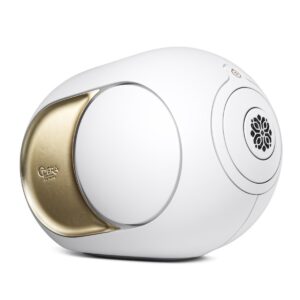
Take just one glance at the Devialet Phantom Ultimate and it’s immediately apparent that this is a cutting-edge, stylish piece of kit. And even though it has a price point to match, we would absolutely say, don’t let this put you off. If you’re in the market for a high-end, supremely powerful speaker, with up to 108 dB of output for an immersive, room-filling sound, this is it. You’ll hear everything in rich detail, from delicate treble at 35 kHz to deep bass reaching all the way down to 14 Hz.
The speaker uses Devialet’s unique Analog Digital Hybrid (ADH) amplification, alongside advanced signal processing and real-time dynamic tuning. These technologies work together to produce a balanced, distortion-free sound with exceptional clarity.
Now, we’ve mentioned how stylish it is. But let’s take a closer look. The Opéra de Paris edition features hand-applied gold leaf side panels and a sleek, matte white finish — a nod to the grandeur of the Opéra Garnier. It feels like a piece of art as well as a speaker.
Plus, it’s wireless, a major bonus if you’re after a super easy setup, with Wi-Fi 6, Bluetooth 5.3, and seamless control via the Devialet app. You’ll also find dedicated listening modes tailored to music, movies, and podcasts.
If you decide to add a second unit, the stereo pairing offers a spacious, immersive soundstage. Vocals stay centred, while instruments and effects are placed clearly across the room. It might be small, but the Devialet Phantom Ultimate delivers a cinematic, enveloping experience.
12. SVS Ultra Evolution Bookshelf Loudspeaker
Best bookshelf speakers for high-end home theatre
 Specifications:
- Dimensions (W x D x H): 220 x 285.7 x 378mm
- High-frequency driver: 1” Diamond Coated Tweeter
- Low-frequency driver: 6.5” Composite Glass-Fibre Cone
- Frequency response: 40Hz to 40kHz (+/-3 dB
- Nominal impedance: 6 ohms
- Sensitivity: 87dB (2.83V @ 1 meter full-space, 300Hz – 3kHz)
- Recommended amplifier: 20 – 150 watts
Pros:
- High-frequency clarity without distortion
- Tight, powerful bass with clean mids
- Wide listening area with consistent imaging
Cons:
-
Rear porting needs careful placement
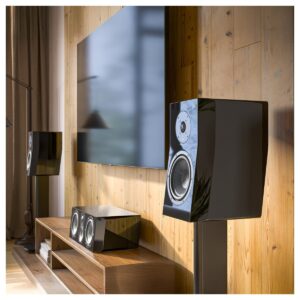
The SVS Ultra Evolution Bookshelf Loudspeaker is built to deliver detail, depth, and realism — all from a compact, well-engineered cabinet. It features a one-inch aluminium tweeter, strengthened with a diamond-carbon layer using a vapour deposition process. This design enhances high-frequency performance while reducing distortion, giving you crystal-clear detail in everything from cymbals to vocals. The cabinet’s rigid build also helps reduce vibrations for a more precise sound.
Below the tweeter is a 6.5-inch glass fibre composite woofer. It’s lightweight yet rigid, producing deep, controlled bass without muddying the midrange.
To maintain audio alignment, the drivers are housed in a time-aligned cabinet. This ensures the sound arrives at your ears together, improving realism and creating a sense of depth — as if the instruments are placed naturally across the room. The curved front baffle and organic diffuser help widen the sweet spot, so you’re not tied to one perfect listening position.
You’ll also find a rear-firing port for improved airflow, magnetic grilles for a clean look, and vented voice coils to manage power efficiently.
13. AVCOM 6″ Bookshelf Speaker Pair
Best bookshelf speakers under £100
 Specifications:
- Dimensions (W x D x H): 164 x 181 x 302mm
- High-frequency driver: 1″ Silk Dome
- Low-frequency driver: 6.5″ Kevlar Cone
- Frequency response: 65Hz – 20kHz
- Nominal impedance: 8 ohms
- Sensitivity: 87dB 1W/1m
- Output power: 50W RMS per speaker
Pros:
- Clear, detailed sound across all frequencies
- Excellent value under £100
- Flexible placement with magnetic grilles
Cons:
-
Limited low-end extension
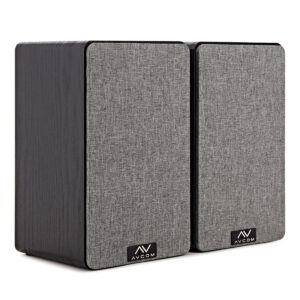
The AVCOM bookshelf speakers might be under £100, but they stand up against some of the more expensive models on this list. Each unit features a 6.5-inch Kevlar woofer, delivering punchy, controlled bass and a natural-sounding midrange. The 1-inch silk dome tweeter handles high frequencies with care, offering a smooth and detailed top end that works well for both music and dialogue.
To support the low end, a rear-facing port helps to enhance bass response — adding depth without muddiness. This makes them a great fit for film soundtracks, gaming, or music with a heavy rhythm section. The MDF cabinet design also helps keep vibrations to a minimum, preserving clarity at higher volumes.
How to choose the best speakers for you
Budget: Ask yourself one question when deciding budget: how often will you use your speakers? Daily intense use or casual listening? The more money you put in, generally speaking, the better quality you’ll get out, not only in sound but in build. Just remember to factor in the price of an amp if you’re not going for an all-in-one system.
Checking specs: If you can’t hear the speakers in person, check the specs.
The first step involves determining power requirements. This is indicated in watts, and manufacturers may provide you with a recommended amplifier power. Compare this to the amp’s power output, usually provided at eight-ohm and/or four-ohm impedance.
On that topic, you’ll want to match the speaker’s impedance (measured in ohms; sometimes shown Ω) with the amplifier. Matching this ensures the most efficient use of the amplifier’s power and minimises the risk of damage to the equipment.
Finally, features such as frequency response and sensitivity can indicate bass capabilities, ease of powering, and loudness.
Space available: Consider your listening space and remember that bigger doesn’t always mean better. Larger speakers may not be optimal for small rooms as they could overpower the space, whereas smaller speakers may not provide sufficient sound in larger rooms. When checking dimensions, also remember to add a little extra at the back for plugs and connections.
Benefits of bookshelf speakers
We’ve touched on this topic before in our guide to Bookshelf vs. Floorstanding Speakers, but it’s always worth revisiting from time to time.
Bookshelf speakers can be found everywhere, from the treasured, old mini-systems that play in garages and garden sheds to the pristine frontrunners of audiophile stereo setups. Their popularity is not a matter of chance.
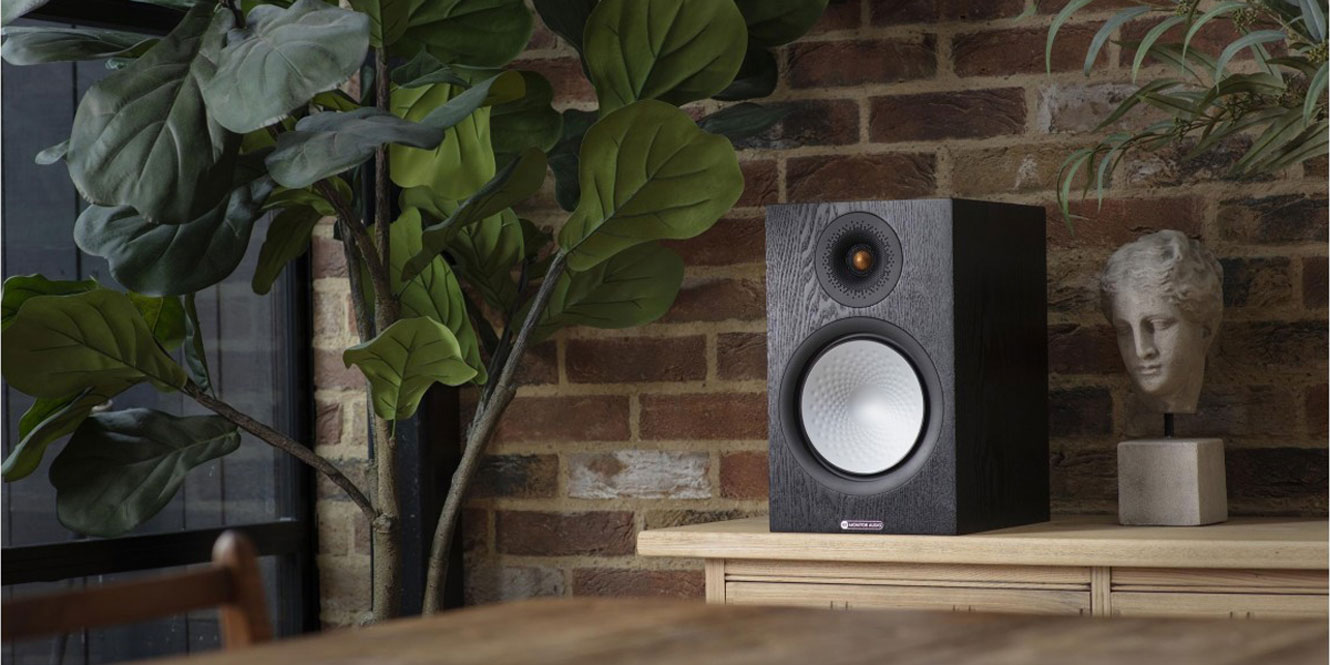
Bookshelf speakers typically have small-to-medium-sized cabinets. This is where the name originated, traditionally being small enough to fit within bookcases. This is not to suggest that they must be placed on shelves, though. In fact, most speakers perform best when placed out in the open on dedicated speaker stands. The name has stuck because it aptly describes their size and versatility in terms of placement options.
In fact, their size is often cited as their key draw when compared to larger floorstanding and standmount speakers.
In our modern age, where space can be a luxury, the ability for speakers to be installed discreetly while still delivering high-end audio quality is a boon. When paired with a good amplifier, bookshelf speakers will consistently outperform all-in-one mini systems where devices such as CD players or radios are integrated into the speaker.
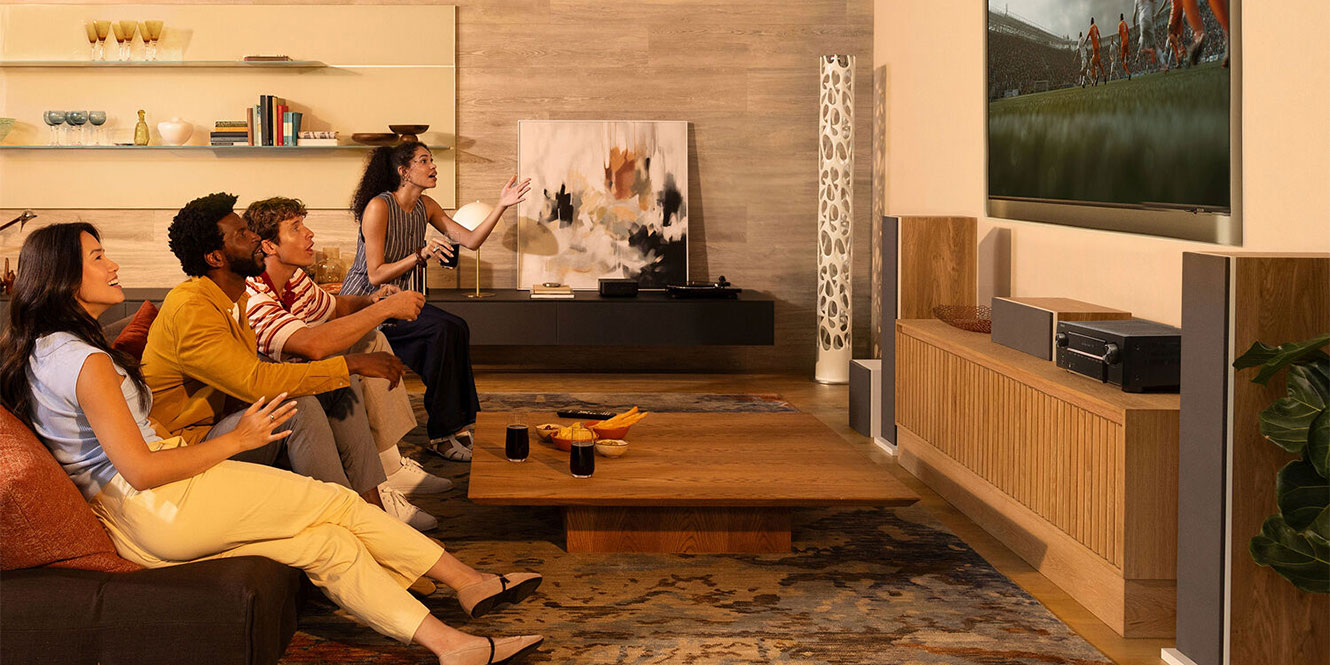
Their versatility makes them the perfect upgrade for a range of home entertainment equipment, including TVs, computers, game consoles, or turntables. They’re also integral to most surround sound speaker systems, especially when wall-mounted to save space.
Active vs. passive speakers
Speakers need an amplifier to produce sound.
In essence, the amp is an electrical component that receives and raises the audio signal to a level where it will move the speaker drivers. Whether the amp is built into your speaker determines whether it’s active or passive.
The majority of high-fidelity speakers are passive and require an external amplifier or receiver to function. This setup allows for greater flexibility, letting you choose an amp to suit your system requirements and preferences. It also means there is more space in the speaker cabinet, which can result in higher performance.
Active speakers, on the other hand, have the amp built in. Their design is more space efficient, meaning you can connect audio sources directly to the speaker without any additional steps.
FAQs
What is the best-sounding bookshelf speaker?
The best-sounding bookshelf speaker is dependent on your system requirements and preferences. These factors include your aesthetic tastes, the size and furnishings of the listening room, and the type of audio you will be listening to. It’s a subjective process.
Can bookshelf speakers sound as good as tower speakers?
Bookshelf speakers can sound as good as tower speakers. While towers (aka. floorstanders) have some obvious advantages, typically higher sensitivity and louder payback, a high-quality pair of bookshelf speakers paired with a subwoofer can produce comparable sound quality if you’re limited on space.
Why do audiophiles prefer bookshelf speakers?
Audiophiles prefer bookshelf speakers for their detailed sound reproduction. Floorstanding speakers excel at providing a big presence and extended bass but can overshadow subtle nuances. The compact size of bookshelf speakers can also make space for more equipment, like turntables and streamers.
Final thoughts
There are so many choices available on the market today that we’re almost spoiled for choice. No matter what you go for, we hope we’ve given you some food for thought on how to pick the best bookshelf speakers for your hi-fi or home entertainment setup.
We strongly suggest testing a speaker in person with a song or album you’re very familiar with. It really puts all those specs and techs in context. If you’re looking for some inspiration though, why not check out our Qobuz playlist and trial your system with hi-res audio playback?
Of course, the 13 we’ve mentioned here are only a select few from our incredible range. Do you think we’ve missed something? Why not let us know in the comments below?




0 Comments