
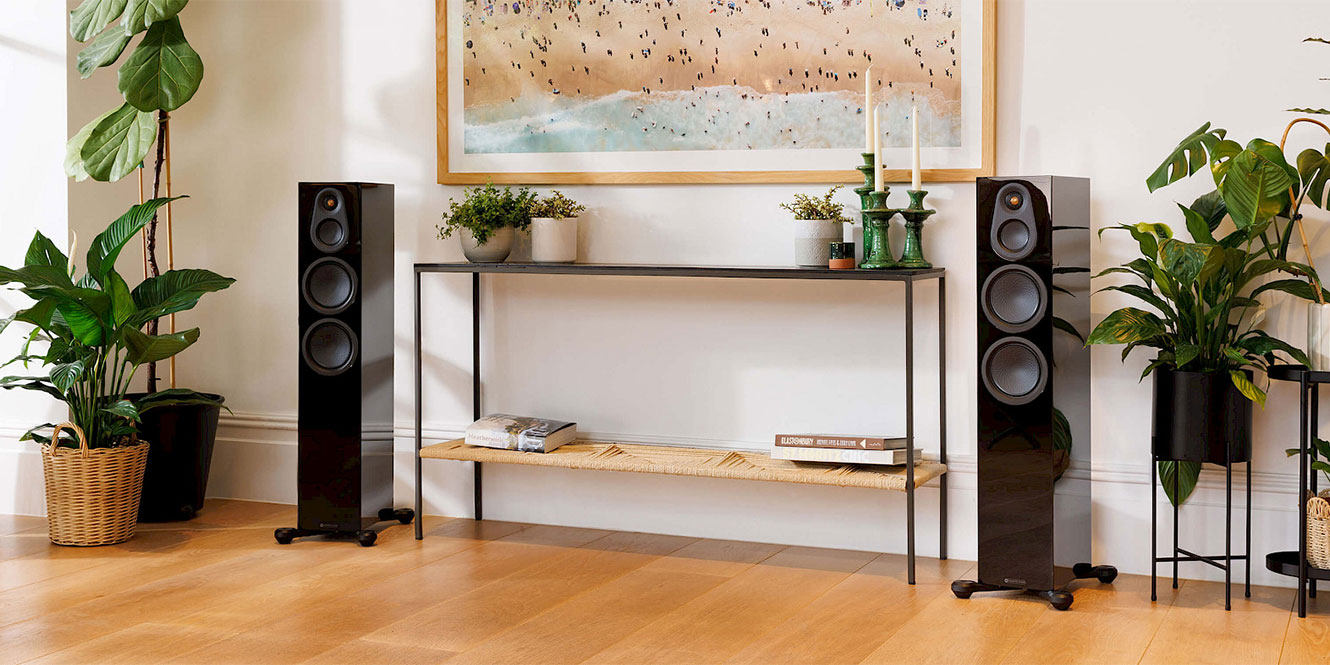

Floorstanding speakers are the point where a hi-fi setup starts to feel a bit more serious. Not better by default, because bookshelf speakers can be brilliant, but definitely more of a statement. They take up space, they ask a bit more from your room, and you can’t really pretend they’re not there.
That’s part of the fun, though. A good pair of floorstanders can give music more scale, more weight, and that sense of ease you don’t always get from smaller speakers. They don’t have to be massive or wildly expensive either — i.e., don’t just buy the biggest you can afford! Match them well, and even a sensible pair can make a room feel properly filled out.
This guide covers the best floorstanding speakers across a range of budgets, from affordable first pairs to serious hi-fi options for bigger rooms and more demanding setups.
In a hurry?
If you want the quick version, these are the three I’d look at first.
| Monitor Audio Silver 300 8G | Best overall | Check the current price |
| DALI Sonik 5 | Best value | Check the current price |
| Arcam Radia R45 | Best premium option | Check the current price |
Why we’ve chosen these floorstanding speakers
We’ve chosen these floorstanding speakers to cover a proper spread, not just seven versions of the same thing at different prices. Some are here because they’re affordable and easy to recommend. Some are here because they give you a more serious hi-fi setup. Others are here because they solve a specific problem, like wanting an active speaker system without separate amplification.
Room size is a big part of it. Floorstanders need space to breathe, but that doesn’t mean every pair has to dominate the room. We’ve included slimmer, more room-friendly options as well as bigger speakers for people who want more scale and low-end weight.
We’ve also looked at value, build, sound character, and how easy each speaker is to fit into a real setup. Some will suit first-time hi-fi buyers. Some need a better amp and a bit more care. That’s fine. The point is to give you useful options, not pretend one speaker is the obvious answer for everyone.
The best floorstanding speakers
1. Monitor Audio Silver 300 8G Floorstanding Speakers
 Key features
- Slim 3-way floorstanding design
- Twin 6-inch C-CAM bass drivers
- 30Hz in-room bass response
Pros
- Strong all-rounder for music and AV
- Big sound from a slimmer cabinet
- Detailed midrange from a dedicated driver
Cons
- Needs a decent amp to get the best from it
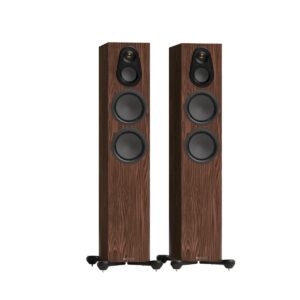
This is the safe all-rounder in the best possible way. The Monitor Audio Silver 300 8G feels like a serious speaker, but not an absurd one. It’s slimmer than the bigger Silver 500 8G, but still gives you a proper three-way design and enough scale for a main stereo setup.
The driver layout is a big part of the appeal. You get two six-inch C-CAM bass drivers, a dedicated three-inch C-CAM midrange driver, and a 25mm Gold Dome tweeter. That means bass, vocals, and treble each get their own space, instead of one driver trying to do too much at once. In real terms, that should help with separation, dialogue clarity, and keeping busy music organised.
This is a great choice if your speakers need to do double duty for films and music. The 30Hz in-room bass response gives it useful low-end reach, while the slimmer cabinet keeps it from becoming too much of a room-dominator.
If you do go for the Silver 300 8G, think about the amp you’ll pair it with. Monitor Audio’s Silver range has always leaned clean and detailed, so you don’t want to throw it on the brightest electronics you can find. Give it something with a bit of control and balance, though, and the Silver 300 8G is probably the easiest “yes, that makes sense” speaker on the list.
2. DALI Sonik 5 Floorstanding Speakers
 Key features
- Slim 2-way floorstanding design
- Dual 5.25-inch woofers
- 29mm soft dome tweeter
Pros
- Great value under £1,000
- Compact enough for smaller rooms
- Fills the gap left by the Oberon 5
Cons
- Bigger rooms may want more scale
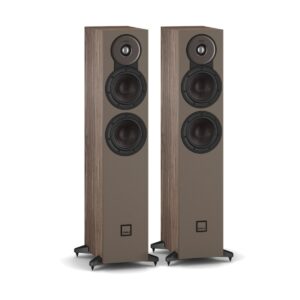
The Dali Sonik 5 sits at the mid-point. But it’s not a compromise. It’s slim, tidy, and clearly built for normal rooms rather than huge listening spaces with one chair in the middle.
It also has a bit of extra pressure on it, because it’s essentially filling the gap left by the much-loved Oberon 5. The Sonik 5 feels approachable and room-friendly, like the Oberon 5, but it just looks newer and cleaner in the current range.
Floorstanders can get silly quite quickly if you buy more speaker than your room actually needs. The Sonik 5 keeps things sensible. You still get the height and presence of a floorstanding speaker, but without ending up with two massive cabinets dominating the place.
Inside, it uses two 5.25-inch woofers and a 29mm soft dome tweeter, with DALI’s SMC magnet system helping keep the midrange cleaner and more controlled. The 39Hz-26kHz frequency range also gives it decent low-end reach for its size.
3. Arcam Radia R45 Floorstanding Speakers
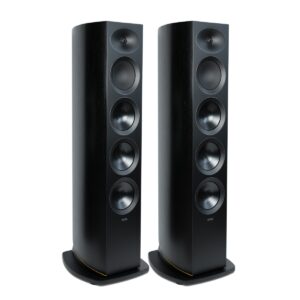 Key features
- Flagship Radia floorstanding speaker
- Three 6.5-inch MCC bass drivers
- 30Hz-40kHz frequency response
Pros
- Serious scale for larger rooms
- Designed to match Arcam Radia electronics
- Five-driver layout gives each range space
Cons
- The price puts it firmly in enthusiast territory
Disclaimer: the Arcam Radia R45 isn’t cheap. It’s for serious audio enthusiasts who are already thinking about the rest of the system.
Arcam might not be the first name you think of when it comes to speakers. The brand is more associated with amps, streamers, and AVRs. The Radia speaker range, though, paints a bigger picture — here, Arcam want the speakers and electronics to feel like one proper system, rather than a mix-and-match afterthought.
The R45 is a large three-way design with three 6.5-inch Micro Ceramic Composite woofers, a dedicated 6.5-inch Deep Ceramic Composite midrange driver, and a 1-inch DCC dome tweeter with an Acoustic Lens waveguide. It’s rear-ported, rated at 88dB sensitivity, and reaches down to 30Hz, so this is built for scale, control, and larger rooms.
4. AVCOM 3-Way Floorstanding Speakers
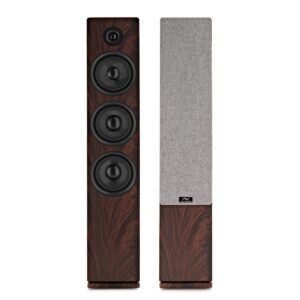 Key features
- Three-way passive floorstanding design
- 100W power handling per speaker
- Four-driver layout with 1-inch tweeter
Pros
- Very affordable for a pair of floorstanders
- Easy first step into larger speakers
- Magnetic grilles keep the front tidy
Cons
- Bass extension is limited compared with pricier options
The AVCOM 3-Way Floorstanding Speakers are at the entry-level end of the scale. If you’re building your first hi-fi system or just want something bigger than bookshelf speakers, without jumping straight in at £1,000, these are for you.
Each speaker has a three-way passive design with a four-driver layout, using twin woofers, a dedicated midrange driver, and a 1-inch silk-dome tweeter. The cabinet is rated at 100W power handling with 92dB sensitivity, so they should be fairly easy to pair with a suitable amplifier.
The only downside is that the bass response isn’t as rich as other speakers on this list, as the frequency response is 100Hz-18kHz. So you might want to think about adding a sub if you want some extra low end. But for an affordable speaker, you can’t have everything! These AVCOM units give you more physical presence than small speakers, without emptying your bank account.
5. ELAC Debut F5.2 Floorstanding Speakers
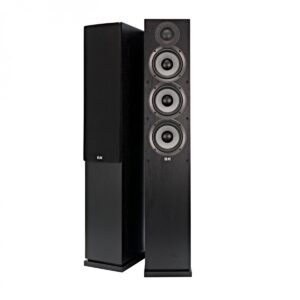 Key features
- 3-way bass reflex design
- 3 x 5.25-inch aramid-fibre drivers
- 42Hz-35kHz frequency response
Pros
- Affordable route into branded floorstanders
- Slim enough for smaller living rooms
- Works for stereo or home cinema systems
Cons
- 86dB sensitivity means amp choice still matters
The ELAC Debut F5.2 still keeps things sensible, but it gives you a more established speaker range to build around, especially if you’re thinking about a matching home cinema setup later.
The design is nicely straightforward. You get a three-way bass reflex cabinet, a one-inch cloth dome tweeter, and three 5.25-inch woven aramid-fibre drivers. It’s not trying to look flashy, which we quite like. Black box, sensible size, job done. At 180mm wide, it’s also fairly slim for a floorstander, so it shouldn’t feel ridiculous in a normal living room.
Sound-wise, the F5.2 is the one to look at if you want scale without going too big. The 42Hz low-end reach gives it more bass presence than a small bookshelf speaker, but it’s still the sort of speaker you can build around rather than fight with. It also makes sense for home cinema, especially if you want matching centre, surround, and subwoofer options from the same range later.
Just don’t assume “affordable” means it’ll work brilliantly with any old amp. The 86dB sensitivity is fine, but not wildly easy-going. Give it a decent amplifier, and it should reward you properly.
6. Wharfedale Evo 5.4 Floorstanding Speakers
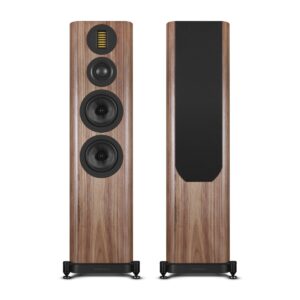 Key features
- 3-way bass reflex floorstanding design
- AMT tweeter with 2-inch dome midrange
- Dual 6-inch woven Kevlar bass drivers
Pros
- Our strongest seller from the last four months
- Big sound without getting silly on price
- Strong match for stereo or home cinema
Cons
- Still needs a decent bit of room
This is the one with a bit of weight behind it, both literally and in terms of popularity. The Wharfedale Evo 5.4 gets consistently good reviews, and we really like it too. It’s a step-up from other more entry-level speakers, but it doesn’t feel out of reach.
You get a three-way bass reflex design, an AMT tweeter, a two-inch soft dome midrange, and two six-inch woven Kevlar bass drivers. That gives it a proper full-size feel, without turning it into some huge, awkward living-room project.
The low-end reach is strong too: a 42Hz-24kHz frequency response and bass extension down to 36Hz. So it should have enough weight for most music without needing a subwoofer.
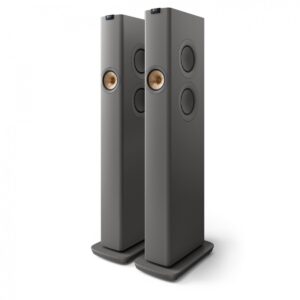
7. KEF LS60 Wireless Active Floorstanding Speakers
 Key features
- Active wireless floorstanding speaker system
- 1400W of built-in amplification
- HDMI eARC, streaming, and wired inputs
Pros
- No separate amp or streamer needed
- Slim design is easier to place
- Great if you want fewer boxes
Cons
- Less flexible than a separate passive system
The KEF LS60 Wireless is a complete active speaker system, so the amplification, streaming, inputs, and speaker design are all built around each other from the start.
If you want floorstanding speakers but don’t want an amp, streamer, DAC, cables everywhere, and the usual “what works with what?” spiral, this is ideal. You still get a serious pair of floorstanders, but the system is much cleaner.
KEF has packed a lot into the LS60 too. You get a 12th generation Uni-Q driver array with MAT, side-firing Uni-Core bass drivers, and 1400W of built-in amplification across the pair. It also supports network streaming up to 24-bit/384kHz, with HDMI eARC, optical, coaxial, RCA, AirPlay 2, Chromecast, Roon Ready, and Bluetooth.
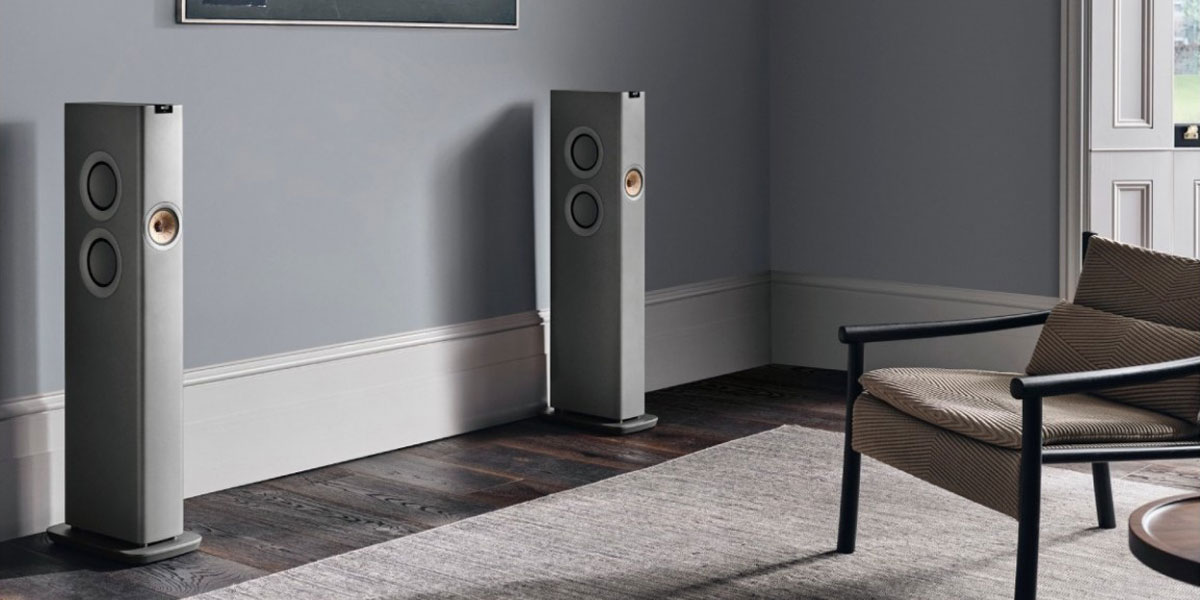
Plus, they’re sleek! The slim cabinet is much easier to live with than a lot of big floorstanders, especially if you want a system that can handle music and TV without turning the room into a hi-fi showroom.
How to choose the best floorstanding speakers for your setup
The best floorstanding speakers for your setup aren’t always the biggest ones you can afford. Annoying, but true. The right pair depends on your room, your amp, your budget, and how you actually listen.
Of course, you need to think about space. Floorstanders usually need a bit of breathing room, especially if they’re rear-ported. If they’re shoved right into a corner, you can end up with too much bass and not enough control. Smaller rooms can still work, but slimmer speakers often make more sense than huge cabinets with massive drivers. You want the speakers to fill the room, not bully it.
Placement is part of that too. A bit of distance from the back wall can make a big difference, and toe-in can affect how focused the stereo image feels. You don’t need to get obsessive with a tape measure, but it’s worth accepting that floorstanders are not always “put them anywhere and hope” speakers.
Then match your amp if you’re opting for passive speakers. Sensitivity, impedance, and recommended amp power are worth checking, even if they’re not the most exciting specs in the world. A speaker that looks easy on paper might still sound flat or loose if the amp isn’t up to it.
If that all sounds like a faff, active speakers are worth considering. Something like the KEF LS60 Wireless has the amplification, streaming, and speaker design built together, so you don’t have to think as much about matching separate boxes. You lose some flexibility, but you gain a much simpler system.
Then think about what you use them for. Music-only setups might favour detail, stereo imaging, and tonal balance. Home cinema setups may need stronger bass, clearer dialogue, and matching speakers from the same range later on. If your speakers are doing both jobs, don’t just chase bass. Clarity and control are just as important.
And finally, there’s budget. You don’t need to spend thousands to get something worthwhile, but spending more can make sense if your room and system are ready for it. The aim isn’t to buy the most impressive-looking pair. It’s to buy the pair you’ll actually enjoy living with.
FAQs
Are floorstanding speakers the best?
Floorstanding speakers are among the best options for powerful, full-range sound. Their larger cabinets and multiple drivers deliver deeper bass, greater volume and a wider soundstage, making them ideal for music and home cinema.
What floorstanding speakers are best for a small room?
The best floorstanding speakers for a small room are compact, slimline models with controlled bass output. Speakers with smaller drivers and flexible placement options provide balanced sound without overwhelming the space.
Are floorstanding speakers generally better than bookshelf speakers?
Floorstanding speakers are generally better than bookshelf speakers for bass depth and maximum volume. However, bookshelf speakers can offer equally impressive clarity and detail, especially in smaller rooms or limited spaces.
Final thoughts
So, there we have it: our list of the best floorstanding speakers. Hopefully you’ve found the right option for you. If not, our experts will be happy to help in the comments below or on Reddit.





0 Comments