
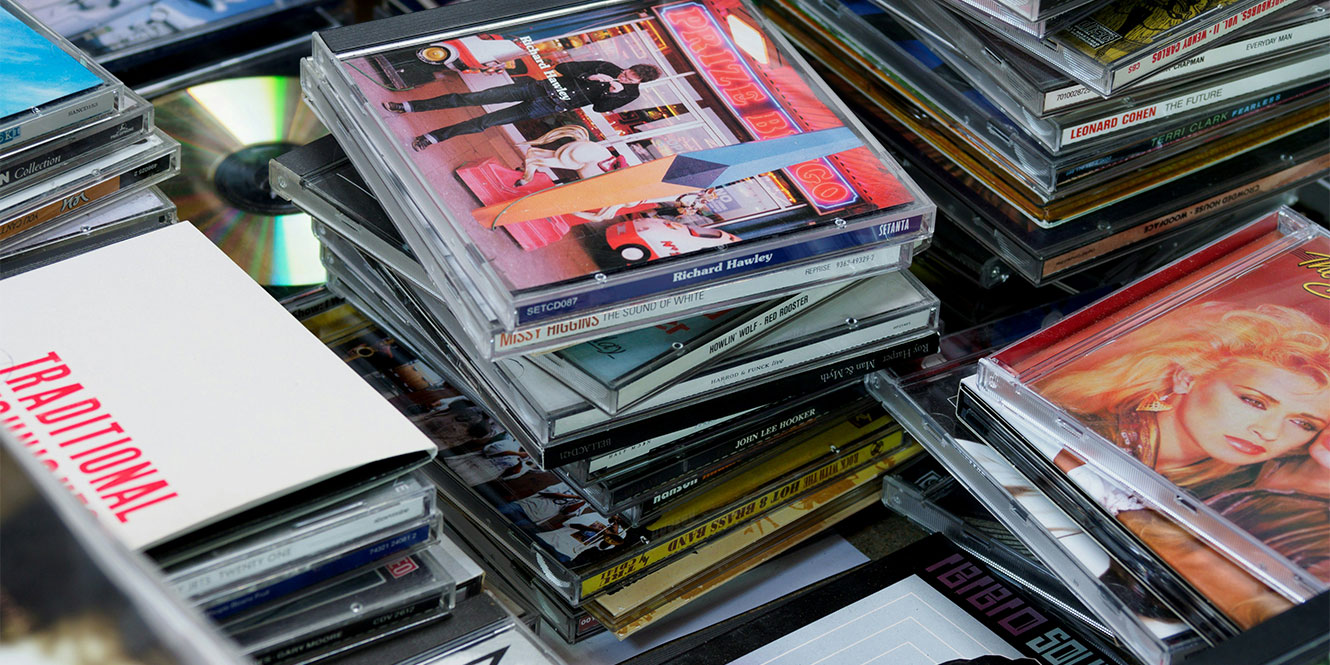

At some point, most of us have looked at a stack of old CDs and thought, Why do I still own these? Maybe they’re in a cupboard, maybe they’re in the loft, or maybe they’re still proudly sitting in one of those giant zip-up CD wallets that made everyone feel incredibly organised in 2006.
The awkward bit is that CDs are quite hard to part with. They’re little time capsules, really. Tiny plastic reminders of old cars, old bedrooms, and in some cases, the only physical evidence that you once bought a nu-metal album from a supermarket. But they also take up space, and if you no longer have a CD player, it’s fair to ask whether they’re still earning their keep.
That said, there is something quite nice about owning physical media properly. We’ve seen the same argument happening in gaming, with Sony moving further away from physical discs and towards digital-only releases. Unsurprisingly, that has upset a lot of people, because it reminds everyone that “owning” something digitally can feel a bit vague once stores, licences, accounts, and corporate decisions get involved.
CDs might not be as convenient as streaming, but at least when you own one, it’s yours. No subscription, no disappearing library, no weird legal grey area. Just a little silver disc that does what it’s supposed to do.
This guide covers six ways to get rid of your old CDs, from selling and donating them to digitising, recycling responsibly, or repurposing them if you’re not quite ready to say goodbye.
In a hurry?
If you want the quick version, here are six ways to get rid of your old CDs:
- Recycle them at your local tip or recycling centre, if they accept CDs
- Donate them to a charity shop
- Offer them to a local library, school, or community group
- Sell them online through eBay, MusicMagpie, or similar sites
- Repurpose them into something useful, decorative, or faintly ridiculous
- Digitise them to a NAS drive, then donate, sell, or recycle the originals
That last one is the sensible middle ground. You still get to keep the music, but you don’t have to keep three shelves of jewel cases staring at you every time you open a cupboard.
How to dispose of your old CDs
1. Recycle them at your local recycling centre
CDs can be awkward to recycle because they’re not just a simple bit of household plastic. The disc itself is usually made from polycarbonate plastic, with extra layers of metal and coating, so they generally can’t just go in your normal recycling bin at home.
That doesn’t mean they need to go straight in the general waste, though. Some local tips and recycling centres have dedicated media, electrical, or hard plastics sections where CDs and DVDs can be taken. It’s worth checking with your local council before loading the car, because the rules can vary depending on where you live.
2. Donate them to charity shops
Charity shops are one of the easiest ways to move old CDs on, especially if they’re still in decent condition. If the cases are intact, the discs aren’t scratched to bits, and the albums are still the kind of thing someone might reasonably buy, there’s a good chance they’ll be useful.
It’s also a nice middle ground. You clear some space, the charity gets stock to sell, and someone else gets to enjoy the album. Maybe even the same questionable nu-metal album you bought from a supermarket in 2004. Everyone wins, sort of.
Just check before turning up with six carrier bags, as not every shop accepts CDs now.
3. Offer them to a local library or community group
Libraries, schools, youth groups, care homes, and community centres may be interested in CDs, especially if you have a varied collection rather than 400 copies of the same three albums. Some places might use them for music lending, events, craft projects, or just as part of a shared media collection.
This one does need a quick phone call or email first. Don’t just appear at the front desk with a box and the energy of someone trying to make it their problem. Ask what they accept, whether they want original cases, and if there are any condition requirements. If they say yes, it’s a good way to keep the discs useful locally.
4. Sell them online
If your CDs are in good condition, selling them online is worth considering. Sites like eBay are useful if you have rarer albums, box sets, imports, or anything with a bit of collector interest. You’ll usually get more control over pricing, but you’ll also need to deal with listings, postage, questions, and the occasional person who thinks “minor case wear” is a personal attack.
CD buying sites like MusicMagpie are more convenient. You scan or enter the barcode, get a price, send the CDs off, and get paid. You might not make loads, especially on common albums, but it’s simple and much better than letting them gather dust forever.
5. Repurpose them into something else
Yes, technically this isn’t getting rid of them. I know. But repurposing old CDs can still be a decent option if you don’t want to bin them and they’re not worth selling or donating.
Old CDs can be used for arts and crafts, mosaics, decorations, coasters, or even as bird scarers in the garden. The reflective surface is surprisingly useful for keeping birds away from vegetable patches, although admittedly it does make your garden look slightly like it’s being protected by a 2002 DJ setup.
It won’t be for everyone, but if you enjoy a project, it gives unwanted discs a second life.
6. Digitise them before moving them on
Digitising is probably the most sensible option if you still care about the music but don’t want the physical clutter. You can rip your CDs to a computer, external hard drive, or NAS drive, then stream them around your home without needing to keep every jewel case within arm’s reach.
This is especially useful if you have albums that aren’t on streaming services, special editions, old compilations, or anything you’d be annoyed to lose access to. Once everything is backed up properly, you can then sell, donate, recycle, or repurpose the original discs. It’s the best of both worlds really: keep the music, lose the towers of plastic.
Can you recycle CDs at home?
You can’t recycle CDs at home, unfortunately. At least, not in the way you’d recycle a cardboard box or an empty bottle.
CDs and DVDs are made from a mix of materials, including polycarbonate plastic, reflective metal layers, coatings, and printed labels. That means they generally shouldn’t go in your normal household recycling bin, because they’re not simple plastic and can be awkward to process.
The cases are a separate question. Some plastic jewel cases may be accepted in certain recycling streams, but again, it depends where you live. Annoying? Yes. But it’s better than “hoying” everything in the wrong bin and hoping for the best.
Should you keep your old CDs?
Before you get too ruthless, it’s worth asking whether you actually want to get rid of them. CDs are having a bit of a moment again, partly because people are realising that owning physical media still has its perks. UK physical album sales grew in 2024 for the first time in two decades, and the decline in CD sales has slowed, so they’re not quite the dead format people once made them out to be.
That doesn’t mean every old CD is suddenly a goldmine. Your battered copy of Now That’s What I Call Music! 47 probably isn’t about to fund your retirement. But special editions, signed albums, imports, local band releases, rare copies, and anything with sentimental value might be worth keeping.
There’s also the simple fact that CDs are useful. They sound good, they’re easy to rip to a digital library, and once you own them, they’re not tied to a streaming licence or subscription. So before you clear the lot, separate the ones you genuinely care about. Keep those. Be ruthless with the rest.
Storage solutions
If you decide you’re not ready to get rid of your CDs, the next best thing is making sure they’re not just lurking in random piles around the house.
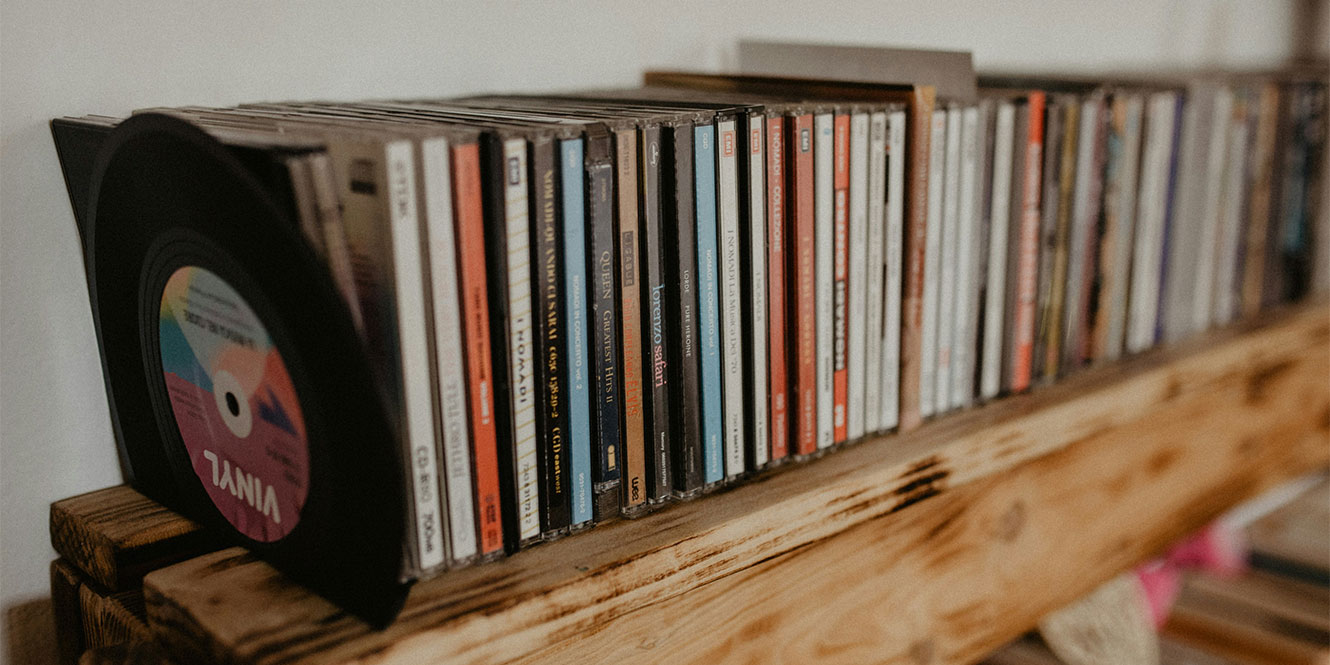
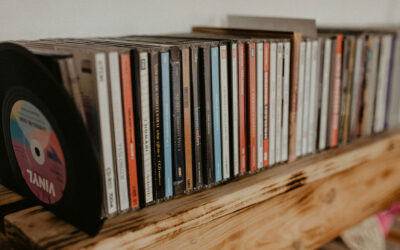
The easiest option is a proper CD rack or media shelf, especially if you still like browsing your collection. It keeps everything visible, easy to reach, and stops you from buying the same album twice because you forgot you already owned it. Not that any of us have ever done that.
If you’re keeping CDs more for archiving than regular use, storage boxes are probably the tidier option. Keep them somewhere dry, away from direct sunlight, and try not to stack anything too heavy on top. Jewel cases are useful, but they’re not exactly built like military equipment.
For larger collections, you could also split things into “still listen to”, “worth keeping”, and “probably never touching again but emotionally complicated” piles. That way, the albums you actually use stay accessible, while the rest can go into longer-term storage.
The main thing is to avoid letting them become clutter by default. If you’re keeping them, keep them properly.
FAQs
Do charity shops want CDs?
Many charity shops gladly accept CDs in good condition because they can resell them to raise funds. Popular artists, complete collections, and well-kept cases are most likely to be accepted, while damaged or heavily scratched discs may be declined.
Are old CDs worth anything?
Some old CDs are worth money, but value depends on rarity, demand, condition, and whether they are first pressings or limited editions. Most common releases have little resale value, while collectable titles can sell for significant amounts.
What is the most sought-after CD?
The most sought-after CDs are typically rare first pressings, limited editions, promotional releases, and albums that were produced in small numbers. Collectors often pay premium prices for titles by iconic artists when they are complete and in excellent condition.
Final thoughts
Getting rid of old CDs is one of those jobs that sounds simple until you’re suddenly holding an album you haven’t played in 15 years and wondering if it’s part of who you are.
That’s the thing with physical music. Some of it is just clutter, but some of it actually means something. Peace Sells… But Who’s Buying? was the first CD I owned myself, while All Hope Is Gone was the first CD I actually bought myself. Those are the kinds of albums I’d really struggle to chuck in a donation pile without at least thinking about it for a bit.
The sensible approach is to sort them properly. Keep the ones you care about, digitise anything you don’t want to lose, then sell, donate, recycle, or repurpose the rest. Physical media still has its place, especially if you like properly owning your music. But if your old CDs are just taking up space, there are plenty of useful ways to move them on without sending everything straight to landfill.



0 Comments