
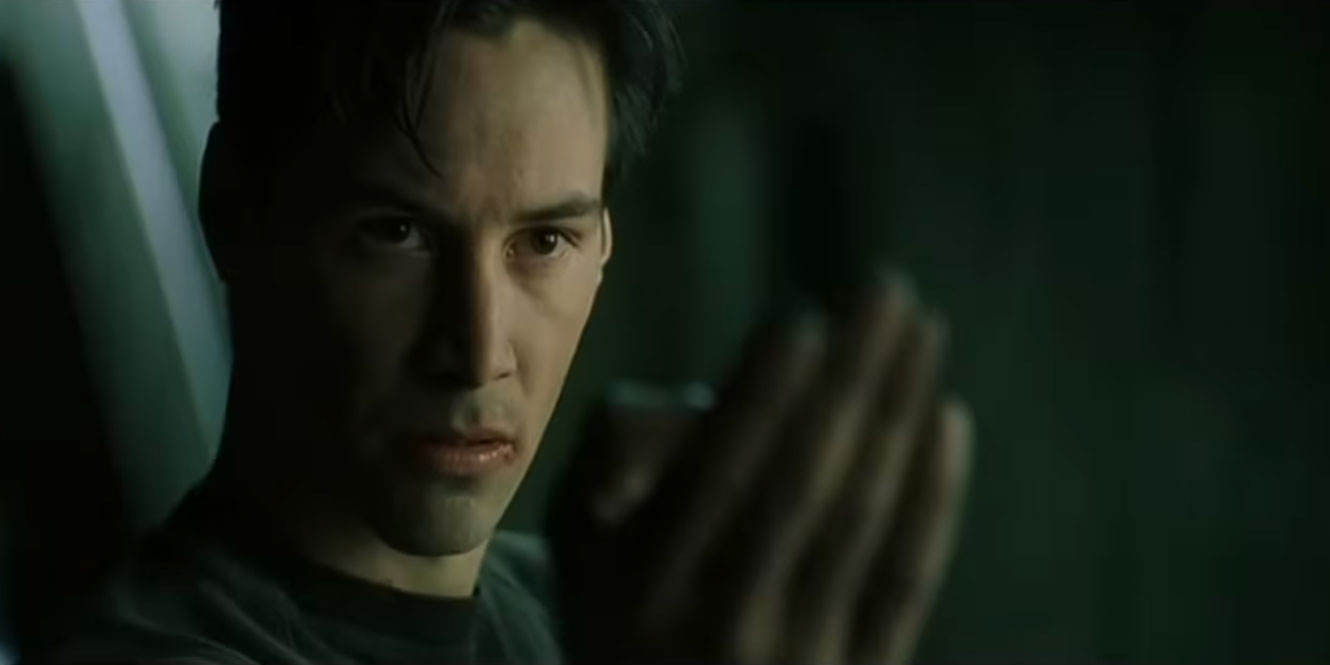

Featured Image: The Matrix (1999), Warner Bros., Village Roadshow Pictures, Silver Pictures
They say all good things come in threes, which is probably why film trilogies feel so satisfying when they actually work. One great film is hard enough, but three that feel connected, worthwhile, and not just made because the first one did well at the box office? That is a much bigger ask.
The best movie trilogies give you a proper sense of time spent in a world. You get to see characters change and stories develop into something bigger or quietly fall apart by the third film. And honestly, that unevenness is part of the fun. Some trilogies are near-perfect from start to finish. Some are carried by one brilliant entry. Some have a third film that everyone politely talks around.
For this list, the rest of the AV.com team and I have chosen our favourite trilogies, from sci-fi and fantasy to horror, comedy, animation, martial arts, superheroes, and more. The “best” is subjective, of course; not every pick is flawless, and I’m sure there are a few choices here that will annoy someone somewhere. That is sort of the point.

In a hurry?
Not got time to go through all 31? Fair enough. Here are the top three movie trilogies on our list.
1. The Matrix Trilogy
The first Matrix is still one of the most important sci-fi films ever made. The sequels are more divisive, but as a trilogy, it has more than earned its place here. It changed how action films looked, made cyber paranoia feel strangely cool, and gave us a version of Keanu Reeves that basically defined an era. Also, watching him do kung fu in a trench coat still works. Obviously.
2. Indiana Jones Original Trilogy
The original Indiana Jones trilogy is adventure cinema done properly. Raiders of the Lost Ark, Temple of Doom, and The Last Crusade all have that old-school serial feel, with hidden temples, ancient myths, and Harrison Ford being effortlessly charming throughout. What makes it hold up is that Indy actually grows across the three films, gaining a bit more warmth and emotional weight as the series goes on.
3. Star Wars Original Trilogy
The original Star Wars trilogy is the obvious pick, but it is obvious for a reason. It gave us one of cinema’s most recognisable worlds, with characters, designs, music, and moments that are still everywhere decades later. It is scrappy in places, but that is part of the charm. Big mythic storytelling, a weird sense of humour, and Darth Vader doing Darth Vader things. Hard to argue with, really.

The best movie trilogies
1. The Matrix Trilogy
I saw The Matrix before Star Wars: Episode III came out, so I must have been about six. Did I understand the deeper ideas about faith, control, and Neo as a messianic figure? Absolutely not. Did I enjoy watching Keanu Reeves do kung fu in a trench coat? Completely.
Directed by the Wachowskis, the trilogy follows Neo as he discovers reality is a simulation and joins Morpheus and Trinity in the fight against the machines. The sequels are more divisive, but the original is still one of the most important sci-fi films ever made. Its bullet time effects, gun-fu action, leather-coated cool, and early-2000s cyber paranoia changed how action cinema looked and felt.
It made technology feel exciting, frightening, and very, very stylish. It’s safe to say this trilogy, for various reasons, changed my life.
2. The Indiana Jones Original Trilogy
The original Indiana Jones trilogy nails that old-school adventure feel, from the map transitions and red travel line to the hidden temples, ancient myths, and creepy occult danger. Directed by Steven Spielberg and led by Harrison Ford at his most effortlessly charming, Raiders of the Lost Ark, Temple of Doom, and The Last Crusade helped define the modern action-adventure film.
What makes the trilogy so satisfying is that Indy actually grows across the three films. He starts as the cool, whip-cracking archaeologist, but by Temple of Doom and The Last Crusade, there’s more warmth, fear, and emotional weight to him. I loved it enough that, on a trip to Venice, I made it my mission to find the library from The Last Crusade.
3. The Star Wars Original Trilogy
What can be said about the original Star Wars trilogy that hasn’t already been said? It’s genre-defining cinema, obviously, but it also has this slightly camp, late-’70s, almost Doctor Who-ish charm that makes it feel weirdly perfect.
George Lucas created a universe that felt huge from the start, with The Empire Strikes Back and Return of the Jedi carrying that story into darker, stranger, and more emotional places. Luke, Leia, Han, Vader, Chewie, the droids; everyone feels instantly iconic, but still scrappy enough to be lovable. It’s mythic without being too polished, silly without being stupid, and somehow still completely timeless.
And honestly, if you thought the original Star Wars trilogy wouldn’t make this list, I’d find your lack of faith disturbing.
4. The Star Wars Prequel Trilogy
I was the perfect age for the Star Wars prequels. I’d seen the original trilogy, but I don’t think I fully understood its significance yet. What I did understand was the brighter, faster, flashier world of The Phantom Menace, Attack of the Clones, and Revenge of the Sith. That was the version that really made Star Wars click for me.
Directed by George Lucas, the trilogy follows Anakin Skywalker’s fall from gifted Jedi to Darth Vader, with Hayden Christensen, Natalie Portman, and Ewan McGregor at the centre of it. Yes, the dialogue is famously clunky, but Darth Maul, Count Dooku, General Grievous, and evil Anakin are all properly iconic. Also, Obi-Wan is absolutely the true protagonist here.
They might get plenty of hate online, but they’re still not Episodes 7, 8, and 9.
5. The Lord of the Rings Trilogy
I remember The Lord of the Rings being one of the few times my parents went to the cinema when I was a kid, without me. So naturally, I knew it must have been good. And to be fair, they were right.
Directed by Peter Jackson, The Fellowship of the Ring, The Two Towers, and The Return of the King remain one of the most complete trilogies ever put on screen. The story follows Frodo, Sam, Aragorn, Gandalf, and the rest of the Fellowship as they try to destroy the One Ring before Sauron can reclaim it.
Elijah Wood, Sean Astin, Ian McKellen, and Viggo Mortensen give it real emotion, while the scale of Middle-earth still feels massive. It’s fantasy filmmaking with craft, patience, and a proper sense of journey.
6. The Dark Knight Trilogy
Before Christopher Nolan got hold of Batman, versions of the character had gone from Tim Burton’s gothic weirdness to bat credit cards and rubber suits and cowls that looked impossible to turn your head in. Then Batman Begins arrived and made Gotham feel almost militaristic.
Nolan’s trilogy gives Bruce Wayne a proper three-film arc. Batman Begins is raw power and anger, with Bruce learning how to turn fear into a weapon. The Dark Knight brings experience, confidence, and cockiness, but also the brutal lesson that power means nothing without direction.
By The Dark Knight Rises, he’s older, damaged, and carrying the consequences of everything he’s built. Christian Bale makes Bruce feel human beneath the armour, while Michael Caine’s Alfred gives the trilogy its heart (the size of a tangerine). Add in the IMAX cinematography, and you’re looking at something truly, truly special.
7. The Bourne Trilogy
“Jesus Christ, that’s Jason Bourne.”
Honestly, no notes. The Bourne Identity, The Bourne Supremacy, and The Bourne Ultimatum are about as tight as action trilogies get. Matt Damon might not have seemed like the obvious spy-action lead at first, but that almost works in the films’ favour. Bourne feels less like a suave super-agent who drinks cocktails and more like a man freaking out because he subconsciously knows how to do things he doesn’t understand yet.
Doug Liman sets the whole thing in motion with Identity, before Paul Greengrass pushes the sequels into that frantic, handheld style that made every chase and close-quarters fight feel immediate. The shaky cam was fresh at the time, giving the trilogy a nervous, dramatic pace that later spy films clearly borrowed from. It’s lean, sharp, and just all around a good time.
8. The Godfather Trilogy
The Godfather and The Godfather: Part II are basically perfect films. The casting, the pacing, the lighting, the music, the suits, the quiet threat in every conversation. Perfecto. Francis Ford Coppola turned Mario Puzo’s mafia story into something much bigger than a gangster saga, making it about family, power, loyalty, and the cost of becoming the person everyone expects you to be.
Marlon Brando’s Vito Corleone is iconic, but Al Pacino’s Michael is the real tragedy. He starts as the son who wants no part of the family business, then slowly becomes colder, sharper, and more isolated than anyone around him. Part III is the weaker film, no question, but it still works as a final consequence chapter. Even with that dip, this trilogy more than earns its place here.
9. The Dollars Trilogy
Before he was asking whether punks felt lucky, Clint Eastwood was cutting about as a poncho-wearing, cigar-smoking cowboy badass. Sergio Leone’s Dollars trilogy arrived at the peak of the spaghetti western era and made the genre feel dirtier, cooler, and far less polished than the more traditional John Wayne-style westerns.
A Fistful of Dollars, For a Few Dollars More, and The Good, the Bad and the Ugly are built on dust, silence, suspicion, and some of the best staring ever committed to film. Eastwood barely needs to speak. The squint does half the work. Ennio Morricone’s music gives the whole trilogy a mythic quality, while the landscapes feel massive and unforgiving.
Special shoutout has to go to Lee Van Cleef, too, who brings proper villain energy every time he appears.
10. The Vengeance Trilogy
First of all, these are not light films. Park Chan-wook’s Vengeance trilogy is grim, stylish, but deeply, deeply uncomfortable. It’s also a brilliant example of 2000s Korean cinema bringing ideas to the screen that probably wouldn’t have survived a Hollywood meeting room.
This isn’t a trilogy in the usual character-and-plot sense. Sympathy for Mr. Vengeance, Oldboy, and Lady Vengeance are connected by theme, all circling around revenge and guilt. Oldboy is the obvious entry point for many people, especially thanks to its famous corridor fight, a raw, exhausting scene that still gets referenced for a reason.
Across the three films, Chan-wook makes revenge look brutal, beautiful, and completely poisonous, because “Holding onto anger is like drinking poison and expecting the other person to die.”
11. The Three Flavours Cornetto Trilogy
Three Flavours Cornetto is painfully, brilliantly British. Edgar Wright, Simon Pegg, and Nick Frost take the most ordinary parts of British life and throw them into a zombie film, a buddy-cop action, and a sci-fi apocalypse story, somehow making all of it feel completely natural.
Shaun of the Dead, Hot Fuzz, and The World’s End are possibly the best horror-comedies ever made. And what ties them together? Not just the iconic Pegg and Frost duo, but also Cornetto ice cream. These films are funny, sharp, and, to be honest, quite bleak…“No luck catching those swans then?”
12. The Wolverine Trilogy
Hugh Jackman is Wolverine. Plenty of actors have played superheroes well, but Hugh Jackman just is Logan. I was the perfect age for the first X-Men films, so it’s hard to imagine anyone else in the role. Sometimes, being born in the ’90s really is the greatest gift.
As a trilogy, it’s uneven, but the overall arc is strong. X-Men Origins: Wolverine is messy, loud and very much of its era, while The Wolverine gives Logan a more isolated story, digging into his guilt, grief, and exhaustion. Then there’s Logan, the clear standout and one of the best superhero films, full stop. By that point, Wolverine is older, healing more slowly and tired of a life built around violence.
Watching time finally catch up with a man who’s survived for almost two centuries is genuinely devastating. I cried at the end, and I’m not ashamed to admit it.
13. The Ocean’s Trilogy
If The Italian Job is classic heist cinema, then Ocean’s Eleven, Twelve and Thirteen are the slick, glossy, modern versions, with the confidence turned all the way up. Steven Soderbergh’s trilogy is less about danger and more about charm and watching a group of people be annoyingly good at their jobs.
George Clooney, Brad Pitt, Matt Damon, Don Cheadle, Bernie Mac, and the rest of the crew make professional crime look like an appealing career move, which is probably not the intended lesson. The films are expensive-looking and ridiculously cool, moving from Vegas casinos to elaborate European schemes without ever taking themselves too seriously.
Ocean’s Eleven is still the strongest of the three, but the whole trilogy runs on pure cast charisma.
14. The Naked Gun Trilogy
The Naked Gun trilogy is absolutely a product of its time, but that’s also part of the appeal. It’s ridiculous, yet there’s real craft behind how daft it all seems on the surface.
Leslie Nielsen’s Frank Drebin is the key. He plays every absurd line with total seriousness, which makes the slapstick, wordplay, background gags, and complete nonsense land even harder. These films don’t pause to make sure you got the joke; they just throw another five at you and trust that at least two will hit.
Some of it is dated, naturally, but the best bits still feel sharp because the timing is so precise. It’s not trying to be sensible comedy. It’s chaos in a police badge, and you love it for what it is.
15. The Mad Max Original Trilogy
Before the later controversies around Mel Gibson complicated his reputation, he really was the man for a while, and the original Mad Max films are a big reason why. I remember watching them as a child and trying to wrap my head around the whole thing. The road gangs, the leather, the dust, the battered cars, the sense that society had just collapsed, and everyone had decided to express that through violence and motorbikes.
George Miller’s trilogy starts fairly raw with Mad Max, then fully locks into the wasteland myth with The Road Warrior and Beyond Thunderdome. That dystopian road-punk look is so striking that it basically became the template for post-apocalyptic action. Even now, when a film shows a desert wasteland full of modified vehicles, it’s hard not to see Max’s tyre tracks all over it.
16. The Spider-Man Trilogy
Team Tobey, 10000%. Sam Raimi’s Spider-Man trilogy was everything you wanted a superhero film to be at the time: colourful, sincere, dramatic, and a bit weird.
What makes it work is how well it balances comic-book danger with painfully normal problems. Peter Parker isn’t just fighting Green Goblin, Doc Ock, and Sandman. He’s late for work, behind on rent, awkward in love, and constantly trying to do the right thing while his life falls apart. Tobey Maguire makes that struggle feel genuine, while Willem Dafoe and Alfred Molina give us two of the most iconic villains in superhero cinema.
Bruce Campbell’s little appearances are also perfect comic relief. And yes, they were going to make a fourth one… but I guess the world wasn’t ready for that.
19. The Pirates of the Caribbean Trilogy
First of all, we’re ignoring everything after At World’s End. As far as I’m concerned, The Curse of the Black Pearl, Dead Man’s Chest, and At World’s End are the full circle experience.
The fact that this all came from a Disneyland ride is still wild, because the first film has no right to be as good as it is. It’s funny, spooky, romantic, and properly adventurous, with Johnny Depp turning Jack Sparrow into an instant icon. Orlando Bloom and Keira Knightley give the trilogy its more traditional swashbuckling heart, while the sequels go bigger, stranger, and more supernatural.
Davy Jones is a brilliant villain, too, all tentacles, tragedy, and “Do you fear death?” energy. It’s frivolous pirate nonsense, but done with real scale and charm.
20. The Shrek Trilogy
Shrek took the clean, polished fairy-tale formula and made it rude, scruffy, sarcastic, and somehow still genuinely sweet.
The first film gave DreamWorks a proper identity and proved animated films could be cheeky without losing heart. Then Shrek 2 came along and, let’s be honest, it might be the best one. Puss in Boots arrives fully formed, Fairy Godmother is a top-tier villain, and the soundtrack choices are ridiculous in the best way. Shrek the Third is definitely weaker, but the trilogy still earns its place through sheer cultural weight.
The jokes, the memes, the music, the adult references we definitely didn’t get as kids… it’s ogre cinema.
21. The Terminator Trilogy
For me, The Terminator, Terminator 2: Judgment Day, and Rise of the Machines are the ones that count, because they complete the John Connor arc. Everything after that gets a bit messy.
The first film is almost a horror movie, with Arnold Schwarzenegger as this unstoppable machine hunting Sarah Connor through dark streets and cheap motels; it feels very John Carpenter-esque, capturing that tech-noir feel.
Then T2 somehow takes that idea and makes one of the greatest action sequels ever made. Bigger budget, better effects, emotional weight, and Sarah Connor going from terrified target to absolute survivalist icon.
Rise of the Machines is definitely the weaker third entry, but its bleak ending does a lot of heavy lifting. As a trilogy, it’s about fate, fear, and whether John Connor can ever really outrun the future.
Create your own home cinema
Hisense PX3-PRO Projector
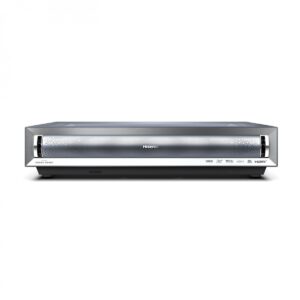
- 4K resolution
- Ultra-short-throw projects up to 150 inches
- TriChroma laser
XGIMI Halo+ Projector
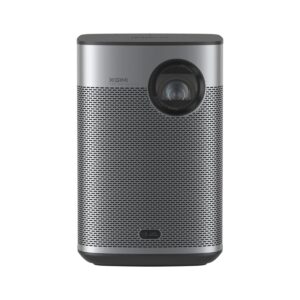
- 1080p Full HD suits casual film nights
- Built-in battery
- Google TV
Sapphire 16:9 Screen

- ALR design helps reject ambient light
- 100-inch size
- Ultra-narrow bezel
What is the most successful movie trilogy?
The Avatar trilogy is the most successful movie trilogy by worldwide box office. Avatar, Avatar: The Way of Water and Avatar: Fire and Ash combine record-breaking global earnings with long-running audience demand. We didn’t pick it as one of our absolute favourites, but as the numbers show, it’s certainly one of the most successful.
What are the top 3 movies of all time?
The top three movies of all time by worldwide box office are Avatar, Avengers: Endgame and Avatar: The Way of Water. These films lead global rankings because of massive theatrical runs, repeat viewing, and international appeal.










0 Comments