
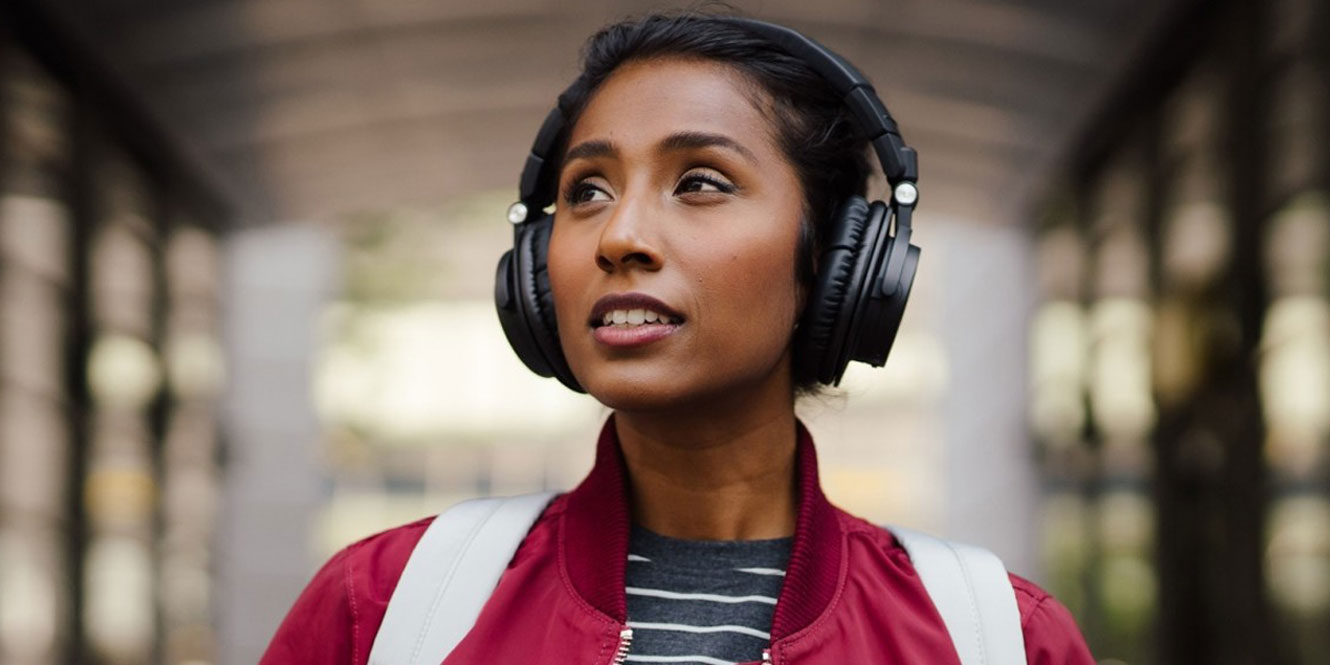

Whether you’re seeking portability and convenience on the go or craving an intimate listening experience at home without disturbing others, the earbuds vs. headphones decision can be a tough one. Both options offer unique advantages that cater to different situations and personal preferences. In this article, we’ll delve into the world of earbuds and headphones and uncover the option that is right for you!
Key differences
| Earbuds | Headphones | |
|---|---|---|
| Portability | Lightweight, compact, fits in your pocket. | Larger, heavier, fits in a bag or carry case. |
| Sound quality | Clean sound quality, not a lot of bass. | Wide frequency range, smooth and roomy sound that is immersive and dynamic. |
| Comfort | Some people may experience discomfort or ear fatigue. | Generally more comfortable, especially for long listening sessions. |
| Noise isolation | Great passive noise isolation by fitting into the ear. | Noise isolation can vary depending on design and construction. |
| Style and design | Limited design options, may not suit all preferences. | Wide variety of styles and designs to choose from. |
| Active noise-cancelling | Some models offer noise-canceling, but are less effective than headphones. | Many headphones come with advanced active noise-cancelling features. |
| Battery life | Generally, shorter battery life compared to headphones. | Longer battery life thanks to larger design allowing for bigger internal batteries. |
| Driver size | Average is 5-10mm. | Average is 30-45mm. |
| Frequency range | Mid-focused with good high frequency detail. | Fuller frequency range offering extended low-end coverage over earbuds. |
What are earbuds?
Earbuds have revolutionised the way we experience audio, offering a compact and immersive listening experience that fits right in our pocket. These small audio devices, also known as in-ear headphones or earphones, are designed to be placed directly inside the ear canal, delivering sound with precision and clarity.
One of the significant advantages of earbuds is their close proximity to the eardrum. Unlike traditional headphones that rest on or around the ears, earbuds place the drivers right next to the eardrum, offering a detailed and direct listening experience.
Beyond their exceptional audio capabilities, the portability of earbuds is another major selling point. Their lightweight and compact design means they can easily slip into your pocket or bag, making them the perfect travel companion. They also provide a discreet appearance, allowing them to go unnoticed when worn.
There is a variety of different earbud types, with wired, wireless, and true wireless options available to cater to different needs.
Wired
Wired earbuds connect to your device through a cable, providing a stable and high-quality connection. They’re often more affordable than wireless options and don’t require charging. However, the cable can sometimes get tangled, and become inconvenient with regular use outdoors.
Additionally, many modern smart devices (often our source of music on the go) no longer include a physical headphone connection, meaning you will require additional accessories to simply plug these earbuds into your device – which is less than ideal!
Wireless
Wireless earbuds on the other hand use Bluetooth technology to connect to your device, eliminating the need for a physical connection to your music source. They do, however, have a cable that connects the two earbuds together which normally goes behind your head – think of this like the headband on a pair of wireless headphones.
Somewhere along the cable, there is also a small control unit that includes the Bluetooth receiver, internal battery, and onboard controls. Wireless earbuds grant users greater freedom of movement, making them ideal for workouts and daily activities.
True wireless
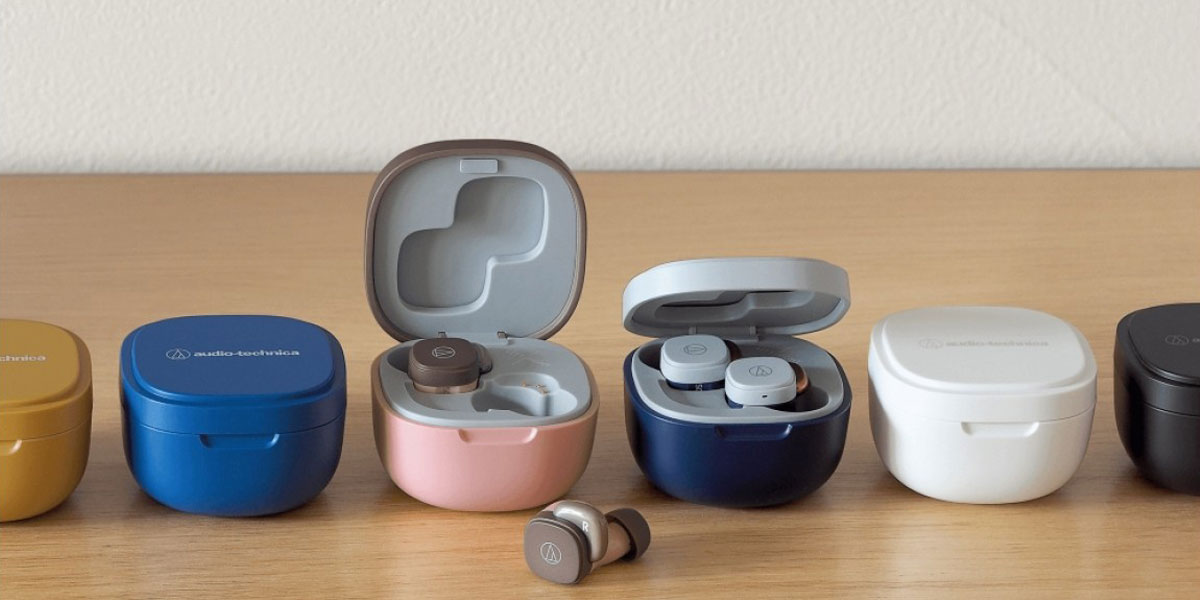
True wireless earbuds take the wireless experience a step further by doing away with any cables or wires between the earbuds. Each earbud operates independently, offering the utmost freedom and convenience. True wireless earbuds often come with portable charging cases to keep them powered throughout the day as well as built-in microphones and support for voice assistants.
What are headphones?
Headphones and earbuds share a common goal – to provide us with a detailed and immersive listening experience without causing any disturbance to those around us. However, headphones take a slightly different approach to achieving this, namely, they’re larger in size and designed to fit around the ears rather than inside the ear canal.
This design allows them to incorporate larger drivers – typically ranging from 30 to 45mm, a substantial upgrade from the typical 5-10mm units found in earbuds – and more complex internals. This generally results in a more powerful, dynamic, and musical sound with deeper low-end tones – perfect for those who enjoy bass-heavy music!
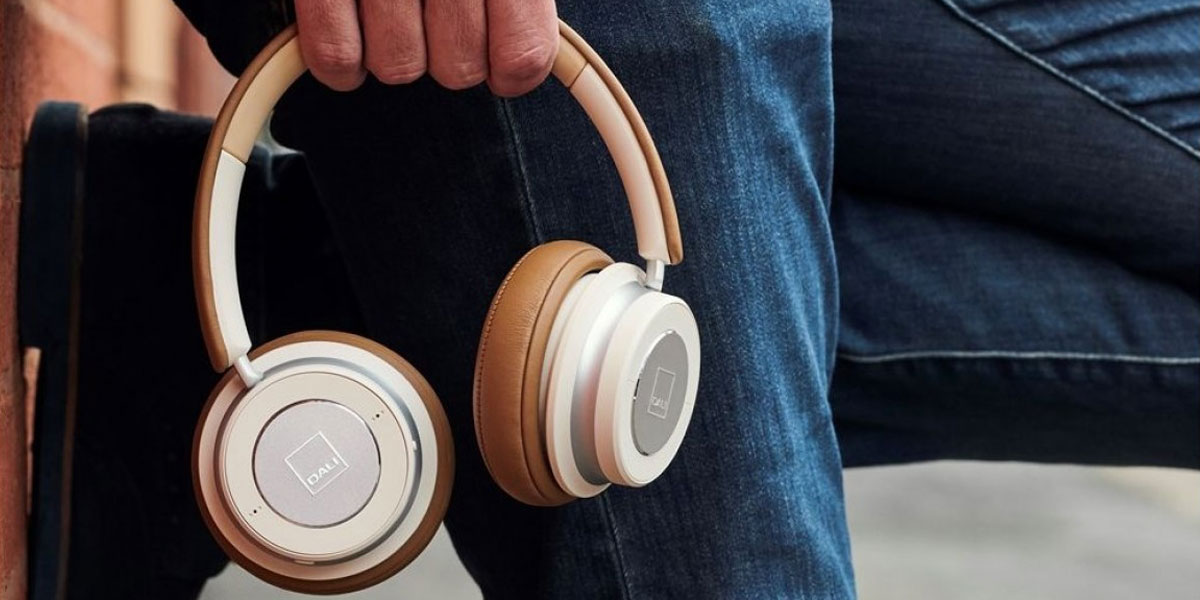
When you slip on a pair of headphones, you’ll notice two comfy cups embracing your ears, connected by a headband that rests gently atop your head. It’s like having your very own concert experience, tailored just for you!
When most people talk about ‘headphones’ they are specifically referring to closed-back over-ear headphones, where the earcups sit around the ear and have a closed backing to help reduce sound leaking in or out. But in reality, there is a wide variety of different headphone types to suit a range of different tastes and preferences.
Closed-back
Closed-back headphones are a type of headphones with earcups that have a solid back, meaning they are fully enclosed on the outside. This design seals the earcups, creating a barrier that prevents sound from escaping and ambient noise from entering.
Open-back
Open-back headphones are a type of over-ear or on-ear headphones that have open earcups. In this design, the back of the earcups is left open or perforated, allowing air and sound to pass freely in and out. This openness allows ambient sounds from the surrounding environment to mix with the audio produced by the headphones.
The main benefit of open-back headphones is their ability to create a more natural and spacious soundstage, great for at-home Hi-Fi listening sessions.
Over-ear
Over-ear headphones are a type of headphones designed to completely encircle or surround the ears. These headphones have large earcups that fit over the ears, creating a seal that helps to isolate the listener from external sounds.
On-ear
On-ear headphones are a type of headphones that rest on the ears rather than fully enclosing them like over-ear headphones. They have smaller earcups that sit directly on the outer part of the ears, without completely enveloping them. They are popular among individuals who prefer a balance between portability, comfort, and sound quality.
Noise-cancelling
Noise-cancelling headphones, often abbreviated to ANC headphones, are equipped with technology that actively reduces or cancels out external ambient noise. Unlike regular headphones that rely on passive noise isolation (using physical barriers like earcups to block sound), noise-cancelling headphones use active noise control to counteract environmental sounds.
An increasingly popular feature is ‘Ambient Mode’, in which the headphones use built-in microphones to detect loud noises in your surroundings, like sirens and people shouting. These sounds are then played back into your headphones, alerting you to potential outside-world dangers. Pretty neat!
Earbuds vs. headphones
Sound quality
 When comparing the sound quality of earbuds and headphones, both offer unique advantages.
Earbuds are known for delivering a clean sound, providing a clear and precise audio experience. However, they often lack bass compared to headphones due to their small driver size.
Despite this, earbuds’ proximity to the ear canal allows for a more direct and intimate listening experience, making them excellent for capturing intricate nuances and details, especially in mid-range frequencies.
On the other hand, headphones generally offer a more expansive soundstage with increased dynamics that is capable of reproducing a wider frequency range, particularly in the low end. This delivers a more immersive sound.
Which is better?
Both earphones and headphones have their strengths and are better suited for different applications. When it comes to all-out music-listening pleasure, headphones are the clear winner. They offer a more immersive experience, making them ideal for enjoying music with depth and richness.
Having said this, earphones shine in critical listening scenarios, where precision and detail are crucial. They’re also the better choice for those seeking ultra-portability, as their compact size and lightweight design make them easy to carry around.
Ultimately, the choice between earphones and headphones depends on individual preferences and what you intend to use them for, as each excels in its own way.
Noise cancellation
While earbuds offer better passive noise isolation thanks to them fitting snugly into your ear, with the recent advancements in Active Noise Cancelling technology, headphones are now just as handy at providing isolation from the outside world. This ensures your music listening experience goes uninterrupted.
Which is better?
Headphones now emerge as the clear winner in this category as they boast more robust active noise-cancelling capabilities compared to earbuds. Their superior performance is attributed to higher-quality microphones and sophisticated internal electronics that achieve greater rejection from external noise sources.
Comfort
 Comfort is a crucial aspect to consider when choosing headphones as it directly impacts the overall listening experience. Some earbuds provide a comfortable fit, while others can exert pressure on the pinna, causing discomfort during prolonged use.
On-ear headphones are suitable for short listening sessions, but their smaller size and direct contact with the ears can lead to discomfort over time.
Over-ear headphones, on the other hand, are often regarded as the most comfortable option, as their large earcups encircle the ears, distributing the weight more evenly and reducing pressure on the ears. For active users, sport-oriented models with stabilisers offer a secure and comfortable fit during physical activities.
Which is better?
Ultimately, this is going to be a subjective thing. Over-ear headphones are generally regarded as being the most comfortable by the largest number of people. However, everyone’s ears and head shapes are different, so what might be comfortable for someone else might not be very comfortable for you.
Portability
Earbuds excel when it comes to portability due to their compact size and lightweight design. They’re highly portable and can easily fit in your pocket or bag, making them ideal for on-the-go use. Most earbuds come with a carrying case for added protection and convenience for storage.
On the other hand, traditional headphones tend to be bulkier and less portable. However, some headphone models offer foldable earcups and come with their own cases, which enhances their portability to some extent.
Which is better?
In the battle of portability, earbuds clearly emerge as the winner. Their small size and included cases make them effortlessly portable, making them the preferred choice for travel, commutes, and activities on the move.
Battery life
 Earphones’ battery life can vary depending on the model, but advancements in technology are continuously improving their performance.
With the introduction of charging cases on true wireless earphone models, the total battery life for earbuds can be significantly extended, making them suitable for extended usage without the need for frequent charging.
However, headphones generally have better battery life on a single charge. The larger casing of headphones allows for more significant internal batteries, enabling them to last longer between charges compared to earphones.
Which is better?
When it comes to battery life, headphones have the advantage of extended usage on a single charge, while earphones offer the convenience of prolonged use thanks to the charging capacity of their cases. Because of this, earbuds are perhaps a better companion throughout multi-day usage.
Price
Premium earbuds typically come at a lower price point compared to premium headphones, making them an attractive option for those seeking high-quality audio without breaking the bank. However, audiophile headphones stand as the most expensive category, especially those featuring an open-back design, catering to enthusiasts who prioritise top-tier sound performance.
Generally, headphones offer better sound quality compared to earphones posed at the same price thanks to their larger drivers and fuller soundstage, which contribute to a more immersive audio experience.
For those seeking a balanced compromise between price, sound quality, and portability, true wireless earbuds are an excellent choice. They provide an optimal intersection of these factors, delivering impressive audio performance while maintaining a compact and convenient form factor.
Which is better?
Ultimately, the choice between earbuds and headphones in terms of price depends on individual budget constraints and desired audio preferences.
Which ones should you go for?
For running/working out
Earbuds are typically favoured for running or working out. This is because there are specific sweat-resistant models that have advantages in terms of durability and IP Rated resistance to sweat and water that makes them more suitable for those scenarios.
For commuting
Headphones are usually favoured for commuting. The most important thing to look out for here is that they have the Active Noise Cancelling feature as this will be the biggest benefit to your morning commute, blocking out external noises and allowing you to hear your favourite albums and podcasts without distractions.
With that said, earbuds get an extra bonus point for being more portable which will come in handy on trains and buses.
For working
With their discrete appearance, earbuds are perhaps more suitable in the workplace as they create less of a barrier between yourself and colleagues in and around the office. I would personally opt to turn noise cancelling off in this scenario in case your boss is trying to get your attention!
For flying
When it comes to flying, a pair of Active Noise Cancelling over-ear headphones are the best option as the ANC technology will work in tandem with the closed-back earcup design to make sure no external noises can distract you from your favourite album.
For audio mixing
Headphones will be the best option here because of their more comprehensive soundstage and stereo image. The wider frequency range provided by larger drivers also makes them more suitable for audio mixing as you get a truer picture of how your mix will translate across a wider variety of different playback systems.
For gaming
Over-ear headphones are best for gaming as they help to isolate you from the outside world that might distract you in your gaming session. If you can find a headset which features a built-in microphone, this is even better.
For kids
Given that manufacturers typically do not make either of these products for kids in the mainstream, earbuds are almost certainly going to be out of the picture, as they are typically designed for adult ear canal sizes making them unlikely to fit in a child’s ear. Headphones will therefore be the better bet given that they often feature adjustable headbands that will help create a more secure fit on a child’s head.
FAQs
Is it better to have headphones or earbuds?
For people who want a completely immersive listening experience, aided by noise cancellation, headphones are better to have; for those who want a more portable option or to use them for working out, earbuds are the better option.
Are earbuds more damaging than headphones?
Earbuds are not more damaging than headphones, it’s a common misconception that they are. What actually causes hearing damage is high volume levels. To prevent hearing damage, you should listen to your music for a maximum of 90 minutes a day if you listen at 80% of the maximum volume. If your music is quieter, you can enjoy it for longer.
Which is better: on-ear or over-ear?
The decision between on-ear and over-ear headphones depends on what you will use them for, however, over-ears tend to be better for noise cancellation, comfort, and sound leakage. On-ears, on the other hand, are more portable and are easier to carry around.
Final thoughts
We hope we have settled the earbuds vs. headphones debate and you’ve found the most suitable option for you! Earbuds are more portable and can deliver extremely detailed audio, whereas headphones can effectively block out noise and offer a more immersive listening experience. The choice is all yours! Why not check out some of our earbuds and headphones via the link below?







0 Comments